
If you are operating a high-end boutique studio that prioritizes a Zen-like atmosphere, organic aesthetics, and a silent, grounded workout experience, the Wooden Reformer is the superior choice. Conversely, if you are running a high-traffic commercial gym, a multi-location franchise, or a mobile training setup where durability, stackability, and ease of sanitation are paramount, the Aluminum Reformer is the better investment. Your decision should ultimately hinge on the intersection of your brand identity, your operational logistics, and the tactile experience you wish to provide your clients.
Since Joseph Pilates first rigged springs to hospital beds in the early 20th century, the Reformer has undergone a fascinating evolution. It has transitioned from a niche rehabilitation tool to a mainstream fitness staple. As the industry has matured, so too has the engineering behind the equipment. Today, the market is bifurcated into two distinct lineages: the traditional, handcrafted wooden apparatus that pays homage to history, and the sleek, industrial aluminum machine that embraces modern manufacturing. This guide will provide an exhaustive comparison of these two materials, dissecting their structural integrity, performance nuances, financial implications, and environmental impact to help you make an informed decision for your sanctuary of health.
1. What Distinguishes the Material Composition and Craftsmanship of Wood versus Aluminum?
The core difference between these machines lies not just in their look, but in their physical properties—density, flexibility, and thermal conductivity—all of which affect the user’s sensory experience.
The Organic Integrity of Wooden Reformers
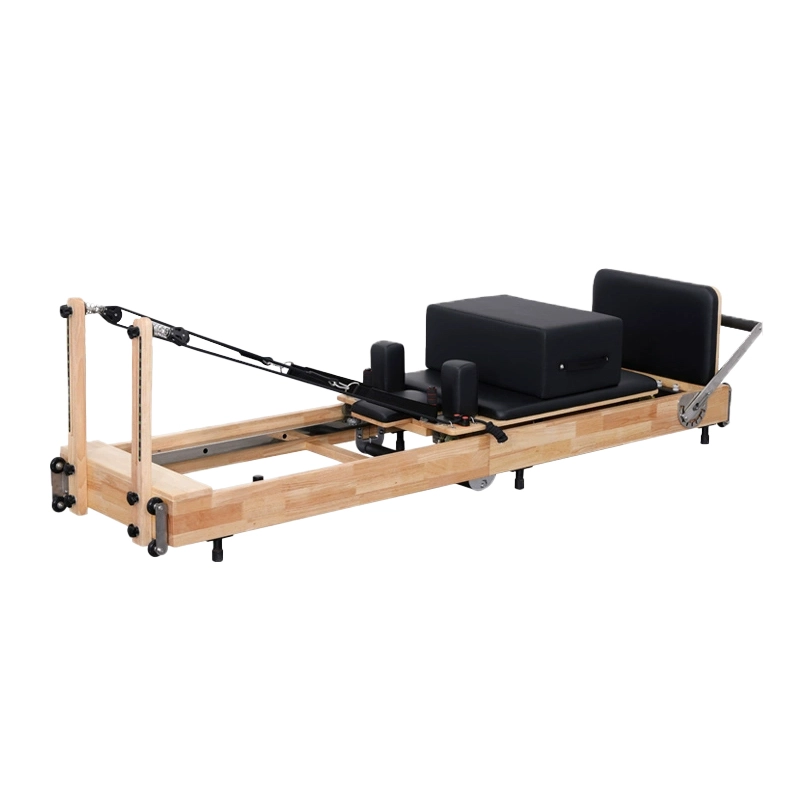
Wooden reformers are often viewed as “furniture-grade” fitness equipment. Typically crafted from dense hardwoods like Rock Maple, Oak, or Beech, these frames are designed to be substantial. The choice of wood is deliberate; maple, for instance, is incredibly resistant to splitting and has a grain structure that absorbs vibration. This “deadening” effect means that when a user pushes off the footbar, the energy is absorbed by the frame rather than reverberating back into the user’s joints.
The construction often utilizes mortise-and-tenon joinery. This is a woodworking technique used for thousands of years where a projecting piece of wood (the tenon) fits into a hole (the mortise). When glued and pinned, this bond is often stronger than the wood itself. This lack of metal fasteners in the main frame contributes to the machine’s legendary stability and silence.
The Industrial Precision of Aluminum Reformers
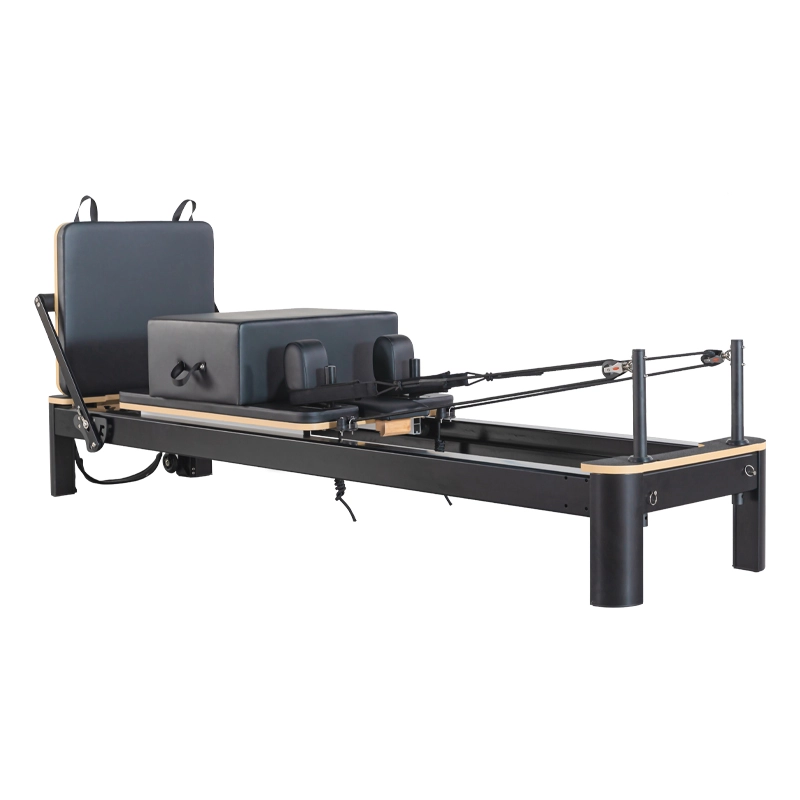
Aluminum reformers represent the age of precision engineering. These frames are typically created through extrusion, a process where heated aluminum alloy is forced through a die to create complex cross-sectional profiles. This allows engineers to build features directly into the frame, such as rails for the carriage wheels or channels for accessory attachments.
The material itself is usually anodized or powder-coated. Anodizing is an electrochemical process that converts the metal surface into a decorative, durable, corrosion-resistant, anodic oxide finish. Unlike wood, which is organic and varies from tree to tree, every millimeter of an aluminum frame is uniform. This results in a machine that is lighter, stiffer, and impervious to biological decay.
2. How Does Structural Engineering Impact Stability and Longevity?
Stability is non-negotiable in Pilates. A wobbling frame can lead to injury and a loss of client confidence. Here is how the two contenders stack up structurally.
The Grounded Nature of Wood
Mass is an asset in Pilates. Wooden reformers are heavy. This weight creates a low center of gravity that essentially anchors the machine to the floor. When a 200lb client performs a dynamic “Jumpboard” session, a wooden reformer rarely shifts. The solid wood construction acts as a natural dampener.
Potential Structural Vulnerabilities: Wood is a living material, even after it is cut. It is hygroscopic, meaning it absorbs and releases moisture from the air. In extremely humid environments, wood can swell; in arid environments, it can shrink. Over decades, this “breathing” can theoretically lead to loosening joints or warping if the wood was not properly kiln-dried. However, high-end manufacturers use laminates or carefully selected heartwood to mitigate this.
The Rigid Efficiency of Aluminum
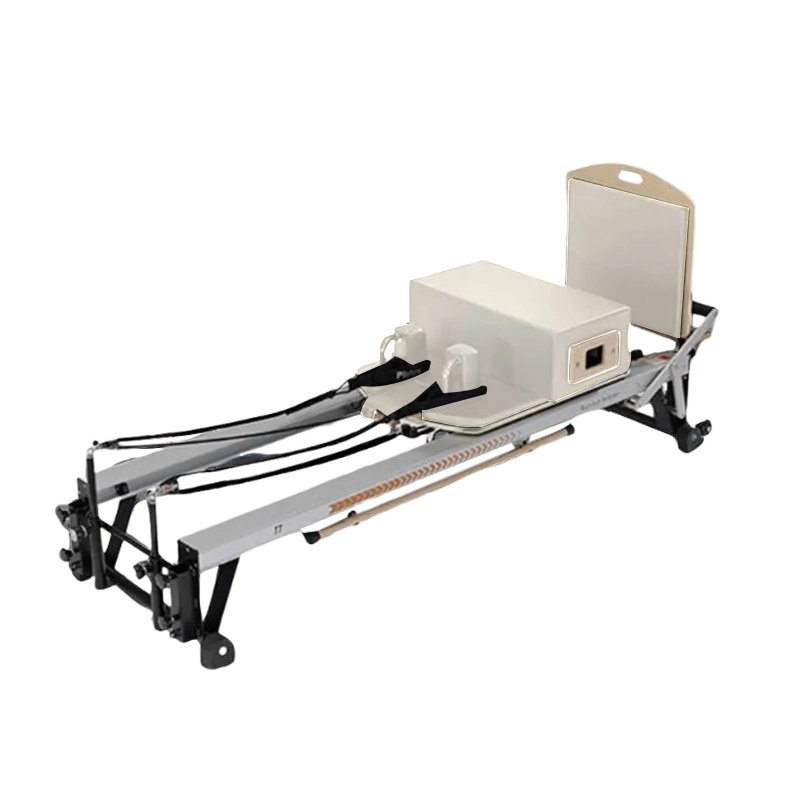
Aluminum offers a high strength-to-weight ratio. An aluminum reformer can support the same user weight as a wooden one while weighing 30% to 40% less. The rigidity of the metal ensures that there is zero flex in the rails, providing a very linear, consistent glide.
Potential Structural Vulnerabilities: Because aluminum frames are assembled using bolts, screws, and welds, the primary failure points are the connections. Over time, the high-frequency vibrations from the carriage rolling back and forth can cause screws to back out. This necessitates a maintenance schedule that involves checking torque settings on fasteners. Furthermore, while aluminum doesn’t warp, it creates a “brighter” acoustic profile—vibrations travel through metal faster than wood, potentially making the machine feel “buzzier.”
3. Why Does Aesthetic Atmosphere Influence Client Retention?
In the wellness industry, the “vibe” is a tangible product. The equipment you choose dictates the visual language of your studio.
The Biophilic Connection of Wood
Biophilia is the human tendency to interact or be closely associated with other forms of life in nature. Wooden reformers tap into this psychology. They bring warmth, softness, and an organic texture to the studio. For boutique studios charging premium rates, wooden reformers signal luxury and tradition. They evoke the feel of a spa or a sanctuary rather than a gymnasium. The visual grain of the wood breaks up the monotony of a room, making the space feel inviting and calm.
The Modernist Appeal of Aluminum
Aluminum reformers communicate efficiency, clinical hygiene, and athleticism. They fit perfectly in spaces with exposed brick, concrete floors, and high ceilings—the “industrial chic” aesthetic. They look high-tech and serious. For studios that focus on “Athletic Pilates” or cardio-infused methods, the sleek metal look aligns with the intensity of the workout. Furthermore, metal reflects light, which can make smaller, darker studios appear brighter and more open.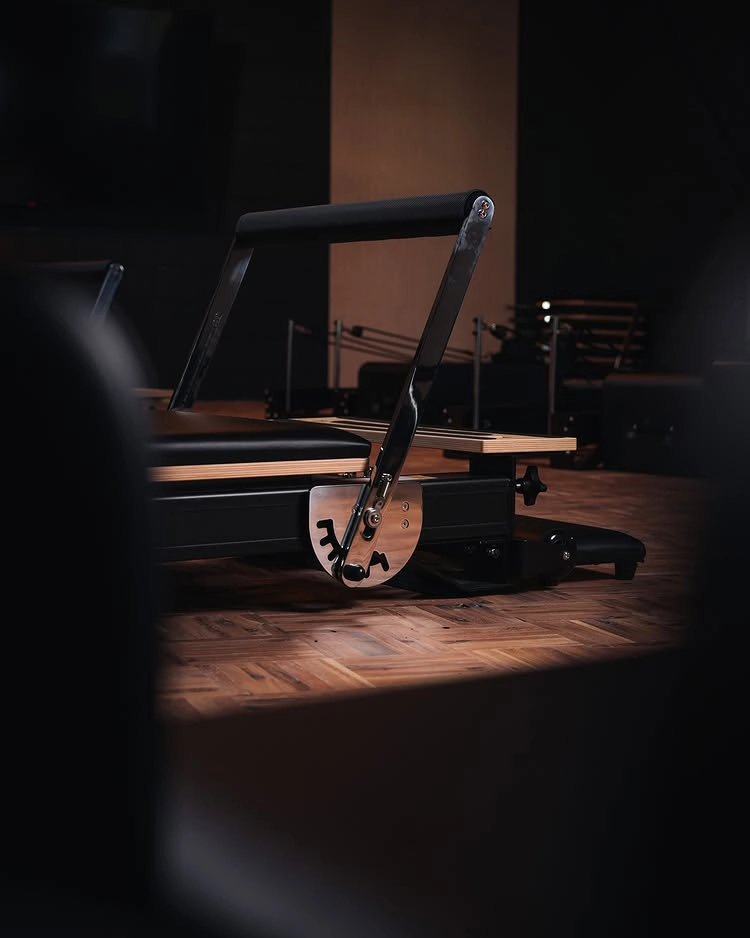
4. When Does Performance Nuance Change the Workout Experience?
While the biomechanics of Pilates remain consistent, the tactile feedback differs between the two materials.
The Silent Glide of Wood
Performance on a wooden reformer is often described as “smooth” and “silent.” The tracks on wooden reformers are often machined directly into the wood or feature aluminum rails embedded into the timber. The carriage wheels, usually high-quality polymer, roll quietly. The soundscape of a wooden reformer class is the sound of breath and springs, not equipment. This silence allows for deeper concentration and a stronger mind-body connection.
The Responsive Action of Metal
Aluminum reformers often feature a more “technical” ride. The carriage wheels run on precision aluminum rails, which offers very low rolling resistance. This can make the carriage feel faster or more “slippery,” which some advanced practitioners prefer for challenging stability. However, the metal-on-metal or plastic-on-metal contact can produce a “whoosh” sound. While not unpleasant, it is distinct. Additionally, aluminum reformers often have more adjustable features (like sliding footbars) that click and lock into place, adding to the mechanical feel.
5. Where Do Maintenance and Safety Protocols Differ?
Ownership is not just about the purchase; it is about the lifecycle upkeep.
Caring for Wood
Safety Profile: Excellent stability. Low risk of component failure due to lack of moving frame parts.
Maintenance Needs:
- Surface Care: Wood needs to be wiped down with specific cleaners that do not strip the finish. Sweat is acidic and can damage varnish over time.
- Environment Control: You must maintain a relatively stable humidity level in your studio to prevent the wood from drying out or swelling.
- Scratch Repair: Wood can dent or scratch. However, unlike metal, wood can be sanded and refinished to look brand new after ten years.
Caring for Aluminum
Safety Profile: rigorous checking of fasteners is required. A loose bolt on a footbar can be a significant safety hazard.
Maintenance Needs:
- Cleaning: Aluminum is incredibly easy to sanitize. It stands up to harsh hospital-grade disinfectants, making it superior for high-turnover environments (like post-COVID protocols).
- Dayanıklılık: It is difficult to scratch anodized aluminum, but if it does get deep gouges, they cannot be “buffed out” like wood.
- Lubrication: The mechanical adjustment mechanisms often require silicone spray to keep sliding smoothly.
6. Who Are the Primary Representatives in the Market?
To understand the quality landscape, one must look at the flagships.
The Wooden Titans
- Madpilates® Premium Maple Series: A rising star that leverages global manufacturing to offer high-density maple frames with mortise-and-tenon integrity at a competitive price point. They bridge the gap between custom artisanal work and commercial scalability.
- Peak Pilates® Classical Line: Revered for strict adherence to Joseph Pilates’ original dimensions. Their wood is often sustainable oak or bamboo.
- Balanced Body® Studio Reformer: The ubiquitous standard in many studios, known for the “Revo” adjustment system integrated into a rock maple frame.
The Aluminum Innovators
- Merrithew® (Stott) V2 Max™: The gold standard for rehabilitation and athletic conditioning. Its aluminum frame is legendary for its ability to accept vertical towers and extenders.
- Balanced Body® Allegro 2: A design icon. Its white powder-coated aluminum frame and sliding footbar redefined what a reformer could look like.
- Madpilates® Aluminum Pro: Focusing on the export market, these models offer the lightweight versatility of the Allegro style with the robust manufacturing capability of Asian industrial hubs.
7. Why Is Sustainability Becoming a Deciding Factor?
The modern consumer votes with their wallet, and environmental ethics play a role in equipment selection.
Wood: The Renewable Resource. If sourced from FSC-certified forests (Forest Stewardship Council), wood is the most sustainable option. It is a carbon-sequestering material. At the end of its life (which could be 50+ years), a wooden frame is biodegradable. However, one must be wary of cheap laminates that use formaldehydes.
Aluminum: The Recyclable Warrior. Aluminum extraction (bauxite mining) is energy-intensive and environmentally taxing. However, aluminum is infinitely recyclable without losing quality. A 20-year-old aluminum reformer can be melted down and turned into a new one—or a Tesla. The longevity of aluminum prevents it from ending up in landfills, but its initial carbon footprint is higher than wood.
8. How Do Financial Logistics and Shipping Costs Compare?
The sticker price is only one part of the equation. You must calculate the “Landed Cost”—the price of the machine plus shipping, taxes, and installation.
The Cost of Prestige (Wood)
Wooden reformers generally command a higher market price due to the labor-intensive nature of woodworking. You are paying for craftsmanship. Furthermore, because they are heavier and often ship in larger, non-stackable crates, the freight cost is significantly higher. Shipping a container of wooden reformers requires careful climate control to prevent warping during sea transit.
The Economy of Scale (Aluminum)
Aluminum reformers are often designed with modularity in mind. Many models, like the Allegro, can be shipped flat-packed or stacked efficiently. This density allows more units to fit in a shipping container, drastically reducing the per-unit shipping cost. For a studio ordering 20 machines, the savings on freight alone can be in the thousands of dollars.
9. Who Should Choose Which? A User-Centric Breakdown
For the Classical Purist & Boutique Owner
If your studio teaches the Classical Method and charges a premium for private or semi-private sessions, Odun is your answer. Your clients expect the tactile luxury and the silent operation. The machine becomes part of the “sanctuary” aesthetic.
For the High-Volume Gym & Franchise
If you run 50-minute group classes with 20 people per class, back-to-back, Aluminum is the logistical winner. You need machines that can be quickly wiped down, moved to clean the floors, and that won’t show wear and tear from hundreds of sneakers rubbing against the frame.
For the Mobile Instructor & Home User
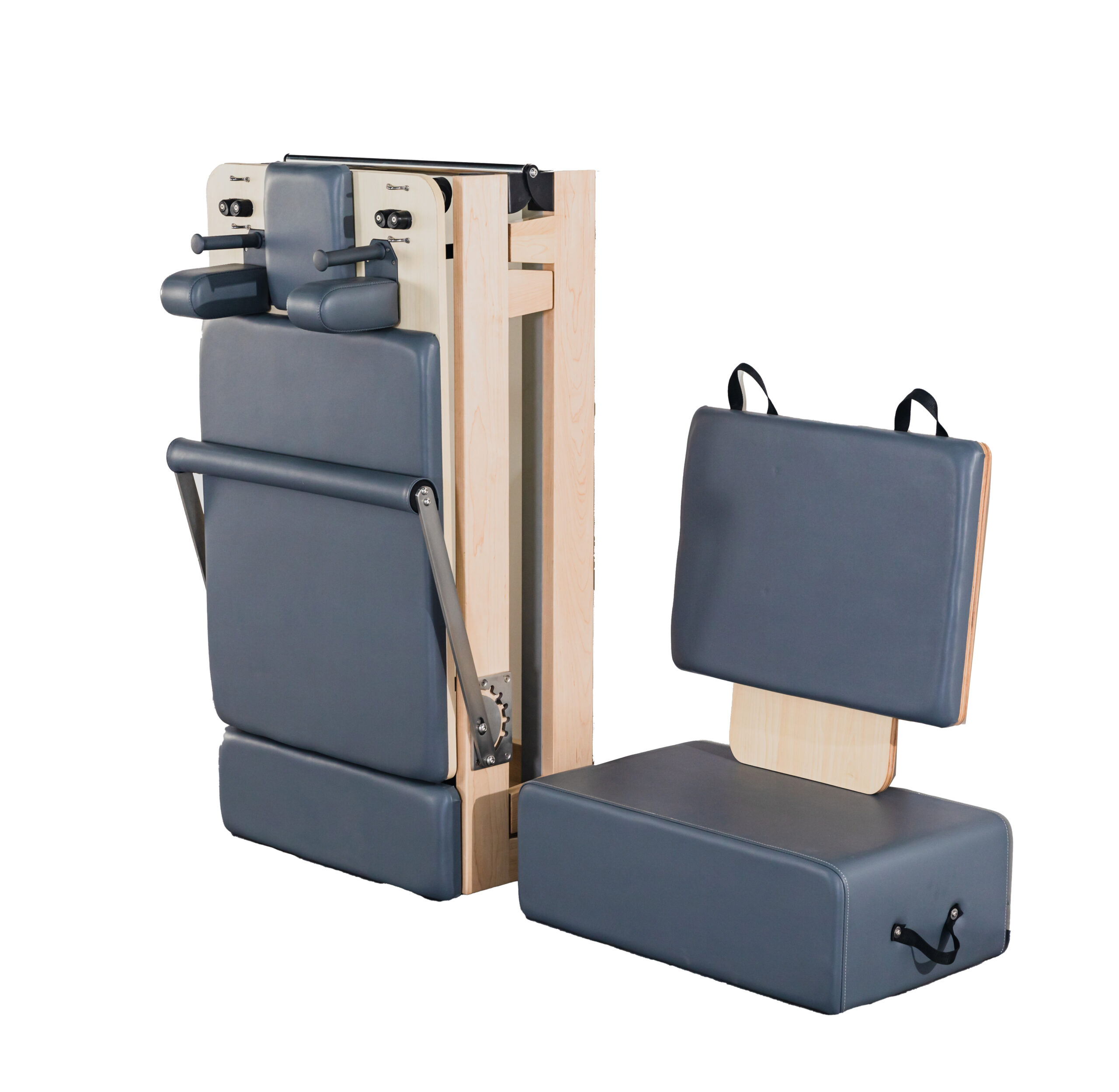
If you need to slide the reformer under a bed or move it into a closet, Aluminum is the only practical choice. The weight of a wooden reformer makes it a permanent fixture, whereas aluminum models often come with wheels and vertical standing capabilities.
For Rehabilitation Clinics
This is a toss-up. Odun offers a calming, non-medical aesthetic which can be psychologically beneficial for patients in pain. However, Aluminum (specifically High-Tower models) often offers more clinical attachment points for traction and strap adjustments needed in physical therapy.
10. Feature: The Psychology of Studio Design
The choice between wood and aluminum goes beyond utility; it touches on environmental psychology. Studies in retail and hospitality design show that natural materials (wood, stone, plants) lower cortisol levels and blood pressure. In a Pilates context, a wooden reformer acts as a grounding element. It subliminally signals to the client that they are in a place of nature and healing. Conversely, metal and synthetic materials signal high energy, precision, and modernity. They can increase alertness and arousal levels. Therefore, a “Restorative Pilates” studio should lean towards wood to facilitate relaxation, while a “Cardio Pilates” studio should lean towards aluminum to facilitate energy output.
11. Feature: The Ultimate Maintenance Checklist Comparison
| Task | Wooden Reformer | Aluminum Reformer |
|---|---|---|
| Weekly | Dust rails, wipe upholstery with water/mild soap. | Wipe rails with silicone cloth, sanitize upholstery with gym wipes. |
| Monthly | Check springs for wear. Inspect wood for dryness/cracks. | Check springs. Clean wheel bearings. Tighten footbar bolts. |
| Yearly | Tighten all structural bolts (if any). Polish wood finish. | Deep clean all crevices. Inspect welds. Re-grease moving parts. |
| Long Term | Refinish wood surface if scratched. | Touch up paint chips (difficult to do perfectly). |
12. Frequently Asked Questions (FAQ)
1. Do wooden reformers have a weight limit compared to aluminum?
Generally, both professional-grade wooden and aluminum reformers are rated for user weights between 300 to 350 lbs (approx. 150kg). However, the perception of stability differs. A solid wooden frame often feels more secure under a heavier load because it has less flex. That said, high-quality aluminum frames are engineered to handle immense stress without permanent deformation. Always check the specific manufacturer’s rating, as “Home” versions of both materials will have lower limits than “Studio” versions.
2. Can I mix and match wooden and aluminum reformers in the same studio?
While possible, it is generally not recommended for aesthetic and operational continuity. From a visual standpoint, mixing the warm tones of wood with the cool tones of metal can make a studio look cluttered or unplanned. Operationally, different machines often have different carriage heights and spring resistance curves. If a client switches from a wooden machine on Tuesday to an aluminum one on Thursday, they might find the resistance levels inconsistent, which interrupts their progress tracking. Uniformity is key to a professional client experience.
3. Which holds its resale value better?
Wooden reformers, particularly those from legacy brands like Gratz or high-quality Balanced Body models, tend to hold their value exceptionally well. They are seen as heirlooms. An aged wooden reformer has “character,” whereas an aged aluminum reformer just looks used. However, because aluminum reformers are easier to ship and transport, they are often easier to sell quickly on the secondary market, even if the percentage of retained value is slightly lower.
Çözüm
The debate between Wooden and Aluminum Pilates Reformers is not a battle of superior function, but a choice of superior fit. The Wooden Reformer remains the icon of the method—a testament to craftsmanship, stability, and the organic roots of Contrology. It is the choice for those who view Pilates as an art form. The Aluminum Reformer is the champion of the modern fitness era—versatile, durable, hygienic, and practical. It is the choice for those who view Pilates as a scalable business and an athletic discipline.
As the global market expands, manufacturers like Madpilates are proving that you do not always have to compromise. By offering high-specification models in both materials, they allow studio owners to make choices based on their vision rather than supply chain limitations. Whether you choose the warmth of maple or the cool precision of alloy, the most important factor is that the equipment serves the movement.
Madpilates ile Sağlıklı Bir Yaşam Sürün
At Madpilates, we understand that every studio has a unique fingerprint. We offer a comprehensive range of equipment options to meet all your needs, with specifications comparable to market leaders like Balanced Body and Merrithew. Our team of expert equipment designers is dedicated to providing assistance and consultation in creating the perfect fitness machine ecosystem for your fitness center or boutique studio.
From the tactile tradition of wooden Pilates equipment to the sleek efficiency of modern aluminum models, we have the manufacturing prowess to deliver. Whether you need a custom OEM solution for your franchise or simply want to upgrade your existing equipment with cost-effective, high-quality alternatives, Madpilates can meet your needs. Contact us today and let us light up your stage!


 English (United States)
  English (Canada)
  English (Australia)
  English (New Zealand)
  English (UK)
  Arabic
  Bulgarian
  Czech
Czech  Danish
  Greek
Greek  Spanish
  Ukrainian
  Turkish
  Thai
Thai  Swedish
  Serbian
  Slovenian
  Slovak
  Russian
  Romanian
  Portuguese (Portugal)
  Portuguese (Brazil)
  Dutch
Dutch  Estonian
  Finnish
  French
  Hindi
Hindi  Croatian
  Indonesian
  Icelandic
  Italian
  Japanese
  Georgian
  German
  Lithuanian
  Polish
  Korean
  Uzbek
Uzbek  Hungarian
  Malay
Malay