
The fundamental purpose of the Pilates Reformer machine is to create a dynamic and controlled environment for the human body to achieve a state of optimal physical function through resistance, assistance, and feedback. It is not merely a strength-building tool; it is a sophisticated apparatus designed by Joseph Pilates to guide the body back to its natural state of alignment, strength, and grace. By utilizing a system of springs, straps, and a sliding carriage, the Reformer provides a unique combination of variable resistance to build muscle and support to assist in challenging movements, making it an unparalleled tool for physical rehabilitation, athletic conditioning, and holistic body transformation.
Why Was the Pilates Reformer Invented?
To understand the machine, one must first understand the man behind it. Joseph Pilates, a German physical trainer, was a visionary obsessed with the concept of “Contrology”—the art of complete coordination of body, mind, and spirit. During World War I, while interned on the Isle of Man, he began developing his rehabilitation techniques for injured soldiers and bedridden detainees. He ingeniously attached bed springs to the headboards and footboards of hospital beds, allowing immobile patients to perform resistance exercises while still lying down. This rudimentary setup was the genesis of the Pilates Reformer.
The name “Reformer” is not accidental. Pilates believed his machine could literally “reform” the body. He saw modern life—with its sedentary habits and poor posture—as a deforming force. The Reformer was his antidote, a machine designed to correct imbalances, lengthen the spine, and restore the body’s innate strength and efficiency. Its purpose has always been therapeutic and transformative, not just aesthetic.
How Does a Pilates Reformer Actually Work?
At first glance, the Reformer can appear intimidating—a complex-looking bed with a web of springs and ropes. However, its mechanics are elegantly simple and rooted in physics.
The Key Components and Their Roles
- The Carriage: This is the moving platform you lie, sit, or stand on. It creates an unstable surface, forcing your deep stabilizing muscles (your “core” or “powerhouse”) to engage constantly to maintain balance and control.
- The Springs: This is the heart of the machine. Unlike static weights, which rely on gravity, the springs provide variable and progressive resistance. As you stretch a spring, the resistance increases, challenging the muscle through its full range of motion.
- The Footbar: This adjustable bar at the front serves as a launchpad for the legs, a stable anchor for the hands, and a platform for standing work.
- The Ropes and Pulleys: These allow for a vast range of motion for the arms and legs, creating long, flowing movements that build strength without bulk.
The interplay of these components creates a workout that is simultaneously a test of strength, stability, flexibility, and coordination. Every single exercise on the Reformer requires full-body integration and intense mental focus, fulfilling Pilates’ vision of mind-body conditioning.
What Makes Reformer Pilates Fundamentally Different from Mat Pilates?
While both disciplines share the same core principles (Centering, Concentration, Control, Precision, Breath, and Flow), the experience and outcomes are markedly different. The นักปฏิรูป is not just a “harder” version of the mat; it is a different biomechanical conversation.
| คุณสมบัติ | Mat Pilates | Reformer Pilates |
|---|---|---|
| Resistance Source | Bodyweight and Gravity | Springs (variable tension), Bodyweight, and Gravity |
| Support System | None (floor only) | The carriage supports body weight, allowing for non-weight-bearing exercise. |
| Range of Motion | Limited by individual strength and flexibility. | Extended by the pulley system, allowing for deeper stretches and longer lines. |
| Feedback Mechanism | Internal (you must feel if you are aligned). | External (the machine gives you instant feedback—if you are crooked, the carriage moves crookedly). |
| Suitability for Injury | Can be difficult for those with limited mobility. | Ideal for rehabilitation as it can assist movements and reduce joint load. |
The Reformer’s ability to both resist และ assist is its key differentiator. Heavier springs can make an exercise harder, but lighter springs can also make an exercise harder by reducing support and demanding more stability from your core. This paradox makes the Reformer an incredibly versatile tool.
Who Is the Ideal Candidate for Using a Reformer?
One of the most profound aspects of the Reformer is its universal applicability. Its purpose is not limited to a specific demographic.
The Beginner Seeking Foundational Strength
For those new to exercise, the นักปฏิรูป provides a safe and supportive environment. The carriage supports the body, taking the stress off joints like knees and ankles. The springs can be set to a light resistance, allowing the user to focus on learning correct form and activating the right muscles without feeling overwhelmed.
The Seasoned Athlete Seeking a Competitive Edge
Professional athletes—from golfers to ballet dancers to NFL players—use the Reformer for cross-training. Its purpose here is to target the small, deep stabilizing muscles that are often neglected in traditional strength training. A stronger core, better balance, and increased flexibility directly translate to improved performance and a reduced risk of injury on the field or stage.
The Individual Recovering from an Injury
In a clinical setting, the Reformer is a powerful rehabilitation tool. Under the guidance of a physiotherapist, the machine can be used to:
- Safely re-introduce movement to an injured joint in a non-weight-bearing position.
- Correct muscular imbalances that may have led to the injury in the first place.
- Retrain neuromuscular patterns for optimal, pain-free movement.
The Prenatal and Postnatal Mother
For pregnant women, the Reformer offers a way to maintain core and pelvic floor strength without putting pressure on the abdomen. Postnatally, it is invaluable for safely rebuilding core integrity and addressing conditions like diastasis recti.
How Does the Reformer Fulfill the Six Principles of Pilates?
The purpose of the machine is inextricably linked to Joseph Pilates’ original philosophy. The Reformer is the physical manifestation of his six guiding principles.
- Centering: Every exercise originates from the “powerhouse” (the core). The instability of the carriage forces this engagement.
- Concentration: You cannot “zone out” on a Reformer. The moving parts and spring tension demand your full mental attention to perform the exercise correctly and safely.
- Control: The essence of the Reformer is controlled movement. The emphasis is on resisting the springs on the return phase, not letting them slam the carriage home. This builds eccentric strength.
- Precision: The machine provides clear feedback. If your alignment is off, you will feel it instantly. The shoulder blocks and footbar provide tactile cues to help you find precise placement.
- Breath: Deep, coordinated breathing is essential to stabilize the core and fuel the muscles. The rhythmic nature of the exercises encourages proper diaphragmatic breathing.
- Flow: As you advance, exercises are linked together in a continuous, graceful sequence. The smooth glide of the carriage facilitates this sense of flow, making the workout feel like a moving meditation.

The Anatomy of a Reformer – A Detailed Breakdown
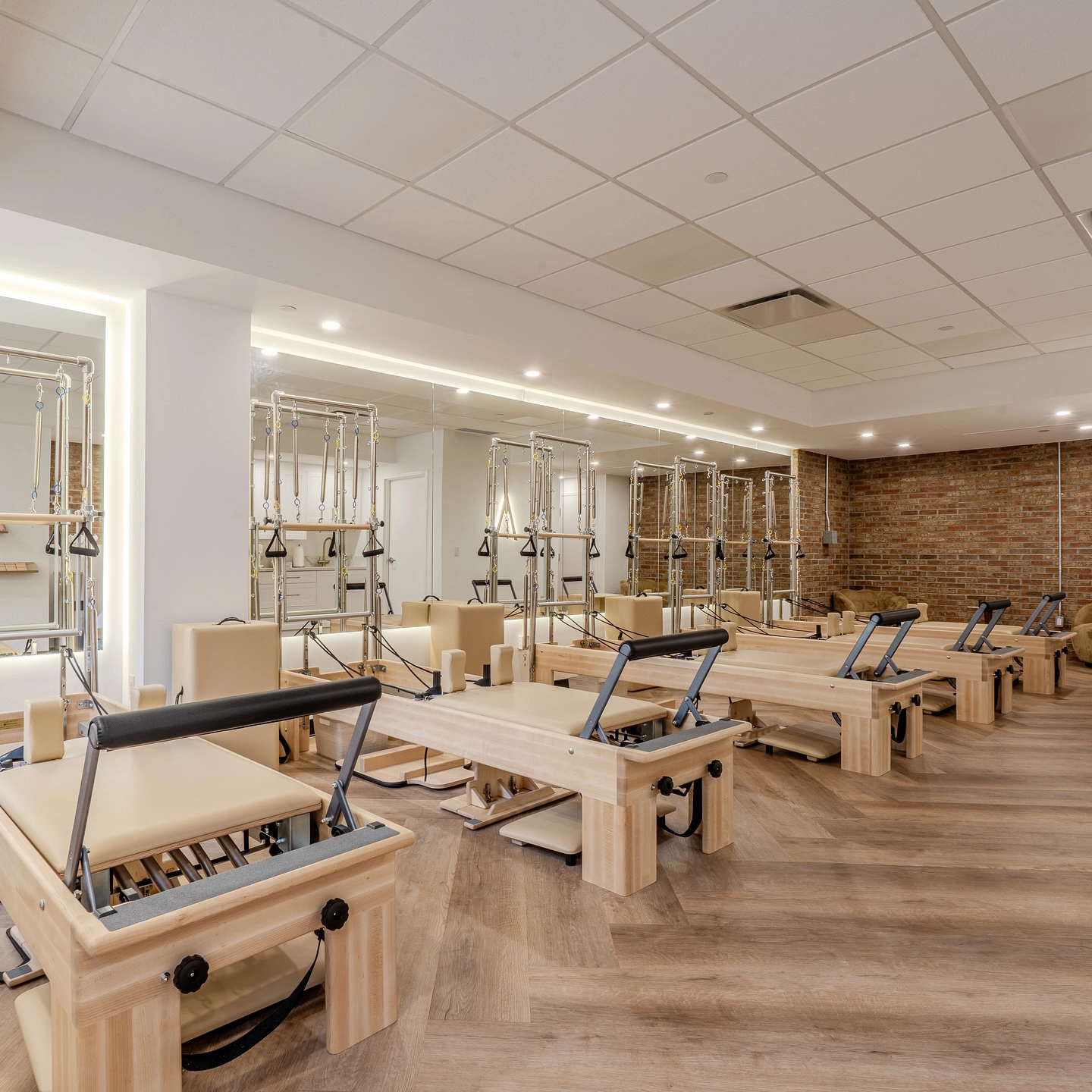
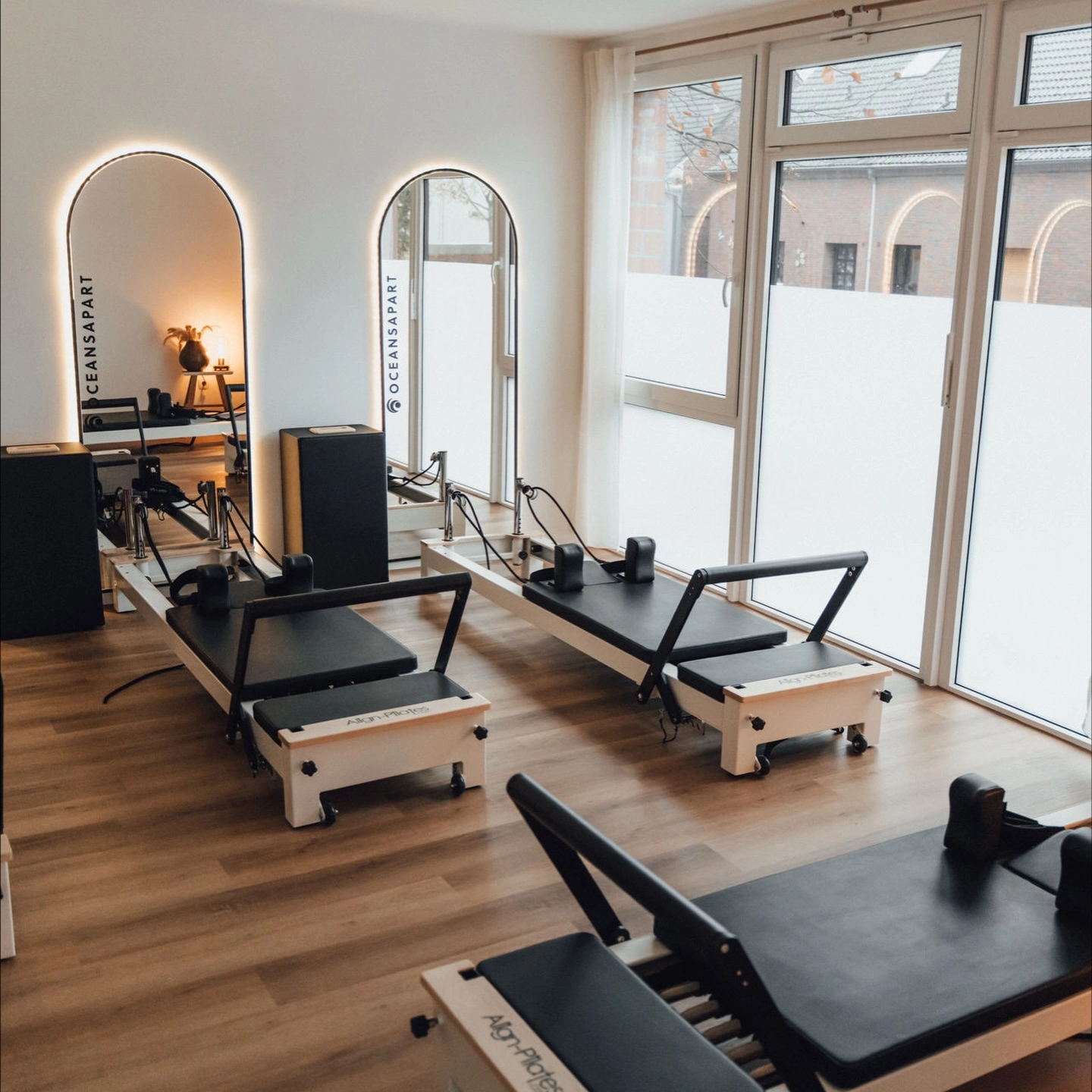
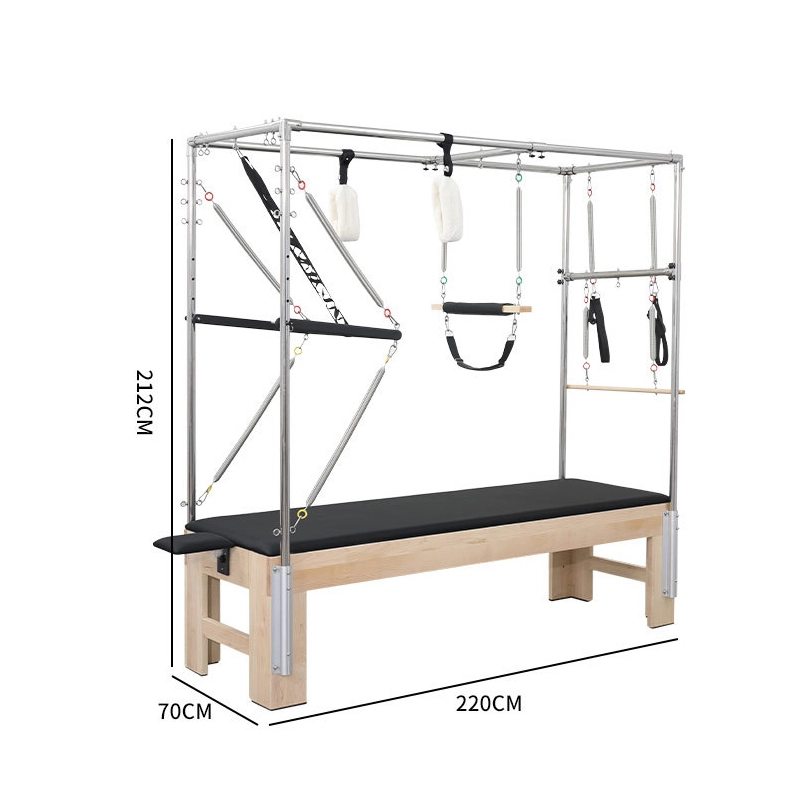
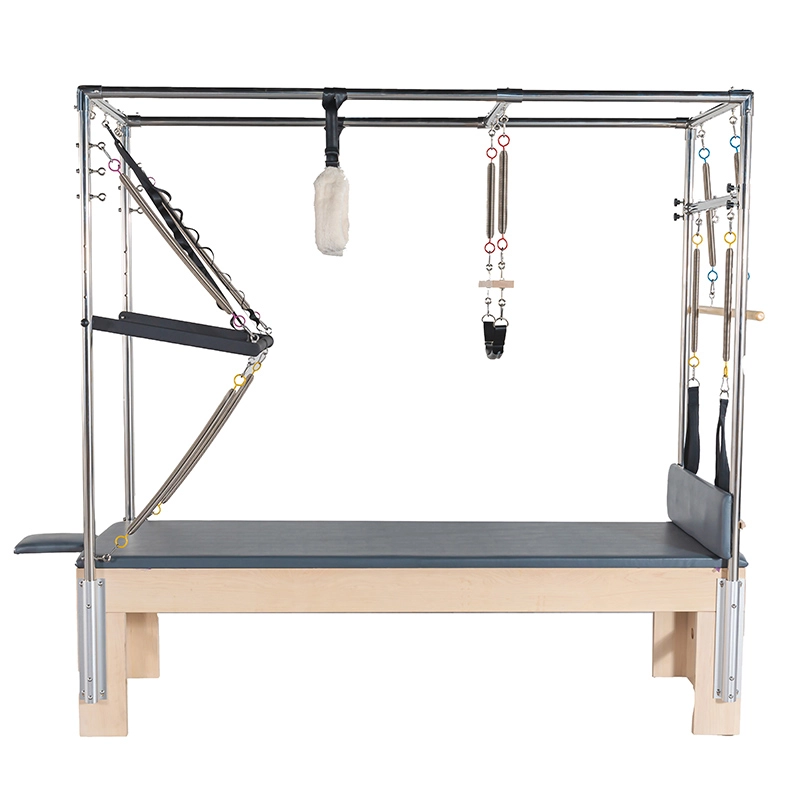
To truly appreciate its purpose, let’s dissect the machine and its attachments, each designed for a specific function.
| ส่วนประกอบ | Purpose & Function |
|---|---|
| Frame | The structural backbone, typically made of solid wood (like maple) or high-grade aluminum for stability and longevity. |
| Carriage | The moving platform. Its smooth, quiet glide is crucial for flow and is achieved through a system of high-performance wheels. |
| บ่อน้ำ | The engine of the Reformer. Color-coded for different levels of tension, they provide the progressive resistance that challenges muscles. |
| Headrest & Shoulder Blocks | Provide comfort and proprioceptive feedback, keeping the user securely on the carriage and preventing neck strain. |
| Footbar | An adjustable bar used by the feet or hands to push the carriage. Its adjustability accommodates different body sizes and exercise variations. |
| Ropes & Straps | Attached to a pulley system, they allow the arms and legs to move freely in space against spring tension, promoting long, lean muscle development. |
| Standing Platform | A non-slip surface at the front of the Reformer for standing exercises that challenge balance and leg strength. |
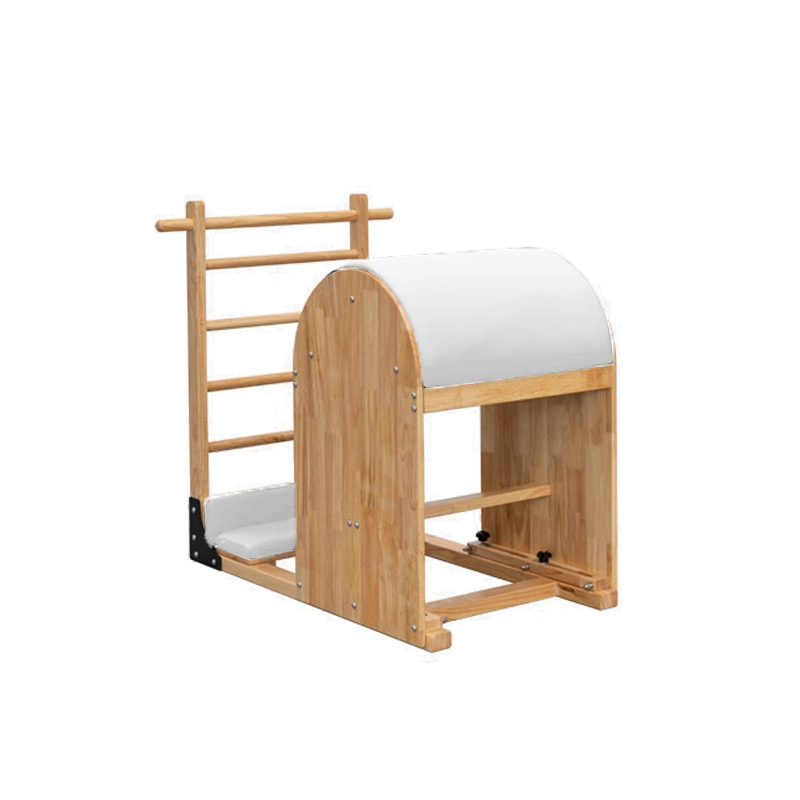
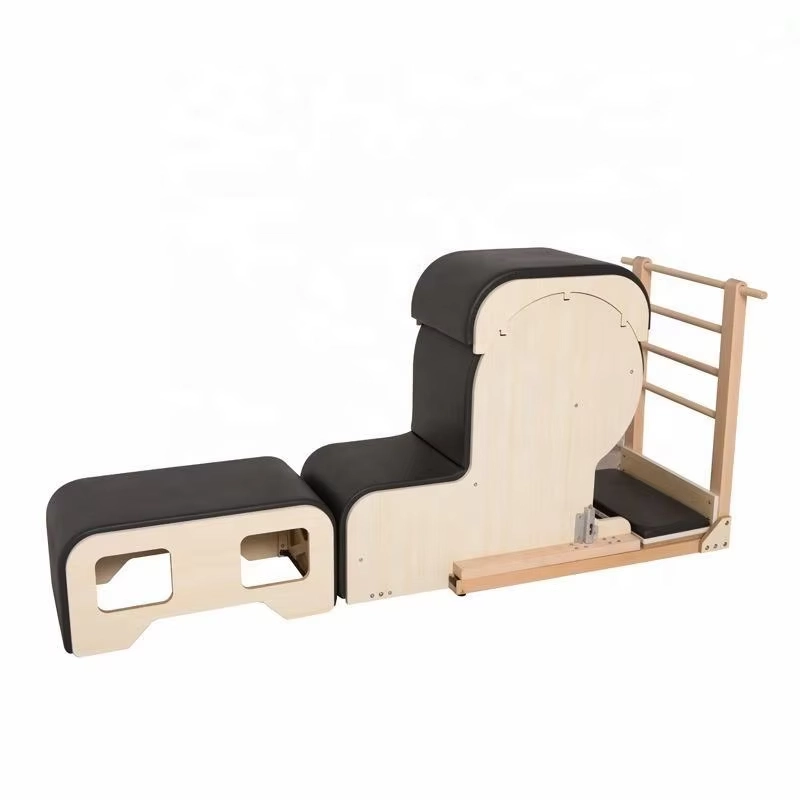
| Optional Accessories | Jumpboard: A padded attachment that turns the Reformer into a horizontal rebounder for plyometric, low-impact cardio. Pilates Box: A versatile prop used on the carriage to facilitate seated, prone, and side-lying exercises. |
Three Exercises That Showcase the Reformer’s Unique Purpose
These classic exercises demonstrate how the Reformer achieves what mat work cannot.
1. The “Footwork” Series
- What it is: The foundational series where you lie on your back and press the carriage out with your feet on the footbar.
- Its Purpose: To teach neutral spinal alignment and proper leg tracking (hips, knees, ankles) under load, a critical pattern for walking, running, and squatting. The springs provide resistance to strengthen the glutes and legs, but the supine position removes the compressive force of gravity from the spine.
2. The “Elephant”
- What it is: A standing exercise where you place your hands on the footbar and feet on the carriage, creating a pike position. You then use your deep abdominals to press the carriage away.
- Its Purpose: To create a deep, loaded hamstring stretch while simultaneously strengthening the core. The springs provide feedback, forcing the user to initiate the movement from their center rather than just pushing with their legs.
3. The “Rowing Series”
- What it is: A series of seated exercises using the straps to mimic rowing motions.
- Its Purpose: To build postural strength in the upper back, open the chest, and improve scapular stability. It directly counteracts the “slumped” posture we adopt at our desks. The pulley system allows for a greater range of motion than a traditional rowing machine.
Frequently Asked Questions (FAQs)
1. Is the purpose of the Reformer just to make Pilates harder?
Not at all. This is a common misconception. The Reformer can certainly make exercises harder by adding heavy spring resistance, but its more unique purpose is to make exercises more accessible. For someone who cannot perform a “Roll Up” on the mat due to a weak core or tight back, the Reformer’s springs and straps can assist them through the movement, allowing them to build strength in a supported range of motion they couldn’t achieve on their own.
2. Can you achieve the same results on a mat if you work hard enough?
You can achieve incredible core strength and flexibility on the mat. However, you cannot replicate the unique benefits of the Reformer’s spring system. The Reformer provides a level of variable resistance and closed-chain feedback (where a hand or foot is fixed against a surface) that is impossible to mimic with bodyweight alone. It is particularly superior for building peripheral strength in the arms and legs and for working in non-weight-bearing positions.
3. Is the main purpose of the Reformer to build long, lean muscles instead of bulk?
Yes, this is a key part of its design philosophy. While you can build significant strength on a Reformer, the nature of the exercises—which often combine stretching with strengthening under moderate, continuous tension—tends to promote the development of lean, elongated muscles (Type I endurance fibers). This is different from traditional weightlifting, which often focuses on heavy, explosive lifts that build bulk (Type IIb power fibers). The result is a physique that is strong and defined, but not “bulky.”
Closing Thoughts: A Machine for Mindful Mastery
The purpose of the Pilates Reformer transcends that of typical fitness equipment. It is not designed for mindless repetitions or brute force. It is a partner in a dialogue with your own body—a tool that reveals your imbalances, challenges your weaknesses, and celebrates your growing strength.
From its humble origins as a hospital bed modification to its current status as the centerpiece of boutique studios worldwide, the Reformer has remained true to its original intent: to reform and restore the body to its peak potential. It teaches you to move with intention, control, and grace. Whether you are an elite athlete, a post-rehab patient, or simply someone seeking a deeper connection to your physical self, stepping onto the carriage is the first move toward mastering the art of Contrology.
 English (United States)
  English (Canada)
  English (Australia)
  English (New Zealand)
  English (UK)
  Arabic
  Bulgarian
  Czech
Czech  Danish
  Greek
Greek  Spanish
  Ukrainian
  Turkish
  Thai
Thai  Swedish
  Serbian
  Slovenian
  Slovak
  Russian
  Romanian
  Portuguese (Portugal)
  Portuguese (Brazil)
  Norwegian
  Dutch
Dutch  Estonian
  Finnish
  French
  Hindi
Hindi  Croatian
  Indonesian
  Icelandic
  Italian
  Japanese
  Georgian
  German
  Lithuanian
  Polish
  Korean
  Uzbek
Uzbek  Hungarian
  Malay
Malay