

Table of Contents
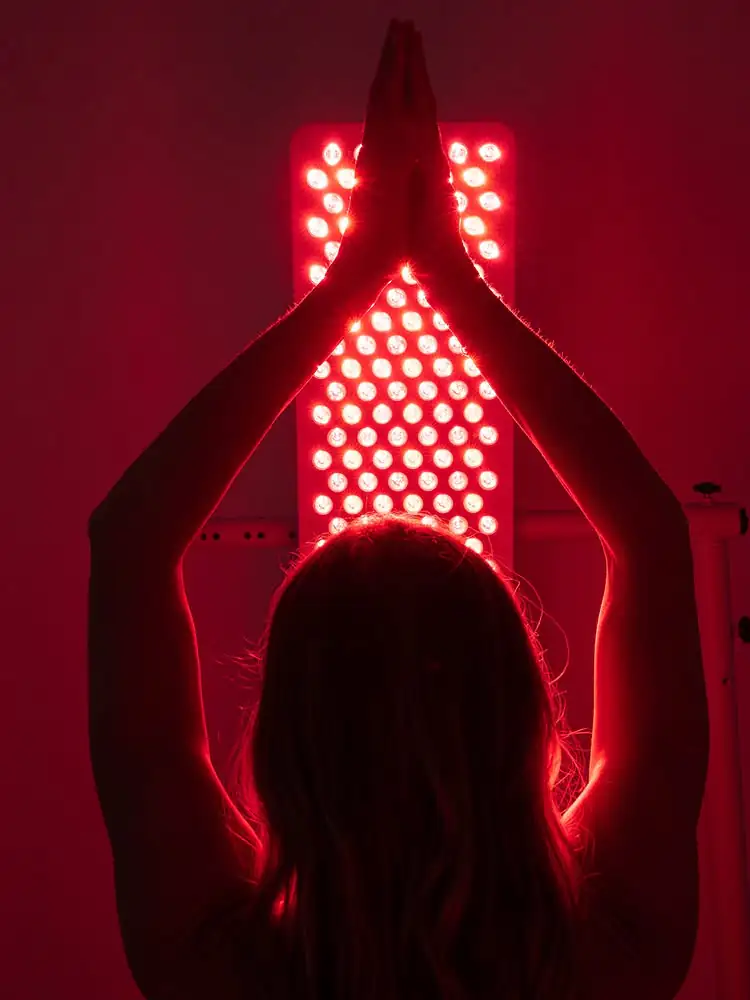
At first glance, most red light therapy (RLT) devices look fairly similar: panels or masks glowing with red or near‑infrared LEDs. But if you dig a little deeper, you’ll find that they are not all the same — and the differences matter profoundly for outcomes. Whether you’re a wellness‑conscious consumer, a skin‑care professional, or simply intrigued by the promise of photobiomodulation, it’s critical to distinguish between superficial similarities and meaningful specifications. In this post, we’ll unpack what sets devices apart, why it matters, and how to assess what you’re really getting.
The Science Behind Red Light Therapy
To understand variation among devices, you need to grasp the underlying mechanism. Simply put, RLT (also called photobiomodulation) uses light in the red and near‑infrared spectrum to stimulate cellular activity — notably mitochondria — which can lead to improved repair, reduced inflammation, and enhanced tissue regeneration.
But within that broad statement, key variables determine how deeply light penetrates, how much energy a tissue receives, and what biological effect is triggered. So while two devices may both claim “red light therapy,” the actual delivered dose, wavelength, and tissue target can differ wildly.
Wavelength Matters — Surface vs. Deep Tissue
One of the first distinctions: the wavelength of light used.
Devices using red light around 620‑750 nm primarily interact with surface and near‑surface tissues (epidermis, upper dermis). Devices using near‑infrared light (e.g., 800‑1000 nm) penetrate deeper into connective tissue, muscle, and joints.
So, two devices labeled “red light therapy” might differ — one targeting wrinkles and skin tone, the other targeting joint pain or deeper tissue regeneration. If you use a device designed for skin on a deep muscle issue, you may not get the intended effect (or you’ll need far more time). Conversely, a high‑power deep tissue unit might be overkill for simple facial renewal.
Irradiance and Dosage — Not All Light is Equal
Another critical variable is irradiance, i.e., how much light energy hits the skin surface per unit area per time (for example, mW/cm²).
A device with low irradiance may require very long sessions to deliver a therapeutic dose. A device with high irradiance can achieve results faster — but may also carry greater risk (if misused).
Even at the same wavelength, a cheap device with weak output may under‑deliver, meaning your “RLT” is more cosmetic than therapeutic. As one source puts it: “If you want to treat deeper tissues, you need higher irradiance.”
In short: two devices emitting 660 nm might feel alike to the eye — but one might deliver half the dose of the other.
Coverage, Distance & Design — The Practical Delivery
Even the best wavelength + irradiance won’t guarantee results if the device isn’t designed well. Consider:
- Coverage area: A mask may cover only the face; a panel may cover full body.
- Distance between device and skin: Light intensity falls off with distance.
- Angle and uniformity of LED placement: Uneven lighting can cause hotspots or under‑treated areas.
- Thermal/heat management: Even LEDs generate heat; a poorly cooled unit may raise skin temperature or degrade performance.
So devices vary not just in “what they emit” but “how they emit it” and “how you apply them.” A full‑body bed used in clinics might give profound systemic effects; a portable mask may give modest cosmetic benefits.
Build Quality, Safety, Certification — The Hidden Differences
You’ll also find important differences in build / safety that matter both for efficacy and risk. For example:
- Some devices are built with medical‑grade LEDs and rigorous emittance specs; cheaper ones may cut corners.
- Certifications: Does the device have independent testing, safety certifications (for eye protection, EMF emissions), or clear stated output specs?
- Pulsed vs continuous light: Some devices offer pulsed mode (light flashes at frequency) versus continuous wave – which may have different biological effects (still under investigation).
- Marketing claims vs data: Many at‑home devices make broad claims without publishing wavelength, irradiance or clinical data. The non‑medical source warns: “At‑home devices may be less powerful than in‑office ones.”
Hence “not all red light therapy devices are made equally” isn’t just a marketing line — it’s real.
Purpose and Context of Use — Match Device to Goal
Because devices vary widely, what matters most is matching the device to your intended use. Here are a few examples:
- If you’re aiming for facial skin rejuvenation (fine lines, tone, texture), a red light around ~630‑660 nm, moderate irradiance, and good mask coverage may suffice.
- If you’re targeting deeper tissue issues (joint pain, muscle recovery), near‑infrared wavelengths (800‑850+ nm) and higher dose/coverage may be required.
- If you want full‑body systemic effects (circulation, sleep, whole‑body recovery) then large panels or beds with multiple wavelengths might be the right tool.
Using a “just for face” device on your back or knees may mean you’re under‑powering the treatment or simply wasting time. Likewise, buying a clinic‑grade bed for casual facial use might be overkill.
How to Evaluate a Specific Device — Practical Checklist
Here’s a checklist to help you evaluate a red light therapy device and spot those meaningful differences:
- Wavelengths listed? Are the nm (nanometre) ranges clearly stated (e.g., 660 nm red + 850 nm NIR)? If vague (e.g., “red light”), treat with caution.
- Irradiance/power output? Does the manufacturer show mW/cm² or Joules/cm² and recommended treatment time & distance?
- Coverage area & distance? How much area does it cover? How far must you be from the skin?
- Certification & safety specs? Has the device undergone third‑party testing? Any mention of safety goggles, EMF, manufacturing quality?
- Intended use‑case vs your goal? Is it for skin only, deep tissue, or full body? Choose accordingly.
- Durability & user experience? Are LEDs evenly placed? Are controls intuitive? Does the unit heat up, is it comfortable to use?
- Customer support, documented protocols? Look for guidance on usage (time, frequency), and warranty or support from manufacturer.
Use these criteria to distinguish between devices that provide “some red light glow” and those engineered for serious therapeutic effect.

Why Some Devices Under‑Deliver — Common Pitfalls
Given all the differentiation above, here are reasons why some devices might disappoint:
- Incorrect wavelength or low power: If the unit emits a red glow but at weak irradiance or off‑optimal wavelength, the biological effect may be minimal.
- Poor distance/angle/coverage: If you’re too far from the skin, or device only treats spot‑areas while you expect full‑body results.
- Inconsistent use: Many benefits of RLT require consistent sessions (e.g., several times per week) and time to accumulate.
- Mismatch between claim and reality: Cheap devices may claim “clinic results at home” without delivering equivalent specs to clinical units.
- Over‑expectation: RLT is promising, but not magic. Clinical evidence is still emerging; for many uses the benefits are modest and accumulate over time.
Recognising these pitfalls helps you set realistic expectations and choose wisely.
A Practical Recommendation for Buyers
Putting all this together: Here’s how you might approach buying and using a red light therapy device with intelligence:
- Define your goal: Is it skin rejuvenation, joint/muscle recovery, full body wellness?
- Match the specs: Pick a wavelength and output suited for your goal (face vs deep tissue vs full body).
- Buy for performance not hype: Prioritise clear specs + safety rather than just “LED panel” or “red light”.
- Plan for usage: How many minutes per session? How many sessions per week? Are you realistic about using it?
- Monitor results: Keep track of changes (skin tone, pain levels, recovery) over weeks. Adjust distance/timing if needed.
- Be patient: Changes may be subtle and gradual rather than dramatic overnight.
- Complement other practices: RLT is part of a broader health/wellness toolkit — sleep, nutrition, skincare, movement matter too.
Conclusion
So, in answer to the title question: No — all red light therapy devices are not the same. The differences lie in wavelength, irradiance, coverage, build quality, safety, and intended use‑case. Two devices might look superficially similar, but one might deliver meaningful therapeutic dose and the other barely scratch the surface.
For you, the bottom line is this: Don’t buy simply on look, hype or price. Instead, invest a little time to evaluate the specs and align them with your goal. With informed choice, you can turn “just red light” into real photobiomodulation — using light as a tool, not just a gimmick.
If you like, I can compare specific models side by side (e.g., home‑mask vs panel vs professional bed) so you can see exactly how the specs differ in real devices. Would that be helpful?


 English (United States)
  English (UK)
  English (Australia)
  English (Canada)
  English (New Zealand)
  English (South Africa)
  Arabic
  Bulgarian
  Croatian
  Czech
Czech  Danish
  Dutch
Dutch  Estonian
  Finnish
  French
  German
  Greek
Greek  Hungarian
  Icelandic
  Italian
  Turkish
  Spanish
  Japanese
  Latvian
  Portuguese
  Korean
  Lithuanian
  Slovenian
  Slovak
  Serbian
  Russian
  Polish