
Reformator Pilates is often more suitable for absolute beginners than traditional Mat Pilates or other forms of resistance training. While the machine—with its straps, springs, and sliding carriage—may look intimidating or complex at first glance, it is designed to act as a support system for the body. The Reformer provides tactile feedback and assistance that helps novices find the correct muscle engagement, maintain proper alignment, and execute movements safely. Unlike Mat Pilates, where you must support your own body weight against gravity from day one, the Reformer meets you exactly where you are, allowing you to adjust resistance to build strength and flexibility progressively without overwhelming your joints.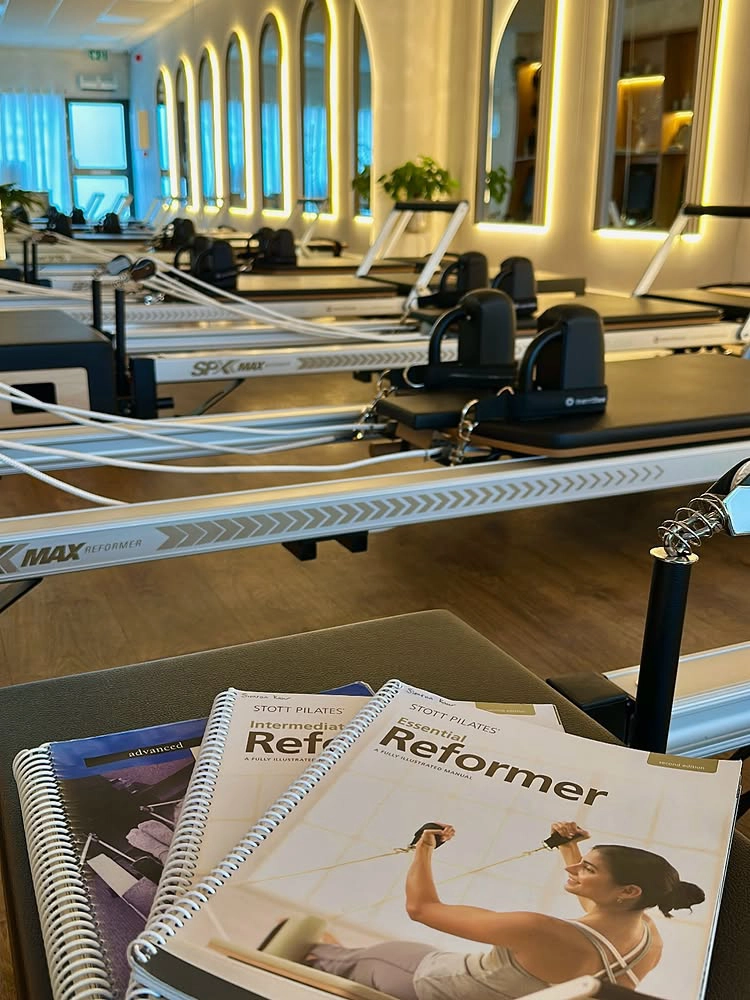
1. What Exactly is the Reformer and Why Does It Look So Complex?
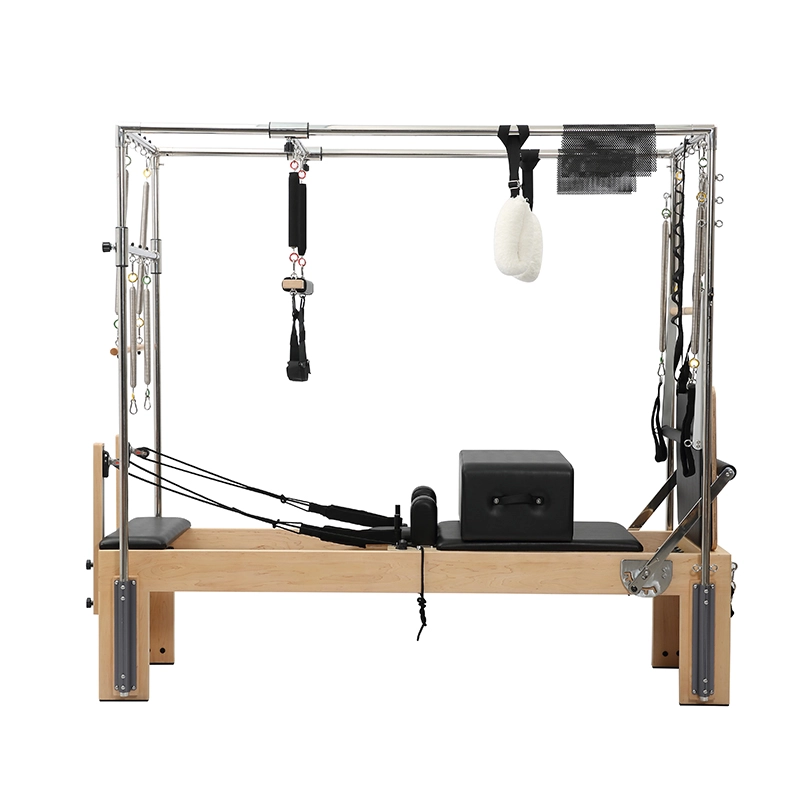
To the uninitiated eye, walking into a Pilates studio can feel like entering a medieval torture chamber. Rows of bed-like frames equipped with metal springs, leather straps, and gliding platforms line the room. However, to understand why this apparatus is perfect for beginners, we must demystify the machine itself.
Anatomia mașinii
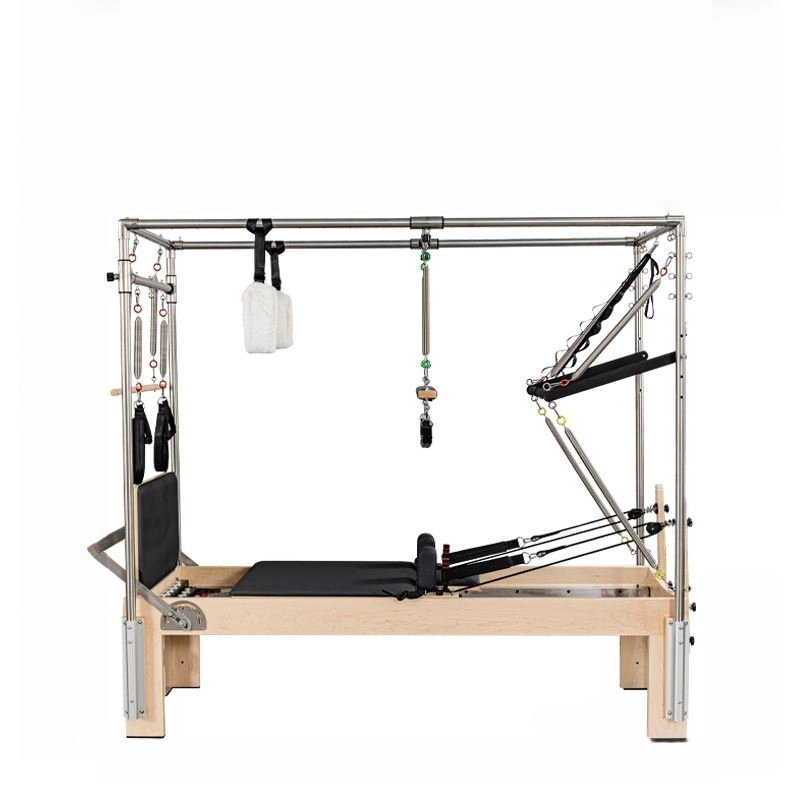
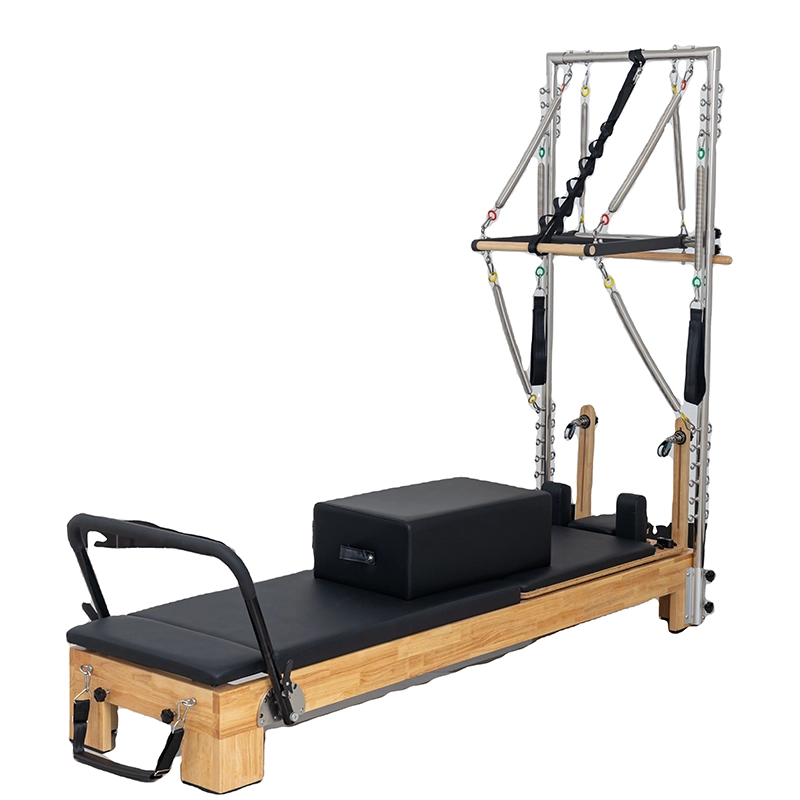
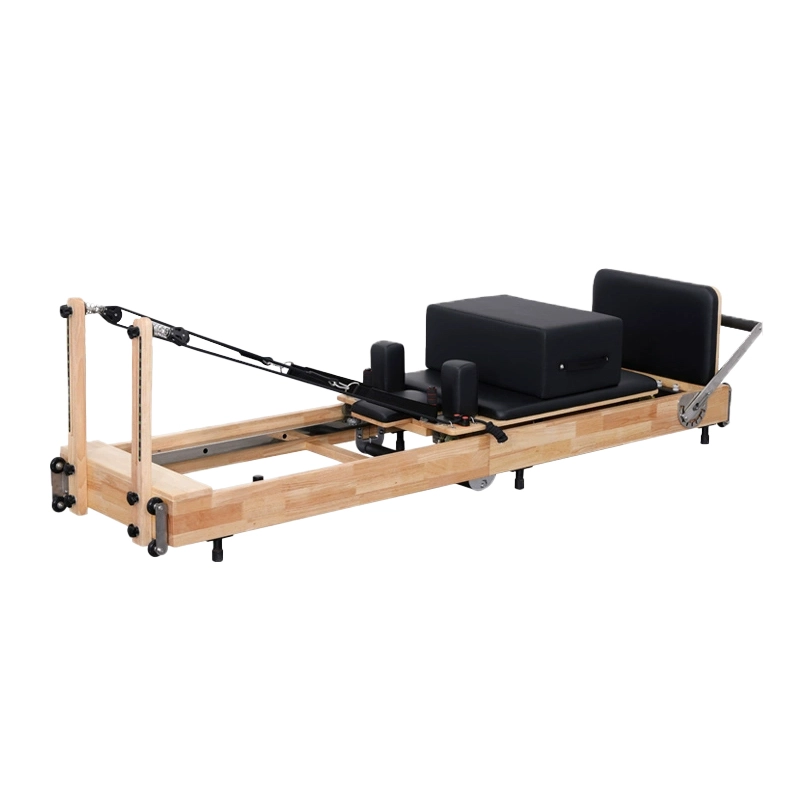
Cel/Cea/Cei/Cele Universal Reformer, designed by Joseph Pilates in the 1920s, was created to “reform” the body. It consists of a carriage that rolls back and forth on wheels within a frame.
- Trăsura: This is the flat, cushioned platform you sit, stand, or lie on. It moves with you, creating an unstable surface that forces your stabilizing muscles to activate.
- Izvoarele: This is the heart of the machine. Usually color-coded for varying tension (e.g., yellow for light, blue for medium, red for heavy), the springs provide progressive resistance. This means they can make an exercise harder (by adding weight) or easier (by providing lift and support).
- The Footbar: An adjustable bar at the end of the frame that you push against with your hands or feet.
- The Straps and Ropes: These connect to pulleys and allow you to move the carriage by pulling with your arms or legs.
Why Complexity Equals Safety
The complexity of the machine is actually its greatest asset for a beginner. In a free-weight gym setting, you are responsible for stabilizing a dumbbell in open space. On a Reformer, the closed-chain environment (where your hands or feet are often fixed to the bar or in straps) guides your range of motion. The ropes tell you if one side of your body is working harder than the other. The carriage tells you if you are controlling the return phase of a movement or just letting gravity take over. It acts as a biofeedback loop, constantly correcting your form in real-time.
2. Why Is the Reformer Often Better for Novices Than Mat Pilates?
A common misconception is that one should “graduate” to the Reformer after mastering Mat Pilates. In reality, the opposite approach is often more beneficial.
Support vs. Gravity
In Mat Pilates, your primary opponent is gravity. If you lack core strength, holding your legs in the air or performing a “teaser” can put immense strain on your hip flexors and lower back. Beginners often cheat these movements because they simply aren’t strong enough yet.
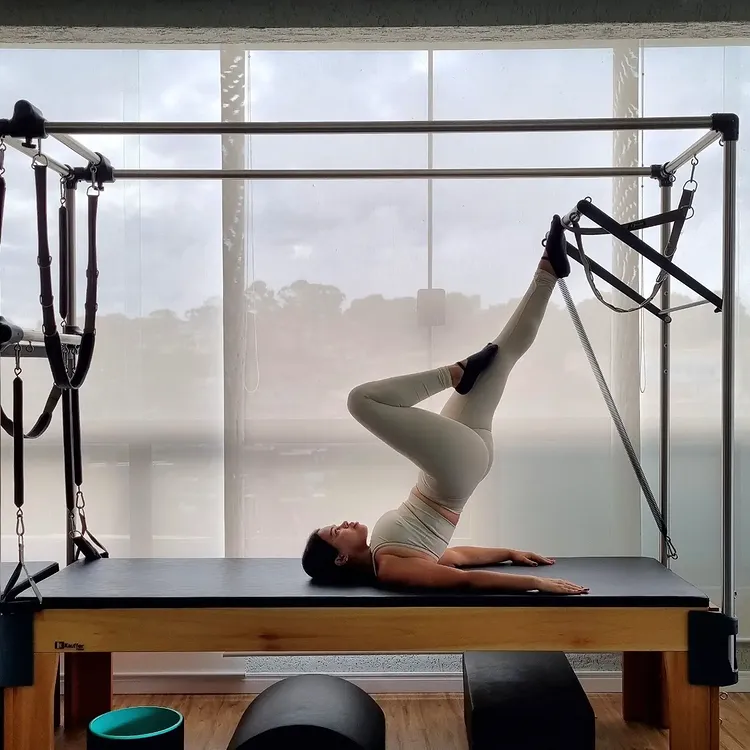
On the Reformator, the springs can be set to support the weight of your legs or torso. This allows a beginner to experience the correct feeling of the exercise without the strain. You can learn to engage the deep abdominals because you aren’t fighting to keep your heavy legs airborne—the straps are holding them for you.
Proprioception and Body Awareness
Beginners often struggle with proprioception—knowing where their body is in space. “Am I straight? Is my pelvis neutral?” The Reformer provides boundaries. The shoulder blocks keep you from sliding; the footbar gives you a reference point; the straps ensure your arms move symmetrically. This physical framework helps the nervous system learn new movement patterns much faster than flailing around on a yoga mat.
Eccentric Muscle Contraction
The Reformer excels at teaching eccentric contraction—strengthening a muscle as it lengthens. Think of resisting the carriage as it returns to the “home” position. This is the phase where most strength building and injury prevention occurs. For beginners, this creates long, lean muscles without the bulk and helps prevent the soreness (DOMS) often associated with other new workout routines.
3. How Does Reformer Pilates Transform a Beginner’s Body?
When a beginner commits to a Reformer practice, the physical changes go far beyond simple calorie burning. The modality offers a holistic overhaul of the musculoskeletal system.
Core Strength: The Powerhouse
Pilates focuses on the “Powerhouse”—the cylinder of muscles wrapping around the torso (transversus abdominis, obliques, pelvic floor, and diaphragm). Unlike crunches which only work the superficial “six-pack” muscles, the Reformer forces the deep stabilizers to fire to keep you balanced on the moving carriage. For beginners, this often alleviates chronic lower back pain within just a few sessions.
We live in a sedentary, tech-driven world. Most beginners enter the studio with “tech neck” (forward head posture) and rounded shoulders. The Reformer strengthens the posterior chain (the muscles on the back of the body), pulling the shoulders back and opening the chest. The cues given by instructors—”lengthen through the crown of the head,” “knit the ribs”—retrain the body to hold itself upright against gravity, making you look and feel taller.
Flexibility without Instability
Stretching can be risky for beginners if they force a position. The Reformer promotes “dynamic flexibility,” which means stretching a muscle while it is active. Because the springs support the limb, you can safely explore a larger range of motion in your hips and hamstrings than you could on the floor. This leads to functional flexibility that improves daily life tasks, like tying shoes or reaching for high shelves.
Low Impact, High Results
The Reformer is a non-weight-bearing (or partial weight-bearing) environment. You can get a rigorous cardio and strength workout while lying on your back. This saves the knees and ankles from the pounding of running or HIIT classes. For beginners who may be carrying extra weight or nursing old sports injuries, this allows for consistent training without the risk of impact-related setbacks.
4. Who Can Participate in Reformer Classes?
One of the most beautiful aspects of Reformer Pilates is its radical inclusivity. It is one of the few fitness modalities where a 20-year-old rugby player and an 80-year-old grandmother can be in the same room, working out on adjacent machines, both getting a challenging workout suited to their needs.
The Sedentary Office Worker
For those who have been inactive for years, the Reformator is the perfect re-entry point. It wakes up dormant muscles (gluteal amnesia is real!) without requiring the cardiovascular stamina of a spin class.
Post-Rehab and Injury Recovery
Physiotherapists utilize clinical Pilates for a reason. If a beginner has a bad knee, the instructor can adjust the footbar angle or spring tension to ensure the knee is strengthened without compression. If a student has a shoulder injury, the ropes allow for range-of-motion work that is controlled and safe. Note: Always consult a doctor before starting.
Pre and Post-Natal
With specific modifications (such as using a wedge to elevate the back), the Reformer is wonderful for pregnant women. It helps support the changing center of gravity and strengthens the pelvic floor. Post-partum, it is the gold standard for knitting the abdominals back together (healing diastasis recti).
The “Inflexible” Guy
There is a myth that Pilates is for flexible dancers. In reality, if you can’t touch your toes, you are the perfect candidate. Men often have tighter hips and shoulders due to higher muscle mass in certain areas. The Reformer helps balance this strength with length.
5. When Can a Beginner Expect to See Results?
Joseph Pilates a spus faimoasa afirmație: “În 10 ședințe vei simți diferența, în 20 vei vedea diferența, iar în 30 vei avea un corp complet nou.” While this is a generalization, it holds truth regarding the timeline of progression.
The First Month (Sessions 1-8)
- Neuromuscular Adaptation: The first few weeks are about brain-body connection. You might feel uncoordinated. This is normal.
- Feeling: You will feel muscles you didn’t know you had. You will likely walk out of class feeling “taller” and more open in the chest.
- Frequency: Aim for 2-3 times a week. Consistency is more important than intensity at this stage.
The Second Month (Sessions 9-16)
- Strength Gains: You will notice you need heavier springs to feel the same burn. Planks become easier.
- Posture: Friends might ask if you’ve grown or lost weight because you are standing differently.
- Pain Reduction: Chronic aches in the back and neck usually begin to subside significantly.
Long-Term Lifestyle
Unlike a crash diet or a boot camp, Reformer Pilates is sustainable. Because it is low impact, you can do it for the rest of your life. It is not about “shredding” for summer; it is about building a body that functions efficiently for decades.
6. How Should You Prepare for Your Very First Class?
Stepping into a studio for the first time can be anxiety-inducing. Here is a practical guide to navigating your debut on the carriage.
What to Wear
- Form-fitting clothing: Avoid baggy t-shirts and shorts. The instructor needs to see your spinal alignment and knee position to correct your form. Baggy clothes can also get caught in the springs (a safety hazard). Leggings and a fitted tank top are ideal.
- Grip Socks: Most studios require these for hygiene and safety. They have rubberized soles that prevent you from slipping on the footbar or carriage.
Studio Etiquette
- Arrive Early: Get there 10-15 minutes early. The instructor will need to show you the specific machine safety features (how to change springs, how to adjust the footbar).
- No Phones: Pilates requires deep concentration. Leave the distraction in the locker.
- Clean Up: It is standard practice to wipe down your carriage, shoulder blocks, and footbar with provided antibacterial spray after class.
Communication is Key
Be vocal. If something feels “pinchy” or painful (in a bad way), wave the instructor over immediately. A small adjustment in foot placement or spring tension can change a painful movement into a productive one. Never suffer in silence; the instructor is there to help you, not judge you.
Manage Expectations
You will likely feel confused. You might mix up your left and right. You might get tangled in the ropes once. This is a rite of passage. Laugh it off. No one is watching you; they are too busy trying to keep their own core engaged.
Feature 1: Mat Pilates vs. Reformer Pilates for Beginners
Understanding the distinction helps beginners justify the cost and effort of attending a studio class versus doing a video at home.
| Caracteristică | Pilates pe saltea | Reformator Pilates |
|---|---|---|
| Rezistență primară | Gravity and Body Weight. | Metal springs and pulley systems. |
| Support | Minimal. You must support yourself. | High. The carriage and straps assist movement. |
| Varietate | Limited to floor exercises (mostly). | Endless variations (lying, sitting, standing, kneeling). |
| Feedback | Visual only (mirror or instructor). | Tactile (ropes, springs, carriage movement). |
| Rehab Potential | Moderate. Hard for those with limited mobility. | Excellent. Exercises can be done horizontally to reduce load. |
| Beginner Ease | Harder than it looks. Requires high existing core strength. | Easier to start. The machine assists weak muscles. |
| Cost | Low (can be done at home). | Higher (requires studio and equipment). |
Feature 2: The Beginner’s “Cheat Sheet” Vocabulary
Instructors often use specific terminology. Knowing these words before you go will help you follow the flow of the class.
- The Powerhouse: Your center—abs, lower back, hips, and buttocks. All movement should initiate from here.
- Neutral Spine: The natural curve of your spine where your lower back has a slight arch off the carriage. Used for most closed-chain exercises (feet on bar).
- Imprinted Spine: Pressing the lower back flat into the carriage. Used to protect the back when legs are in the air (open chain).
- Tabletop Legs: Lying on your back with knees bent at 90 degrees and stacked directly over hips. Shins parallel to the ceiling.
- Pilates V: Heels together, toes apart (like a slice of pizza). Activates the inner thighs and glutes.
- C-Curve: A flexion of the spine where you scoop your abs in to create a “C” shape from head to tailbone.
- Cei o sută: A classic warm-up exercise involving pumping the arms while holding the head and legs up.
Întrebări frecvente (FAQ)
1. Will I lose weight doing Reformer Pilates?
This is a nuanced answer. Reformer Pilates is not primarily a cardiovascular calorie-torcher in the same way running or spinning is. However, it changes body composition. By building lean muscle mass, you increase your resting metabolic rate (you burn more calories just sitting still). Furthermore, the core strength and posture improvements often pull the waist in and lift the chest, causing you to look like you’ve dropped a dress size even if the scale hasn’t moved much. For weight loss, combine Pilates with a healthy diet and steady-state cardio.
2. Is Reformer Pilates safe if I have a “bad back”?
Generally, yes—it is often the best thing for a bad back. Most back pain stems from a weak core and poor posture. The Reformer strengthens the support system around the spine. However, the type of back issue matters (e.g., herniated disc vs. stenosis vs. general strain). You must inform your instructor before class. They may tell you to avoid “flexion” (rounding the spine) or “extension” (arching) depending on your specific pathology.
3. I am very uncoordinated. Will I fall off the machine?
It is a very common fear, but falling off a Reformer is extremely rare. The carriage is low to the ground, and the movements are controlled and deliberate, not fast and ballistic. The springs provide tension that actually stabilizes you. While you might feel wobbly or shaky (the “Pilates shake” is a badge of honor!), the equipment is designed to keep you centered. Start with a Level 1 or Foundation class where the pace is slow and focused on setup.
Concluzie
Este Reformator Pilates good for beginners? It is exceptional. It offers a unique blend of support and challenge that is difficult to replicate with any other fitness modality. It bridges the gap between rehabilitation and athletic conditioning, making it a safe harbor for those starting their fitness journey, yet a challenge for even the most seasoned athletes.
By providing a structured environment where proper form is prioritized over heavy lifting, the Reformer allows beginners to build a solid foundation of strength, alignment, and body awareness. While the springs and pulleys may seem foreign at first, they quickly become your greatest allies in discovering what your body is truly capable of.
If you are hesitating, remember that every expert was once a beginner. The Reformer is waiting to support you—quite literally—every step of the way. Book that introductory class, put on your grip socks, and prepare to feel muscles you never knew existed. Your future self, with better posture and a stronger core, will thank you.
 English (United States)
  English (Canada)
  English (Australia)
  English (New Zealand)
  English (UK)
  Arabic
  Bulgarian
  Czech
Czech  Danish
  Greek
Greek  Spanish
  Ukrainian
  Turkish
  Thai
Thai  Swedish
  Serbian
  Slovenian
  Slovak
  Russian
  Romanian
  Portuguese (Portugal)
  Portuguese (Brazil)
  Dutch
Dutch  Estonian
  Finnish
  French
  Hindi
Hindi  Croatian
  Indonesian
  Icelandic
  Italian
  Japanese
  Georgian
  German
  Lithuanian
  Polish
  Korean
  Uzbek
Uzbek  Hungarian
  Malay
Malay