
Reformer Pilates is exceptionally beneficial for managing and rehabilitating a bulging disc, provided it is approached with caution, proper technique, and professional guidance. While the condition of a bulging disc can be debilitating and painful, the Reformer offers a unique environment where the spine is supported by the carriage and the load is managed by springs rather than gravity alone. This allows for the strengthening of the deep stabilizing muscles—specifically the transversus abdominis and multifidus—without placing undue compressive force on the compromised spinal discs. However, it is not a free-for-all; specific protocols must be followed to ensure safety, as improper form can exacerbate the injury. When executed correctly, Reformer Pilates acts as a powerful tool to decompress the spine, restore alignment, and build a “corset” of muscle that protects the back from future injury.
1. Why Is Reformer Pilates Considered the Gold Standard for Spinal Rehabilitation?
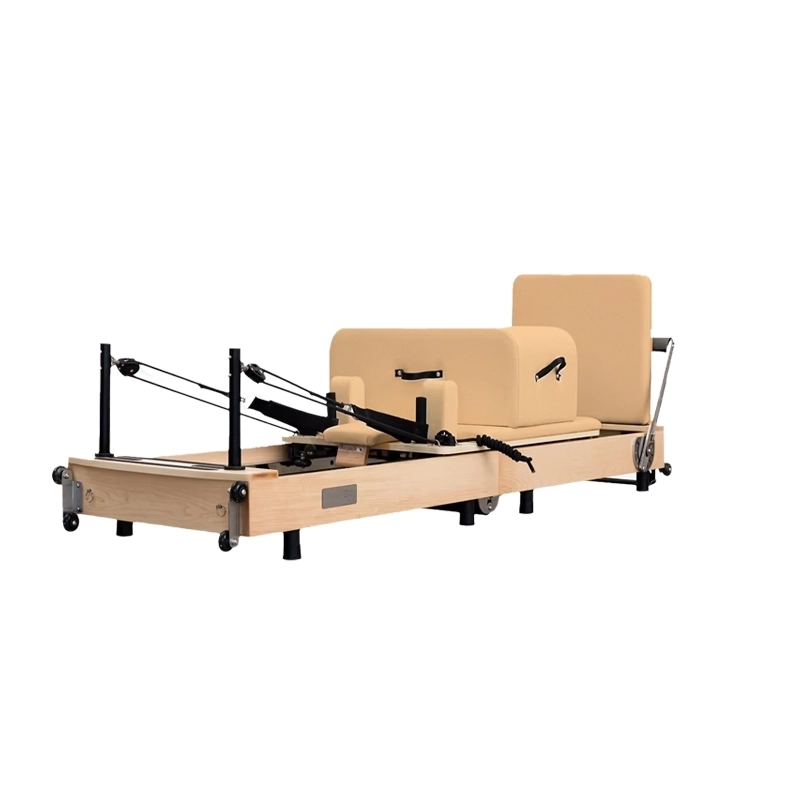
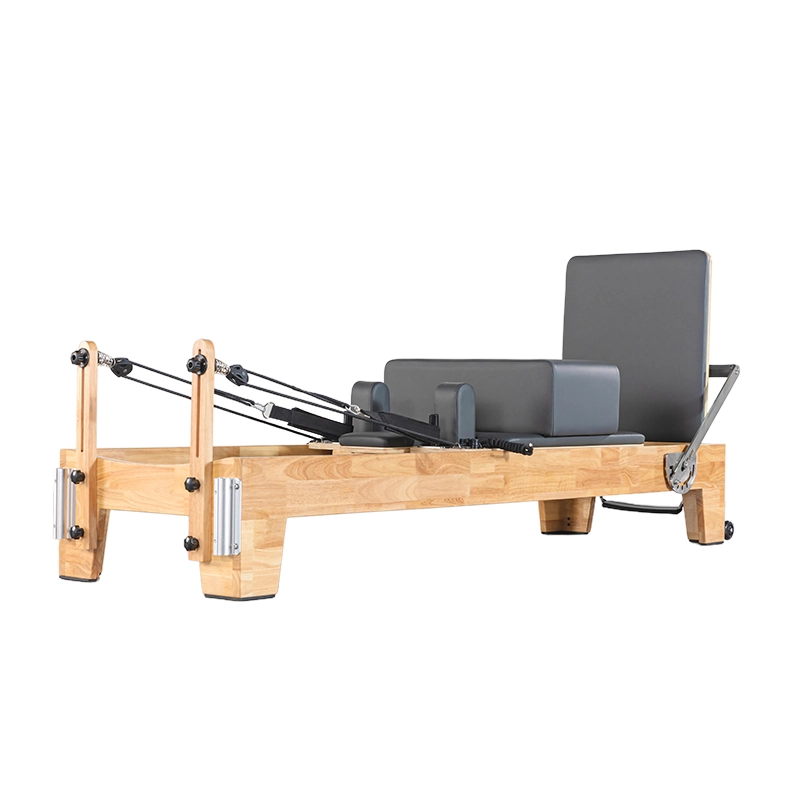
In recent years, Reformer Pilates has exploded in popularity, transitioning from a niche practice for dancers to a mainstream fitness phenomenon visible on every social media feed. While the aesthetic benefits of a toned physique are appealing, the medical community—including orthopedic surgeons and physical therapists—often champions the Reformer for a different reason: spinal health.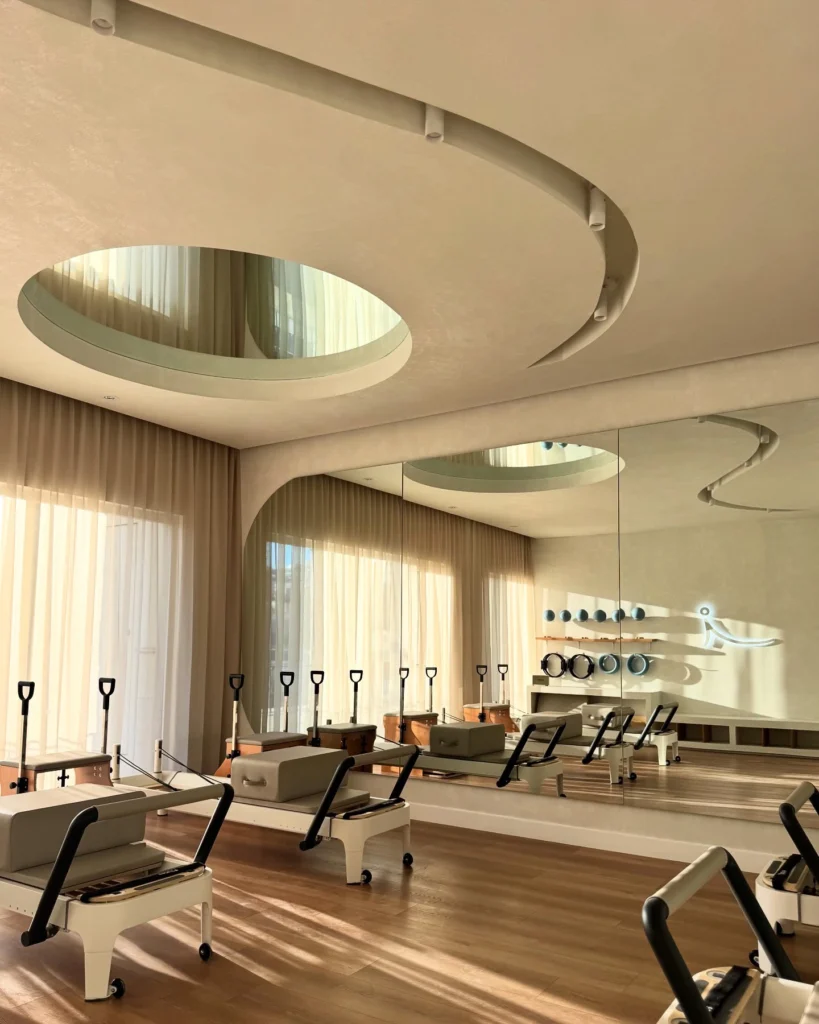
The Mechanics of Support vs. Gravity
To understand why the Reformer is superior to many other forms of exercise for a bulging disc, one must look at the physics of the machine. When suffering from a disc injury, gravity is often the enemy. Standing, walking, or even sitting compresses the spine, potentially squeezing the gelatinous center of the disc further out against the nerve root.
On the Reformer, much of the work is performed in a supine position (lying on the back). In this position, the spine is in a non-weight-bearing state. The carriage supports the torso, head, and pelvis. This allows the individual to engage the muscles of the arms, legs, and core without the vertical compression of gravity acting on the lumbar vertebrae. It creates a safe “closed chain” environment where the body can move and strengthen without the immediate threat of pain caused by vertical loading.
The Role of Spring Resistance
Unlike dumbbells or kettlebells, which rely on dead weight, the Reformer uses springs. Spring resistance is dynamic. It increases as the spring is stretched and creates a need for control as the spring retracts. This serves two vital purposes for a bulging disc:
- Eccentric Strengthening: The “return” phase of a movement (resisting the springs as they close) builds eccentric strength. This lengthens the muscles while strengthening them, preventing the compressive “shortening” that often plagues back pain sufferers.
- Stability Feedback: If a user has a muscular imbalance—for example, if the right side of the back is protecting the injury and the left side is weak—the springs will wobble or the carriage will rattle. This provides immediate biofeedback, forcing the user to correct their alignment and engage the deep stabilizers to create a smooth motion.
Decompression and Traction
One of the unique features of the Reformer is its ability to create traction. Exercises that involve pulling straps with the arms or pushing the carriage with the legs can actually create space between the vertebrae. For a bulging disc, which is essentially a compression injury, this gentle distraction (pulling apart) can offer immediate relief by reducing the pressure on the nerve root.
2. What Exactly Is a Bulging Disc and How Does Movement Affect It?
Before diving deeper into the exercises, it is crucial to understand the pathology being treated. The spine is made up of stacked vertebrae separated by shock-absorbing discs. These discs have a tough outer layer (annulus fibrosus) and a soft, jelly-like center (nucleus pulposus).
A “bulge” occurs when the tough outer layer weakens, allowing the inner jelly to push outward, distorting the shape of the disc. If it pushes far enough, it can press on the nerves exiting the spine, causing pain, numbness, or weakness in the legs (sciatica).
The “Motion is Lotion” Philosophy
Historically, doctors prescribed bed rest for back pain. We now know this is detrimental. Prolonged inactivity causes the stabilizing muscles to atrophy (waste away), leaving the spine even more vulnerable. The current medical consensus is that controlled movement is essential.
However, the type of movement matters immensely.
- Flexion (Rounding forward): For most posterior disc bulges (the most common type), bending forward squeezes the front of the vertebrae together, pushing the disc further backward into the nerve. This is often a trigger for pain.
- Extension (Arching back): For some, this brings relief, but for others with conditions like stenosis, it causes pain.
- Rotation (Twisting): Uncontrolled twisting, especially under load, creates a shearing force that can tear the disc further.
Reformer Pilates is effective because it teaches dissociation. It teaches you how to move your hip joints and shoulder joints without moving your spine. By keeping the spine in a “neutral” zone while mobilizing the limbs, you increase blood flow and strength without irritating the bulge.
3. How Do Specific Breathing Techniques Protect the Injured Spine?
When dealing with a herniated or bulging disc, breathing is not just about oxygen intake; it is a mechanical tool for spinal stabilization. The prompt highlights two critical techniques: the Abdominal Drawing-In Maneuver (ADIM) en de Valsalva Maneuver (or management of Intra-Abdominal Pressure). Mastering these is the prerequisite for any movement.
The Abdominal Drawing-In Maneuver (ADIM)
This technique targets the Transversus Abdominis (TVA). The TVA is the deepest layer of abdominal muscle, wrapping horizontally around the waist like a corset.
- The Problem: In many people with back pain, the TVA goes “offline.” It fails to fire before movement occurs.
- De oplossing: The ADIM involves gently drawing the navel toward the spine without moving the pelvis or holding the breath.
- Visualization: Imagine trying to zip up a pair of tight jeans. You pull the lower belly in away from the zipper.
- Function: When the TVA contracts, it compresses the abdominal contents and tightens the fascia around the lower back, creating a rigid cylinder of support. This “internal splint” prevents the vertebrae from shifting during exercise.
Managing Intra-Abdominal Pressure (The “Valsalva” Context)
While the medical “Valsalva Maneuver” often implies holding the breath to the point of strain (which is generally avoided in fitness), in the context of lifting and heavy stabilization, it refers to creating Intra-Abdominal Pressure (IAP).
- The Mechanism: By inhaling deeply and depressing the diaphragm while contracting the pelvic floor and abs, you create a pressurized balloon inside your abdomen.
- Application: For a bulging disc patient, learning to regulate this pressure is key. You don’t want to hold your breath until you turn blue, but you do want to use the breath to brace the spine during the hardest part of an effort.
- Pilates Adaptation: In Reformer Pilates, we use a controlled exhalation. As you push the carriage (exertion), you exhale forcefully through pursed lips. This triggers an automatic contraction of the deep core, increasing IAP enough to protect the disc without spiking blood pressure.
These techniques must be practiced in isolation first—lying on the mat or reformer—before adding the load of springs. If you cannot breathe and brace while still, you cannot do it while moving.
4. Who Should You Trust to Guide Your Rehabilitation Journey?
The diagnosis of a bulging disc moves you from the category of “general fitness” to “clinical population.” This shift requires a change in who you trust with your body. Not all Pilates is created equal, and not all instructors are equipped to handle spinal pathologies.
The Danger of the “Fitness” Approach
In large group classes (often called “Megaformer” or “Power Pilates”), the focus is frequently on intensity, speed, and muscle burn. The goal is caloric expenditure. For a healthy body, this is fine. For a bulging disc, it is dangerous. These classes often utilize rapid transitions, heavy loads, and complex movements that require a healthy spine to execute safely.
The Clinical Pilates Distinction
You must seek out Clinical Pilates or instructors certified in rehabilitative protocols.
- Physiotherapists: Many physical therapy clinics have Reformers. This is the safest starting point. A physio understands the exact angle of your bulge and the contraindications.
- Certified Rehabilitation Specialists: Look for instructors with comprehensive certification (500+ hours) and specific continuing education in spinal pathologies.
The Role of the Physician
Before stepping into a studio, clearance from a spine specialist or orthopedic surgeon is non-negotiable. They can provide an MRI report indicating the direction of the bulge (e.g., L4-L5 posterior-lateral herniation). This detail is gold for your instructor. Knowing the direction of the bulge tells the instructor exactly which movements (like flexion or extension) to avoid.
5. Where Is the Safe Range of Motion for a Compromised Back?
One of the most critical concepts in rehabilitating a bulging disc is establishing a Safe Range of Motion (ROM). The philosophy of “no pain, no gain” must be completely abandoned. Instead, the focus shifts to “pain-free precision.”
Finding “Neutral Spine”
The “Neutral Spine” is the position where the spine is most resilient and the discs are under the least amount of asymmetric pressure.
- The Position: Lying on the Reformer, there should be a small, natural curve in the lower back—enough to slip a few fingers under, but not a whole hand. The tailbone should be heavy on the carriage.
- The Challenge: The goal of Reformer Pilates is to maintain this neutral shape while the legs and arms move. If you lower your legs and your back arches (pops off the carriage), you have lost neutral and compromised the disc. If you pull your knees in and your tailbone tucks under, you have flexed the spine and potentially aggravated the bulge.
The Concept of the “Functional Range”
Every individual will have a different functional range.
- Restricted Hip Flexion: A person with a bulging disc may only be able to lift their leg to 45 degrees before the pelvis starts to tuck (flex). Therefore, 45 degrees is their limit. Going to 90 degrees would cause injury.
- Restricted Rotation: While healthy spines love rotation, a bulging disc is vulnerable to shearing forces. Initial rehab may involve zero rotation (anti-rotation exercises), progressing to very small, controlled ranges only once stability is proven.
The Reformer is excellent for defining these ranges because the straps and footbar provide hard stops and tactile feedback. You learn exactly where your safe zone is, and you work strictly within it until your strength allows you to expand it.
6. When Is It Time to Modify or Change Your Routine?
A common pitfall in back pain recovery is either doing too much too soon, or getting stuck doing too little for too long. The prompt notes that practicing the same program for more than 1.5 to 2 months renders it obsolete.
The Principle of Adaptation
The human body is an adaptation machine. When you first learn a rehabilitation exercise—say, a simple pelvic tilt or a leg slide—your nervous system works hard to coordinate it. After a few weeks, the movement becomes efficient. The muscles no longer need to work as hard to perform the same task.
- Stagnation: If you continue doing the exact same routine for 3 months, you are no longer strengthening the back; you are merely maintaining a baseline. For a bulging disc to heal and for the spine to become robust, the tissues need Progressive Overload.
Progressieve overbelasting van de hervormer
This does not necessarily mean adding heavier springs. In Pilates, progression can look like:
- Decreasing Base of Support: Moving from a wide stance to a narrow stance.
- Reducing Assistance: Using lighter springs on stability exercises makes the core work harder to control the wobble.
- Complexity: Adding arm movements to leg movements (coordination challenges).
- Endurance: Increasing the time under tension.
The Weekly vs. Monthly Check-in
- Acute Phase (Weeks 1-4): You should be consulting your instructor or physio weekly. Symptoms fluctuate rapidly, and the program needs micro-adjustments.
- Sub-Acute/Chronic Phase (Month 2+): A check-in every 3-4 weeks is vital to update the program. The instructor needs to see if your neutral spine is stronger, if your hamstring flexibility has improved, and if you are ready for the next level of challenge. Without this progression, recovery stalls.
The “Don’ts” – The Hidden Dangers of Stretching and Massage
When we are in pain, our instinct is often to “rub it” or “stretch it.” It feels intuitive that a tight back needs to be loosened. However, regarding a bulging disc, this intuition can be misleading and even harmful.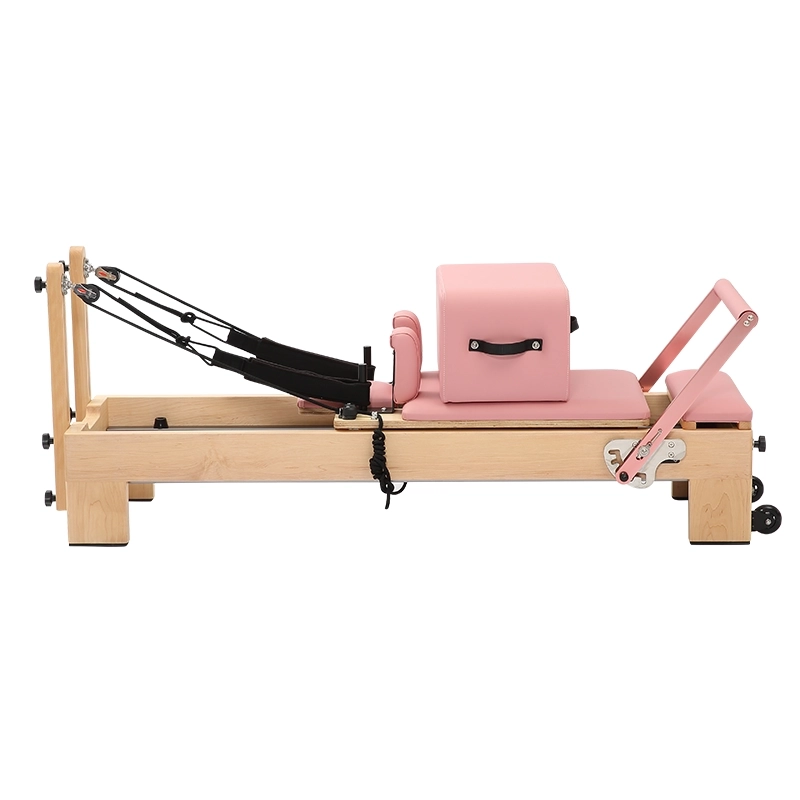
The Myth of Stretching the Pain Away
When a disc bulges, the muscles surrounding the spine often go into spasm. This is a protective mechanism. The brain senses instability in the spine and orders the muscles to clamp down to form a natural splint, preventing movement that could cause further damage.
- The Danger: If you aggressively stretch these muscles (for example, forcing a deep forward fold or a twist), you are effectively tearing down the body’s only line of defense. You might temporarily feel “loose,” but you have removed the stability, leaving the damaged disc vulnerable to shifting. This often results in a “rebound effect,” where the pain returns with greater intensity hours later.
The Risk of Fascia Manipulation
Similarly, deep tissue massage or aggressive foam rolling directly over the area of instability can be counterproductive in the acute stages.
- Hypermobility: Some people have bulging discs because their ligaments are too loose (hypermobility). Making the tissues meer pliable through passive stretching or release work only adds to the instability.
- The Pilates Solution: Instead of passive stretching (where gravity pulls you), Reformer Pilates uses active mobility. You lengthen the muscle by engaging the opposing muscle (reciprocal inhibition). For example, engaging the glutes to actively open the front of the hips. This creates length without sacrificing stability.
A Guide to Safe vs. Risky Reformer Exercises
Navigating the Reformer repertoire requires a filter: “Is this stabilizing or shearing?” Here is a breakdown of what generally works and what to avoid.
Safe / Recommended Exercises (The “Green Light”)
- Footwork (in Neutral): Lying on the back, feet on the bar. This strengthens the legs and glutes—the engines that should be doing the lifting in daily life—while the spine remains supported and static.
- Supine Arms in Straps: Lying on the back, pulling the ropes down to the hips. This engages the lats and the mid-back, which help stabilize the lower back. It also teaches core engagement without spinal movement.
- Knee Stretches (Flat Back): Kneeling on the carriage, hands on the bar, moving the carriage with the legs. This is a crucial stabilization exercise that teaches the core to hold the spine rigid while the hips flex and extend.
- Side-Lying Leg Series: Lying on the side (with proper head support), strap on the foot. This targets the Glute Medius. Weak glutes are a primary contributor to back pain; strengthening them stabilizes the pelvis.
Risky / Contraindicated Exercises (The “Red Light”)
- Short Box Round Back: This involves sitting on a box and rounding the spine forward and back. For a posterior disc bulge, this loaded flexion is the mechanism of injury and should be avoided.
- The Saw / Corkscrew: These involve deep rotation combined with flexion. This twisting motion creates shearing forces that can grind the disc.
- Rolling Like a Ball / Teaser: These are advanced mat/reformer hybrid moves that put immense pressure on the lumbar spine and require deep flexion.
- Heavy Overhead Pressing: While not always impossible, loading the spine vertically (sitting upright and pushing heavy straps overhead) can compress the discs.
The Psychological Aspect – Overcoming Kinesiophobia
Pain changes the brain. After a disc injury, it is common to develop Kinesiophobia, or the fear of movement. Patients often become stiff and robotic, terrified that bending to pick up a pencil will “blow out” their back again.
Reformer Pilates as a “Safe Container”
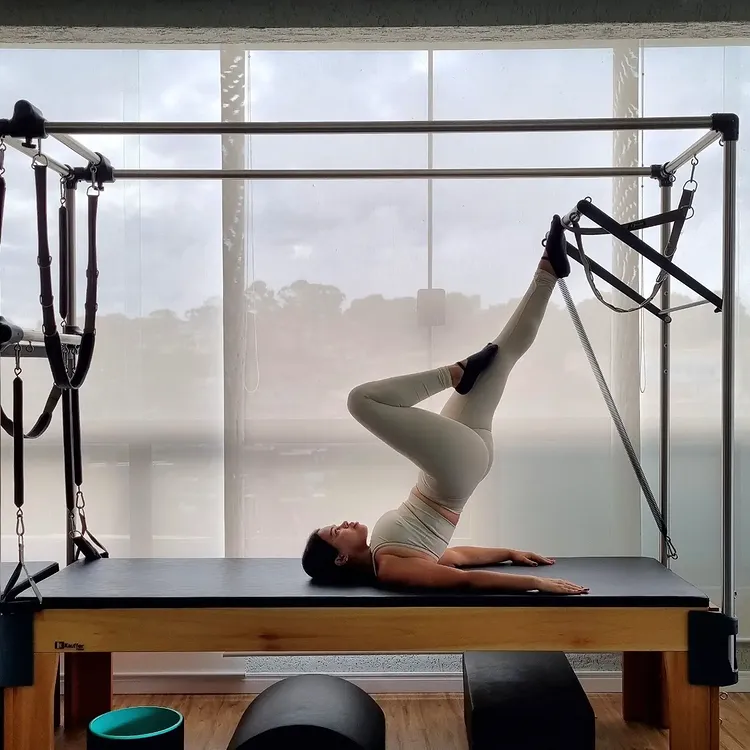
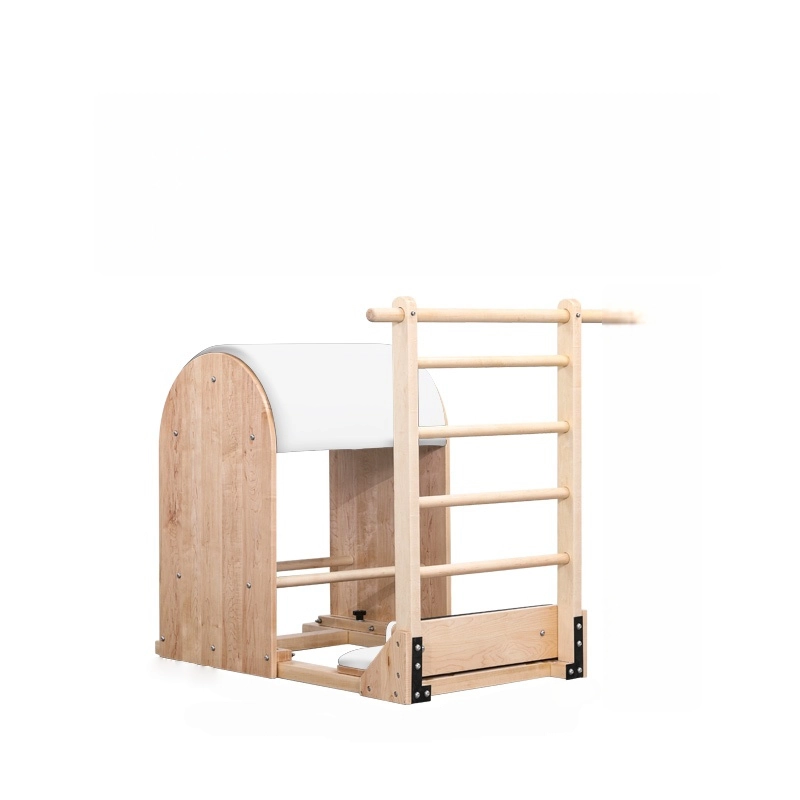
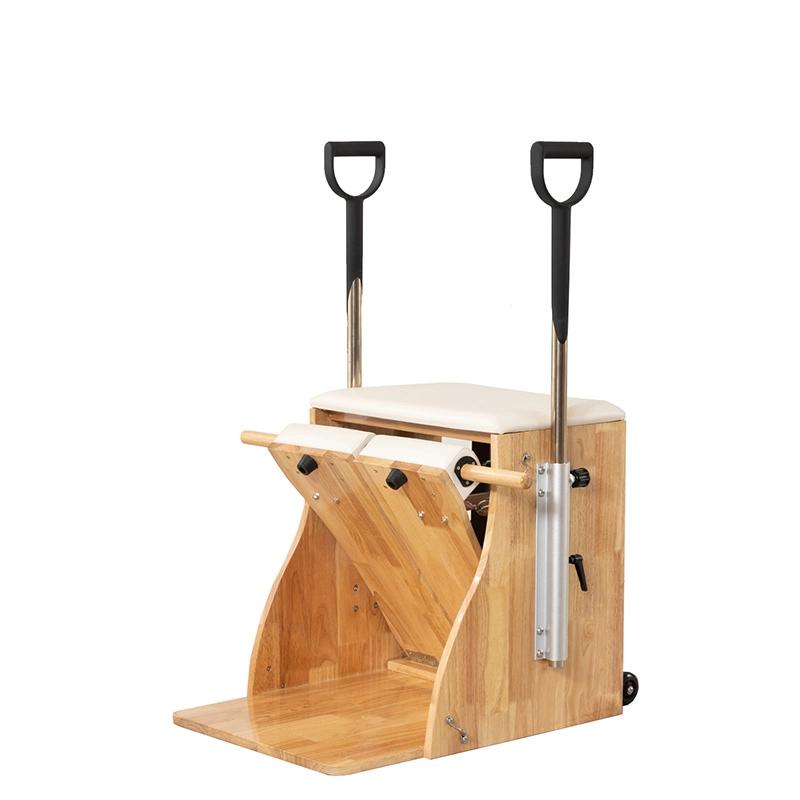
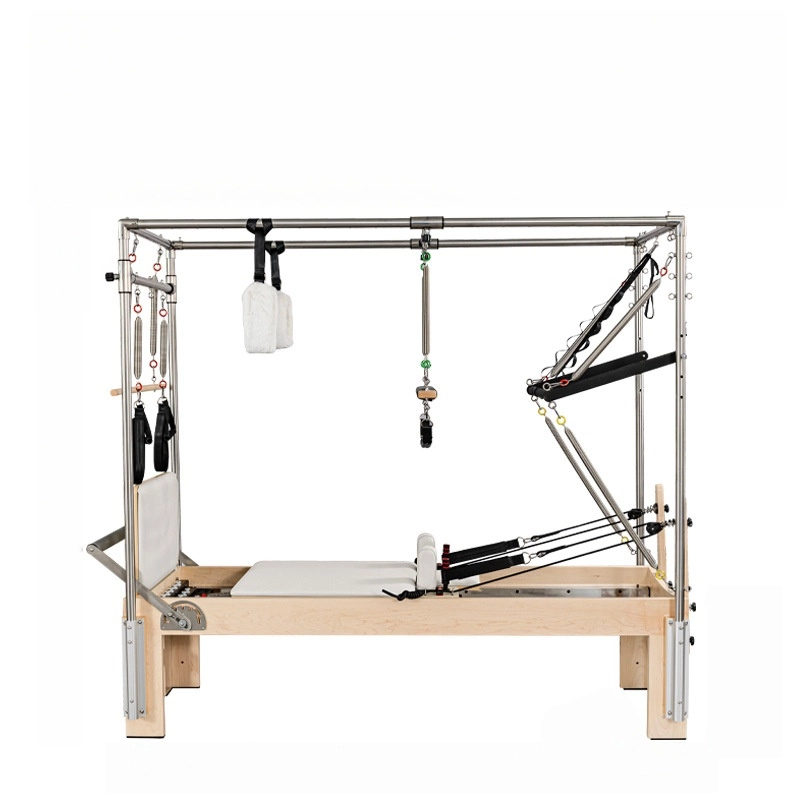
The Reformer provides a psychological safety net. It’s often used alongside equipment like the Wunda-stoel, Cadillac (Trapezetafel), En Laddervat to provide comprehensive rehabilitation.
- Support: Knowing the machine is holding you allows the nervous system to down-regulate. You aren’t fighting gravity alone.
- Controlled Environment: Unlike a gym with free weights that can swing or drop, the Reformer’s path of motion is linear and guided. This predictability helps reduce the brain’s threat response.
- Success Spirals: Successfully performing a movement on the Reformer without pain rewires the brain. It proves to the nervous system that movement is safe. This confidence translates to daily life, reducing the guarding and tension that contribute to chronic pain.
Veelgestelde vragen
1. Can I practice Reformer Pilates while my disc is currently herniated and painful?
Timing is everything. In the acute phase (usually the first 3 to 7 days after injury), when inflammation is at its peak and every movement causes spasms, rest and gentle walking are usually preferred. Reformer Pilates is generally introduced in the sub-acute phase, once the initial severe muscle spasms have subsided and the pain is manageable.
Starting too soon can increase inflammation. However, once you can lie down and get up comfortably, Reformer Pilates is excellent for mobilization. Always start with a 1-on-1 session, never a group class, during this phase.
2. Is Mat Pilates or Reformer Pilates better for a bulging disc?
While both are beneficial, the Reformer is generally superior for the early stages of rehab for a bulging disc.
- Mat Pilates: Requires you to support your own body weight against gravity. For a weak core, this often leads to compensation (hip grippers taking over, neck straining). Exercises like “The Hundred” on the mat can put too much lever-load on a vulnerable back.
- Reformer Pilates: The springs can be used for assistance. They can help hold the weight of your legs, taking the load off the back. The elevated carriage is also easier to get on and off than the floor. The feedback from the machine ensures you are staying in alignment, whereas on a mat, it is easy to “cheat” without realizing it.
3. Will the exercises hurt? Understanding “Good” vs. “Bad” Pain.
Rehabilitation should not be excruciating. There is a distinction you must learn:
- Good Pain: The feeling of muscles working, burning, or fatiguing (e.g., your abs shaking or your glutes burning). This is desirable.
- Bad Pain: Sharp, shooting, electrical, or searing pain. Specifically, pain that travels down the leg (radiculopathy) or causes numbness/tingling.
If you experience “Bad Pain” during any exercise, stop immediately. It means the nerve is being compressed. The exercise must be modified or abandoned. A dull ache or stiffness is often normal when starting, but sharp nerve pain is a red flag.
The Bottom Line
Reformer Pilates offers a pathway from pain to performance for those suffering from a bulging disc. By providing a supportive environment that prioritizes spinal neutrality, deep core engagement, and controlled mobility, it addresses the root causes of back instability. It moves beyond the outdated advice of bed rest and offers an active solution to managing spinal health.
However, the machine is only as good as the method. Success relies on proper breathing mechanics (ADIM and IAP), strict adherence to safe ranges of motion, and the wisdom to avoid exercises that compromise the disc. It requires a shift in mindset from “working out” to “rehabilitating.”
If you have a bulging disc, do not fear movement. Fear uncontrolled movement. Embrace the precision of the Hervormer, seek qualified guidance, and trust the process. With consistency and care, you can build a spine that is not only healed but stronger and more resilient than it was before the injury.

 English (United States)
  English (Canada)
  English (Australia)
  English (New Zealand)
  English (UK)
  Arabic
  Bulgarian
  Czech
Czech  Danish
  Greek
Greek  Spanish
  Ukrainian
  Turkish
  Thai
Thai  Swedish
  Serbian
  Slovenian
  Slovak
  Russian
  Romanian
  Portuguese (Portugal)
  Portuguese (Brazil)
  Dutch
Dutch  Estonian
  Finnish
  French
  Hindi
Hindi  Croatian
  Indonesian
  Icelandic
  Italian
  Japanese
  Georgian
  German
  Lithuanian
  Polish
  Korean
  Uzbek
Uzbek  Hungarian
  Malay
Malay