
Pilates reformer can effectively replace weight training for the vast majority of fitness goals, specifically those related to muscular endurance, core stability, functional movement, and general hypertrophy; however, for athletes seeking maximal raw power or competitive bodybuilders requiring extreme muscle mass, the reformer serves better as a complementary tool rather than a total replacement.
While Joseph Pilates introduced his methodology roughly a century ago, the popularity of his most famous invention—the Reformer—has exploded in the modern wellness era. This sliding carriage system is no longer just for rehabilitation; it is now widely recognized for its ability to sculpt, tone, and strengthen the human body. As the fitness industry evolves, extensive research continues to validate the critical importance of resistance training for longevity, metabolic health, and mobility. Consequently, a common debate has emerged among fitness enthusiasts: does the spring-loaded resistance of a reformer count as “strength training,” and can it truly take the place of the dumbbell rack? This article delves deep into the biomechanics, physiological adaptations, and practical applications of Reformer Pilates to answer that question comprehensively.
1. What constitutes effective strength training in the modern era?
To understand if Pilates can replace weightlifting, we must first define what “strength training” actually is. At its core, strength training (or resistance training) is any physical activity that induces muscular contraction against an external load to build strength, anaerobic endurance, and skeletal muscle mass.
The American College of Sports Medicine (ACSM) defines the parameters for healthy adults, recommending strength training activities at least two days per week. The standard protocol suggests performing 8 to 12 repetitions of 8 to 10 distinct exercises that target the major muscle groups. The goal is to create a stimulus that forces the body to adapt.
The external resistance used to create this stimulus can come from various sources:
- Gravity-dependent weights: Traditional dumbbells, barbells, kettlebells, and plates.
- Elastic resistance: Resistance bands and tubes.
- Machine-based resistance: Cable pulleys and weight stacks.
- Bodyweight: Calisthenics and suspension training.
- Spring tension: The specific mechanism used in Reformer Pilates.
The Physiology of Adaptation
Regardless of the tool used, the biological mechanism remains the same: Progressive Overload. This is the foundational principle of strength development. For a muscle to grow stronger or larger (hypertrophy), it must be forced to work at a higher capacity than it is accustomed to. This stress causes microscopic tears in the muscle fibers. During rest and recovery, the body repairs these fibers, making them thicker and stronger to handle the load better next time.
In traditional lifting, you achieve progressive overload by adding heavier plates. In Reformer Pilates, overload is achieved by increasing spring tension, reducing stability (making the exercise harder to control), or increasing the time under tension. Therefore, scientifically speaking, if the Reformer provides enough resistance to fatigue the muscle within the desired repetition range, it is, by definition, strength training.
2. How does the Reformer apparatus generate mechanical tension?
The Hervormer is a sophisticated piece of engineering designed to manipulate physics to the user’s advantage. Unlike a dumbbell, which relies on gravity (providing a vertical force vector), the Reformer uses springs to provide resistance in multiple planes of motion.
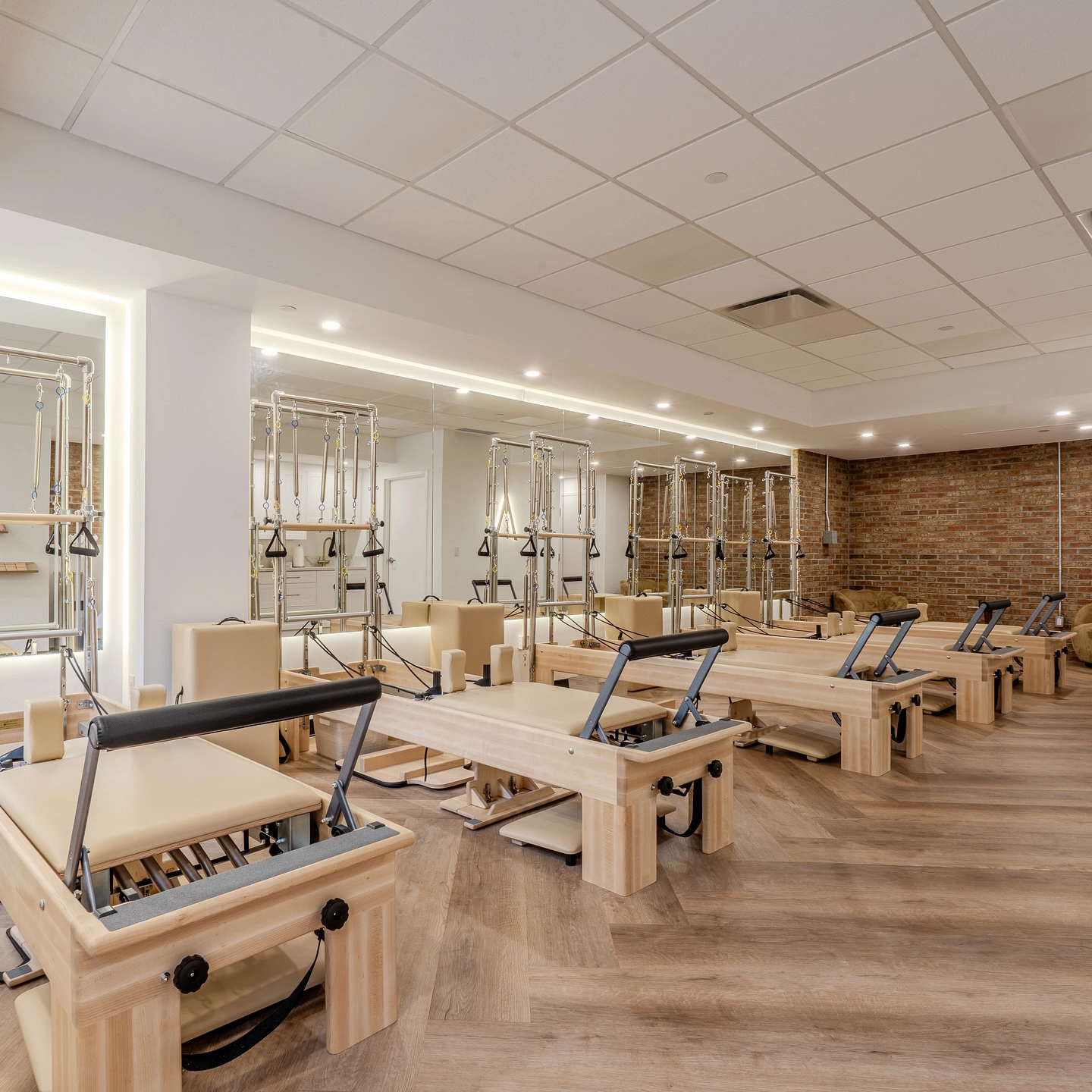
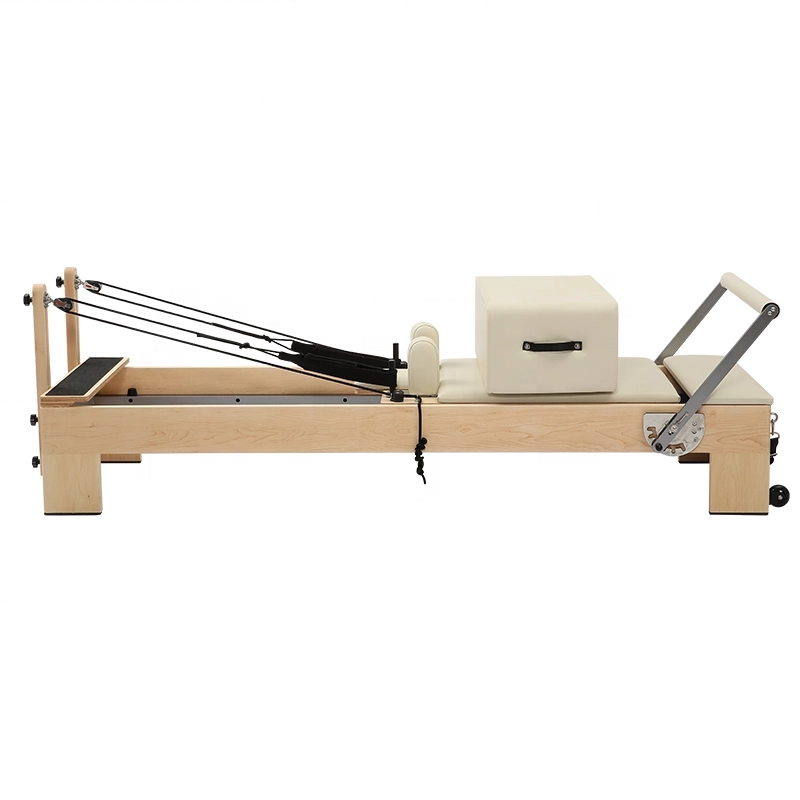
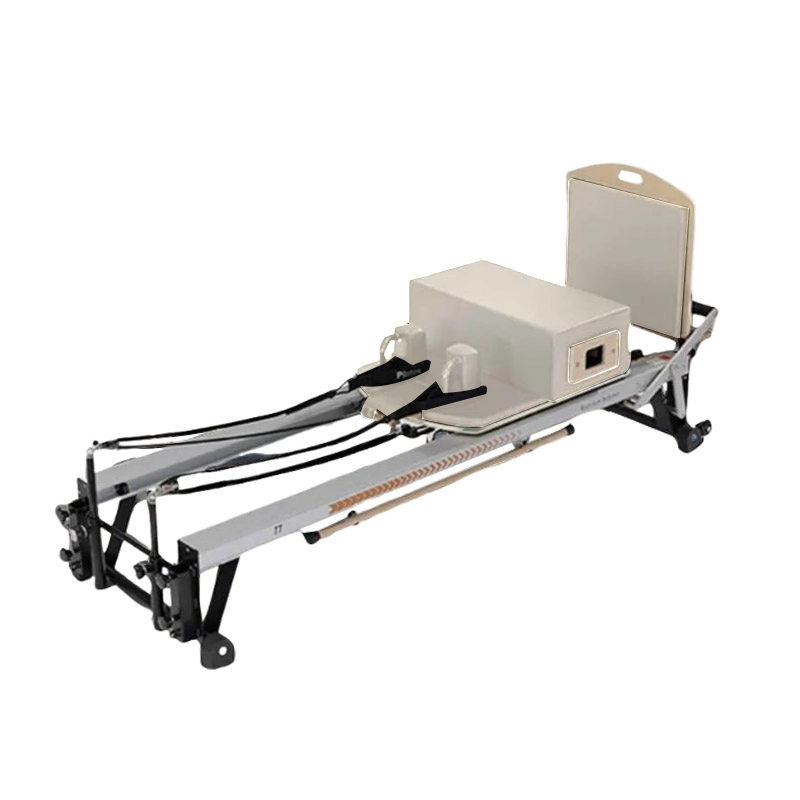
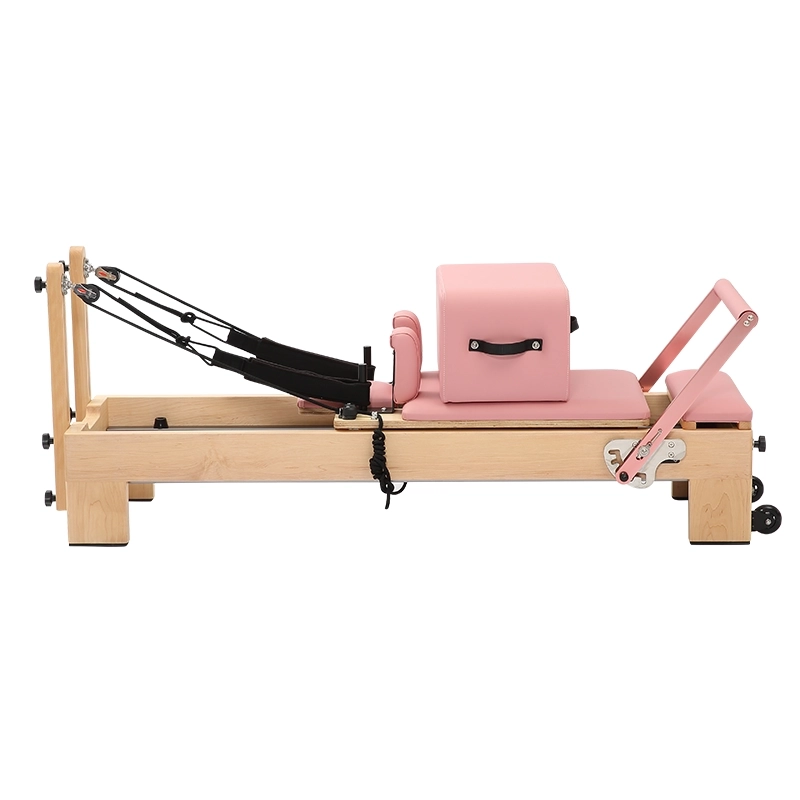
The Anatomy of the Machine
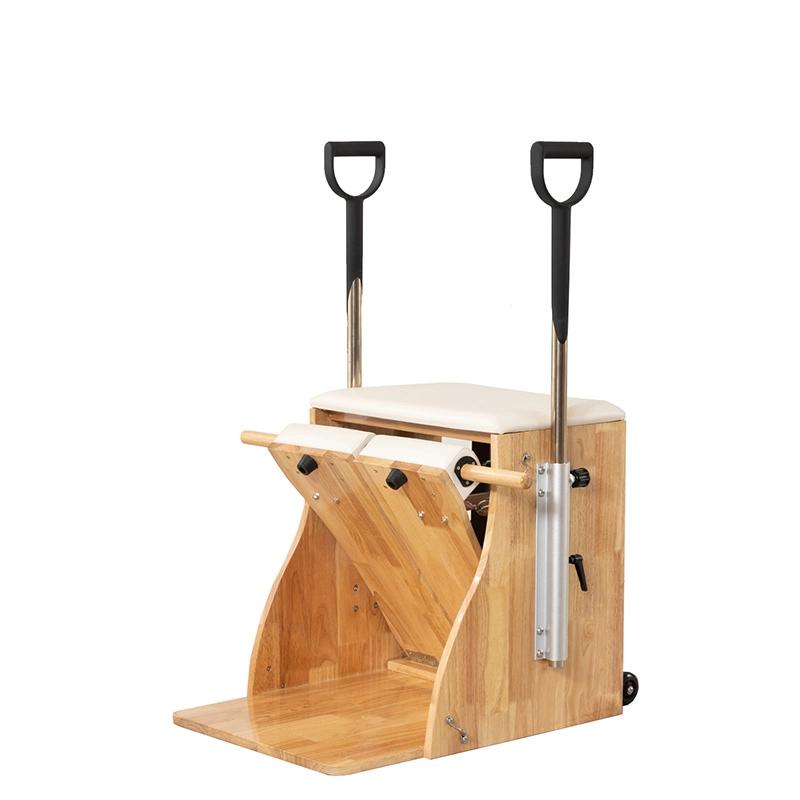
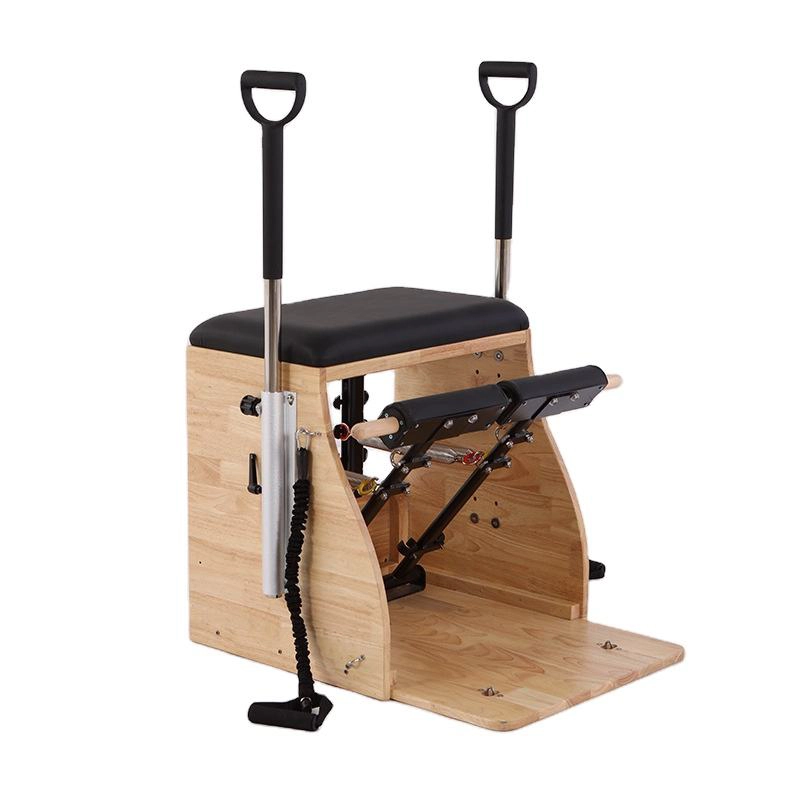
- The Carriage: This is the sliding platform upon which the user sits, stands, kneels, or lies down. It moves along rails, creating an unstable surface that instantly engages the core and stabilizer muscles.
- The Spring System: This is the heart of the resistance. Springs attach the carriage to the frame. Different colors usually denote different tensions (e.g., heavy, medium, light).
- The Footbar: An adjustable bar at the base of the unit used for pushing (leg presses) or supporting the upper body (planks).
- The Strap and Pulley System: Ropes attached to the carriage run through pulleys, allowing the user to pull the carriage with their arms or legs.
Variable vs. Constant Resistance
The most distinct difference between the Reformer and traditional weights is the type of resistance.
- Free Weights (Constant Resistance): A 20lb dumbbell weighs 20lbs at the bottom of a curl and 20lbs at the top. The resistance is constant, though the torque changes based on joint angles.
- Reformer Springs (Variable Resistance): Springs follow Hooke’s Law (F = kx), meaning the resistance increases the further the spring is stretched. As you push the carriage out, the exercise becomes heavier at the end range of motion.

The Eccentric Advantage
Reformer Pilates places a massive emphasis on the eccentric phase of movement (the lengthening of the muscle). For example, when performing a bicep curl on a reformer, you pull the strap (concentric), but you must also slowly control the return of the strap (eccentric) so the carriage doesn’t slam home.
Research, including studies cited in current sports science literature (Ansari et al., 2023), suggests that eccentric training is often superior for building muscle strength and tendon resilience. Because the springs are constantly trying to pull the carriage back, the user cannot “switch off” or use momentum; they must maintain tension throughout the entire cycle. This increased “Time Under Tension” (TUT) is a primary driver of muscle growth and is a key reason why the Reformer can effectively replace traditional weights for many exercisers.
3. Why is Reformer Pilates considered a “functional” alternative to the gym?
When asking if the Reformer can replace weights, we must consider the goal of the training. If the goal is “functional fitness”—the ability to perform daily life activities with ease and without pain—the Reformer is often superior to fixed weight machines.
Multi-Planar Movement
Traditional gym machines often lock the user into a single plane of motion (usually sagittal, moving forward and backward). However, life happens in 3D. We twist to grab groceries, we side-step puddles, and we bend at awkward angles to pick up children. The Reformer allows for movement in all planes:
- Sagittal: Flexion and extension.
- Frontal: Lateral flexion and abduction/adduction.
- Transverse: Rotation.
The Role of Stabilizers
In a leg press machine at the gym, the seat is fixed. You can push hundreds of pounds because your back and hips are stabilized by the chair. On a Reformer, the “floor” (the carriage) is moving. To perform a leg press on a Reformer, you must engage your transverse abdominis, obliques, and pelvic floor just to keep your body steady.
This means that while the absolute load might be lower on a Reformer than a gym leg press, the relative intensity and neuromuscular demand are often higher. You are strengthening the prime movers (quads, glutes) while simultaneously strengthening the deep stabilizers that protect the spine and joints. This functional carryover is why many people feel “stronger” in their daily lives after Pilates, even if they aren’t lifting heavy barbells.
Core-Centric Strength
In traditional weight training, “core day” is often separate. In Pilates, every exercise is a core exercise. The instability of the springs and carriage forces the user to initiate every movement from the “Powerhouse” (the Pilates term for the center of the body). This leads to a type of strength that is integrated and cohesive, rather than isolated.
4. Who benefits most from swapping iron for springs?
While the Reformer is versatile, it serves different populations in different ways. Understanding who benefits most helps clarify if it can be a total replacement for weight training.
The Novice Strength Trainer
For those who have never lifted weights, the gym floor can be intimidating and dangerous. Poor form with a barbell can lead to immediate injury. The Hervormer is an ideal entry point (consistent with ACSM recommendations for machine-based initiation). The tracks of the carriage guide the movement, reducing the risk of going “off path,” while the springs provide a smoother load than clunky metal plates. It builds a foundation of movement patterning that is invaluable.
The Injury-Prone and Rehabilitating
This is the Reformer’s home turf. Because the resistance is low-impact (no jarring of the joints) and the position is often supine (lying down) or seated, it removes axial loading on the spine. People with herniated discs, knee osteoarthritis, or rotator cuff issues can build significant strength on a Reformer in ranges of motion that would be impossible with dumbbells.
The “Stiff” Athlete
Hypertrophy training (bodybuilding) often leads to a loss of flexibility if not counterbalanced with stretching. Pilates builds strength at the end range of motion. This is known as “length-tension.” By strengthening the muscle while it is elongated, the Reformer improves flexibility and strength simultaneously. For stiff athletes (runners, cyclists), replacing some weight sessions with Reformer work can prevent injuries related to tightness.
The Intermediate Fitness Enthusiast
For the general population looking to look good, feel good, and stay healthy, the Reformer is a complete solution. It provides enough resistance to tone muscles, burn calories, and improve posture. For this demographic, yes, the Hervormer can 100% replace the gym.
5. When is the Reformer insufficient for strength goals?
To provide a balanced view, we must address the limitations. There are specific physiological scenarios where a Pilates Reformer cannot mathematically or mechanically replace heavy weight training.
The Ceiling of Progressive Overload
The most significant limitation is the maximum load. A commercial Reformer might offer a maximum spring resistance that equates to roughly 100-150 lbs of pressure. For a squat or a deadlift, an advanced lifter can easily exceed this.
- Maximal Strength: If the goal is to increase your 1RM (One Repetition Maximum) to elite levels (e.g., powerlifting), the Reformer will not suffice. You need heavy iron to stimulate the nervous system for maximal force output.
- Hypertrophy (Massive Size): To build “bodybuilder” size, you typically need high volume at heavy loads. While you can build some muscle on a Reformer, you will eventually hit a plateau where the springs simply aren’t heavy enough to trigger further significant growth without doing hundreds of reps (which shifts the focus to endurance).
The Difficulty of Micro-Loading
In the gym, you can add a 1.25lb plate to the bar to progress. On a Reformer, the jump between spring settings is significant. Going from one red spring to a red plus a blue might be a 30% jump in resistance. This lack of granular adjustability can make linear strength progression trickier to manage than with free weights.
Bone Density Considerations
While Pilates does improve bone density through muscle pulling on bone, heavy axial loading (like a heavy barbell squat or overhead press) is generally considered the “gold standard” for osteogenic (bone-building) loading. Post-menopausal women specifically concerned with osteoporosis should ensure they are getting enough heavy resistance, which might require supplementing Pilates with some heavy lifting.
6. Where does the intersection of Pilates and lifting occur?
The answer to the title question doesn’t have to be binary. The most effective approach for many is a hybrid model. The Reformer and the Weight Room are not enemies; they are complementary partners.
The “Accessory” Approach
Advanced lifters can use the Reformer for “accessory work.” After a heavy session of squats, they might use the Reformer for single-leg lunges to work on stability and correct imbalances. This allows them to keep training without adding more compressive load to their spine.
The “Deload” Week
Strength athletes take “deload” weeks to let their central nervous system recover. A week of Reformer Pilates is the perfect active recovery. It keeps the muscles moving and working against resistance but gives the joints a break from the pounding of heavy weights.
Integrating Principles
Even if you train exclusively on a Reformer, you can apply weightlifting principles:
- Reps in Reserve (RIR): Instead of just doing 10 reps because the instructor said so, choose a spring tension where you physically cannot do more than 12 reps. This mimics the intensity of weight lifting.
- Sets: Instead of doing one set of 10 different exercises, do 3 sets of the same exercise to fatigue the muscle group thoroughly.
The Reformer vs. Weights Comparative Matrix
To visually assist in understanding the differences, the following table breaks down the specific attributes of both modalities.
| Functie | Reformer Pilates | Traditional Weight Training |
|---|---|---|
| Primary Resistance | Variable Tension (Springs) | Constant Tension (Gravity/Mass) |
| Plane of Motion | Multi-planar (3D Movement) | Often Single-plane (Isolation) |
| Muscle Activation | Whole-body integration + Deep Stabilizers | Targeted isolation + Prime Movers |
| Impact on Joints | Low Impact (Joint Friendly) | High Impact (Load Bearing) |
| Hypertrophy Potential | Moderate (Lean muscle tone) | High (Significant mass gain) |
| Flexibility Gains | High (Eccentric strengthening) | Low to Moderate |
| Injury Risk | Low (Guided path of motion) | Moderate to High (Requires strict form) |
| Core Involvement | Constant / Integral to every move | Varies by exercise |
5 Signs Your Reformer Practice is Building True Strength
How do you know if you are actually getting stronger without seeing the numbers on a dumbbell go up? Look for these physiological markers:
- Spring Progression: You are able to maintain perfect form on a “Red” spring where you previously needed a “Blue.”
- Increased Stability: The carriage shakes less when you are in a plank or lunge position. This indicates your deep stabilizers (multifidus and transverse abdominis) are stronger.
- Endurance Capacity: You can complete the full minute of “The Hundred” without your neck straining or your lower back lifting off the carriage.
- Control of the Return: You can resist the springs pulling you home slowly and smoothly, rather than letting the carriage crash. This shows eccentric strength gains.
- Daily Carryover: Activities outside the studio (carrying groceries, climbing stairs, lifting kids) feel noticeably easier and lighter.
Frequently Asked Questions (FAQs)
1. Can you actually build visible muscle mass with just a Reformer?
Yes. This is a common misconception. Muscle growth occurs when muscle fibers are fatigued against resistance. If you set the spring tension high enough and perform exercises to the point of fatigue (where you cannot complete another rep with good form), you will stimulate hypertrophy. While you may not achieve the bulk of a competitive bodybuilder, you can absolutely build a defined, athletic, and muscular physique using only the Reformer.
2. Is Reformer Pilates enough to help with weight loss?
Yes, but diet plays a larger role. Resistance training of any kind, including Pilates, builds lean muscle mass. Muscle tissue is metabolically active, meaning it burns more calories at rest than fat tissue does. By increasing your muscle mass through Reformer Pilates, you increase your Resting Metabolic Rate (RMR). However, a standard Pilates class burns fewer calories during the session than a high-intensity cardio session. Therefore, for weight loss, Pilates should be combined with a calorie-conscious diet and perhaps some steady-state cardiovascular activity.
3. How often should I do Reformer Pilates to see strength gains?
Consistency is key. The ACSM suggests muscle-strengthening activities at least 2 days a week. However, because Pilates is low-impact, recovery is generally faster than heavy weightlifting.
- Maintenance: 1-2 times per week.
- Significant Strength Gains: 3-4 times per week.
- Total Body Transformation: 4+ times per week.
Note: If you are doing Pilates 4+ times a week, ensure you are varying the focus (e.g., upper body focus one day, legs the next) or intensity to prevent burnout, although overtraining on a Reformer is harder to do than with weights.
Conclusion
Can a Pilates reformer replace weight training? The verdict is a definitive yes, provided that the programming is intelligent and aligned with your goals. The Hervormer is a powerful strength-training tool that utilizes springs and body weight to create resistance, adhering to the scientific principles of progressive overload. It offers unique benefits that traditional weights cannot, such as improved flexibility, deep core stabilization, and low-impact joint protection.
However, the “replacement” comes with caveats. If your goal is to compete in powerlifting or achieve maximum hypertrophy, the Reformer has limitations regarding absolute load. But for the vast majority of the population—those seeking a strong, pain-free, toned, and functional body—the Reformer is not just a viable alternative; it is often the superior choice.
The key lies in how you use the machine. To replace weights, you must treat the Reformer like a weight room: seek out resistance that challenges you, focus on control, and consistently try to improve.
 English (United States)
  English (Canada)
  English (Australia)
  English (New Zealand)
  English (UK)
  Arabic
  Bulgarian
  Czech
Czech  Danish
  Greek
Greek  Spanish
  Ukrainian
  Turkish
  Thai
Thai  Swedish
  Serbian
  Slovenian
  Slovak
  Russian
  Romanian
  Portuguese (Portugal)
  Portuguese (Brazil)
  Norwegian
  Dutch
Dutch  Estonian
  Finnish
  French
  Hindi
Hindi  Croatian
  Indonesian
  Icelandic
  Italian
  Japanese
  Georgian
  German
  Lithuanian
  Polish
  Korean
  Uzbek
Uzbek  Hungarian
  Malay
Malay