
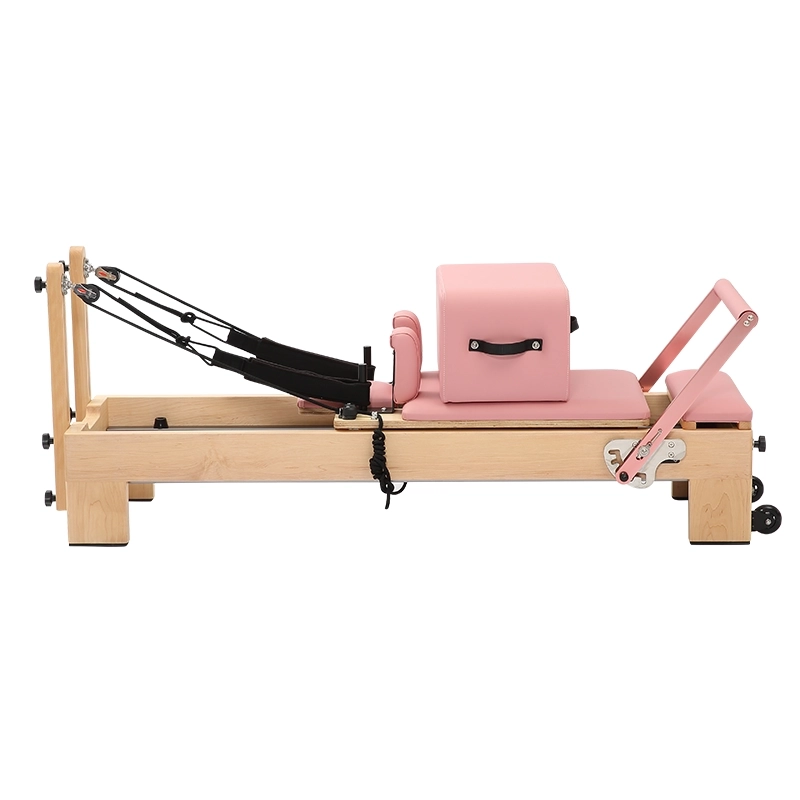
While all Pilates Reformers share a common ancestry and a fundamental mechanical structure—consisting of a frame, a sliding carriage, a footbar, and a resistance system—they are by no means identical in function, feel, or purpose. From the specific tension profiles of the springs and the height of the frame to the adjustability of the ropes and the density of the upholstery, every manufacturer and model offers a distinct “personality” that drastically alters the user experience, making some machines ideal for clinical rehabilitation and others better suited for high-intensity athletic conditioning.
1. What Constitutes the Core Anatomy vs. The Variable Features?
To understand why Reformers differ, one must first identify what remains constant. At its heart, a Pilates Reformer is a resistance-based apparatus designed to facilitate the Pilates method. Every machine will have a carriage that rolls back and forth, a system to create load (usually springs), and a place to position the feet and hands. However, the execution of these elements varies wildly.
The Structural Foundation
The frame is the skeleton of the machine.
The Variable: Reformers are generally constructed from one of three materials: solid wood (usually maple or oak), aluminum, or steel.
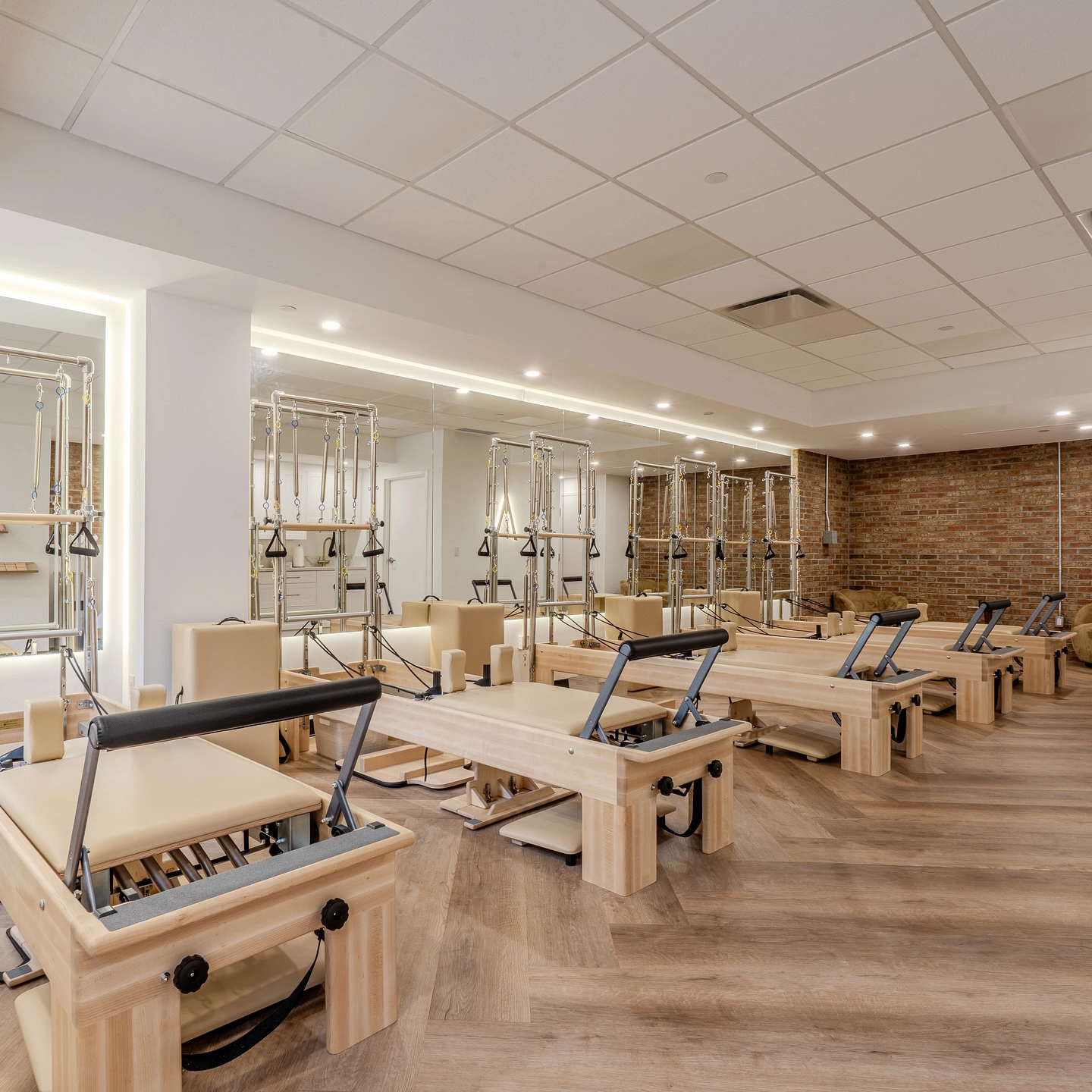
The Impact: A wood frame, often found in classical studios, offers a solid, grounded feel with a degree of vibration absorption that creates a “thud” rather than a “clang” during movement. Metal frames, conversely, are often lighter, sleeker, and more adjustable, but they can feel colder and more industrial. Furthermore, the height of the frame is a major differentiator. “Studio Height” reformers sit about 14 to 16 inches off the ground, facilitating easy mounting and dismounting. “Home” versions often sit directly on the floor to save space, which fundamentally changes the leverage and accessibility for the user.
The Carriage Dynamics
The carriage is where the body lies, sits, or stands.
<br
The Variable: The suspension system.
The Impact: High-end commercial Reformers utilize a complex system of 4 to 8 wheels with precision bearings—some vertical to support weight, and some horizontal to stabilize the carriage against the rails. This creates a “floating” sensation. Cheaper or older models might use fewer wheels or simple rollers, resulting in a carriage that drags, bumps, or rumbles. The friction coefficient is not the same across machines; on some, you glide; on others, you roll.
The Resistance Engine
While we generically say “springs,” the reality is more nuanced.
The Variable: Tension source and calibration.
The Impact: Classical Reformers (like Gratz) typically use four springs of equal tension. Contemporary Reformers (like Balanced Body or Merrithew) usually use five springs with varying tensions (heavy, medium, light). This color-coded variance allows for “micro-loading,” enabling much more precise resistance adjustments for rehabilitation or specific muscle isolation. Some budget home models forgo springs entirely, utilizing rubber bungee cords. While functional, cords lack the progressive resistance curve of steel springs—meaning they don’t pull back with the same snappy responsiveness that is critical for eccentric muscle training.
2. Why Does the Distinction Between “Classical” and “Contemporary” Matter?
One of the deepest divides in the Reformer world is philosophical, which translates directly into mechanical differences. This distinction answers why two machines can look similar but feel completely different.
The Classical Lineage
Classical Reformers are built to the exact specifications left by Joseph Pilates.
The Philosophy: The goal is to preserve the method exactly as it was taught in the early 20th century.
The Machine: These machines often have leather straps (not ropes), a footbar that does not lock (or has very limited positions), and springs that are uniformly heavy. The dimensions are non-negotiable. The carriage is often less padded. The “feel” is one of rigorous discipline. The straps are set to a specific length and are rarely changed during a session, forcing the body to adapt to the machine.
The Contemporary Evolution
Contemporary Reformers are based on modern biomechanics and exercise science.
The Philosophy: The goal is to adapt the method to the modern body, which may suffer from “tech neck,” lordosis, or other postural issues unknown in the 1920s.
The Machine: These are the “Swiss Army Knives” of Pilates. They feature adjustable gear bars to accommodate different leg lengths, locking footbars with multiple angles, and riser heights that can be changed to alter the angle of pull. The focus is on ergonomics and inclusivity. They allow the machine to adapt to the body, making them safer for general populations and those with injuries.
3. How Do Resistance Mechanisms Change the Workout Experience?
If you get on two different Reformers and perform a “Footwork” series, the muscular recruitment can feel distinct. This is largely due to the physics of the resistance mechanism utilized.
Spring Composition and Length
Not all springs are created equal.
The Physics: A spring provides “progressive linear resistance.” The further you stretch it, the heavier it gets. However, the rate at which it gets heavier depends on the coil diameter, the steel quality, and the resting length.
The Difference: Some manufacturers use shorter springs that ramp up tension very quickly, creating a “hard stop” feel at the end of the range of motion. Others use longer springs that provide a smoother, more fluid pull. Furthermore, the gap between the springs matters. On some machines, the springs are close together; on others, they are wide apart. This spacing changes the vector of force, subtly altering which muscles are recruited to keep the carriage stable.
Bungees vs. Steel
In the realm of home equipment, cost-cutting often leads to the use of bungee cords.
The Drawback: Rubber degrades. Over time, cords lose their elasticity and become slack. More importantly, rubber has a “dead spot” at the initial phase of extension and can feel snappy or uncontrolled on the return. Steel springs provide consistent feedback throughout the entire concentric (pushing) and eccentric (returning) phases, which is vital for the “control” aspect of Contrology (the original name for Pilates).
4. Who Is the Machine Designed to Accommodate?
One of the most critical ways Reformers differ is in their anthropometric inclusivity. Are they built for the average 1940s male, or the diverse population of the 2020s?
The Height Factor
Standard Reformers have a carriage travel distance tailored to an average height (roughly 5’2″ to 5’9″).
The Limitation: If you are 6’4″, a standard Reformer will physically stop you. You will hit the bumpers before your legs are fully straight.
<br
The Solution: “Extended” versions exist. However, many modern machines feature a movable “Gear Bar.” By shifting the gear bar, you move the spring anchor points further away from the footbar. This allows taller users to achieve full hip extension without crashing the carriage. Conversely, for petite users, the ability to move the footbar closer is essential for safety.
The Width Factor
Human bodies come in various widths.
The Variation: Classic carriages are quite narrow. For broad-shouldered individuals (like rugby players or bodybuilders), this can be uncomfortable, as their shoulders may spill off the edge or feel pinched between the shoulder blocks.
The Solution: Contemporary manufacturers offer “wide carriage” options. Additionally, the spacing of the shoulder blocks varies. Some machines have adjustable shoulder blocks that can slide wider or narrower, while others are fixed. If a machine has fixed, narrow blocks, it is fundamentally different—and potentially unusable—for a broad-shouldered user.
5. Where Does the Reformer Fit in the Landscape of Use Cases?
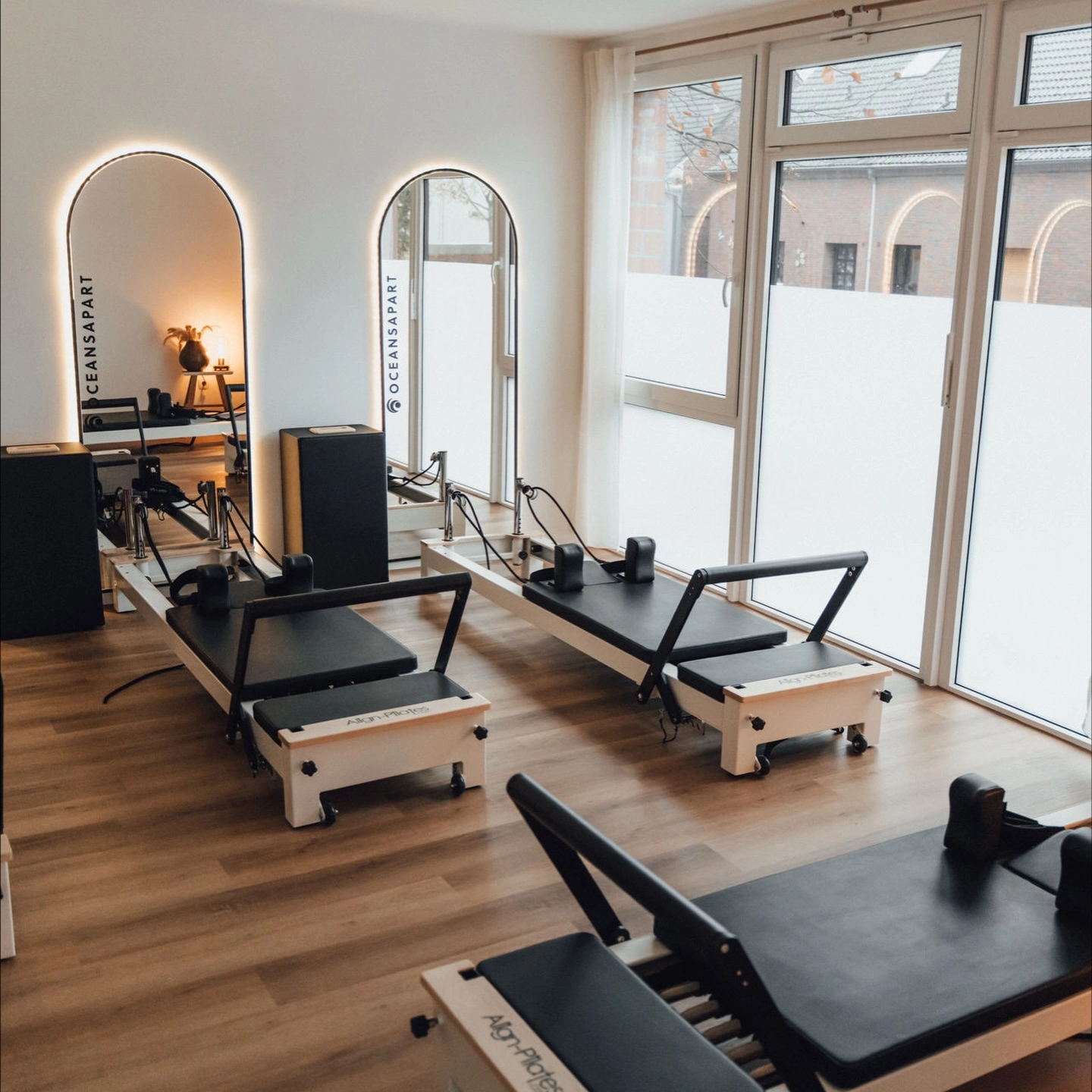
The environment dictates the design. A Reformer built for a high-traffic New York City studio is engineered differently than one built for a bedroom in a suburban apartment.
The Durability Spectrum
Commercial Reformers are tanks.
The Build: They are designed to run for 10+ hours a day, 7 days a week. They use heavy-gauge steel, vinyl that can withstand thousands of wipe-downs, and wheels that won’t flatten under constant load.
The Home Version: Home Reformers assume usage of maybe 3-5 hours a week. Consequently, they use lighter materials. While a home Reformer might look like a studio one, the tolerances are looser. If you put a home Reformer in a commercial setting, it would rattle apart within six months. They are not the same machine.
Portability and Storage
This is a major point of divergence.
The Fixed: Studio Reformers are heavy furniture. They are meant to stay put.
The Mobile: Many home Reformers are foldable. They have hinges in the rails. While this is brilliant for storage, it affects the ride. You can often feel the “seam” where the rails join as the carriage rolls over it. Others are designed to stand vertically on their end. A Reformer that can stand up requires a specific footbar design and weight distribution that a standard one does not have.
6. When Should You Look for Specialized Attachments?
The “sameness” of Reformers disappears completely when you look at their expandability. Some are islands; others are ecosystems.
The Tower/Half-Cadillac Capability
Some Reformers are strictly Reformers.
The Hybrid: Others are “Tower Ready.” They have ports drilled into the frame to accept a vertical metal structure (the Tower). This converts the Reformer into a hybrid station that allows for Trapeze Table exercises (springs from above). If a Reformer lacks these ports, its functionality is capped. The presence of a Tower radically changes the stabilization requirements, as pull comes from the vertical plane, not just the horizontal one.
The Footbar Configurations
The footbar is the primary leverage point.
The Infinity Bar: Some high-end machines feature a footbar that slides along the entire length of the frame, not just the end. This allows for entirely new exercise repertoires where the footbar is positioned over the carriage or at the rope end. A standard Reformer with a fixed-end footbar simply cannot perform these movements.
Feature 1: The Rope and Riser Revolution
One of the most overlooked but impactful differences lies in how the user connects to the resistance: the ropes.
Leather vs. Rope
In traditional designs, thick leather straps are used. These are durable and provide a very specific tactile feedback. However, they are prone to stretching unevenly over time (one side becomes longer than the other) and are difficult to adjust. You typically have to unbuckle them like a belt.
The Rise of the Riser
Modern machines use nautical-grade climbing ropes running through pulleys on “risers” (vertical metal poles).
Height Adjustment: On superior machines, these risers are adjustable. You can lower the pulley (for a heavier feel and more stability) or raise it (to increase the range of motion and challenge stability).
Cleat Systems: Contemporary Reformers utilize “nautical cleats” (like on a sailboat) that allow you to shorten or lengthen the ropes in seconds with one hand. This means you can transition from an exercise requiring long ropes (Feet in Straps) to short ropes (Rowing) without disrupting the flow of the class. A Reformer without this quick-adjust system changes the entire rhythm of a workout.
Feature 2: The Digital Integration and “Smart” Reformers
In the last five years, a new category has emerged that makes the “are they all the same” question laughable: the Smart Reformer.
The Connected Experience
Companies like Frame or Reform RX have introduced machines that look more like spaceships than Victorian beds.
The Screen: These feature integrated touchscreens that stream on-demand content.
The Sensors: Unlike analog machines, these have Bluetooth sensors in the tracks and springs. They measure your power output, your calorie burn, and your “time under tension.” They can gamify the workout.
The Design: To accommodate the electronics, the aesthetic is often monocoque (single shell) plastic or carbon fiber. This is a fundamentally different experience than a wooden Balanced Body machine. It is Pilates meets Peloton.
Soalan Lazim
1. If I learn on a studio Reformer, can I use a home Reformer effectively?
Yes, but there will be a learning curve regarding the “translation” of resistance. Studio machines usually have a standard color code (e.g., 3 Red, 1 Blue, 1 Yellow). Your home machine might have 4 black cords. You will need to learn to gauge resistance by feeling rather than by color. Additionally, home machines are often lighter, so if you are used to pushing off the footbar aggressively in a studio, you might find a home machine lifts off the floor or slides. You will need to move with slightly more control and less explosive force.
2. Does the price difference really reflect a difference in quality?
In the world of Reformers, the adage “you get what you pay for” is strictly true. A $500 Reformer and a $5,000 Reformer are not the same species. The price difference reflects:
Stability: The cheaper machine will wobble.
Smoothness: The cheaper machine will have friction and drag.
Longevity: The expensive machine is an heirloom piece that will last 20+ years. The budget machine may have plastic parts that crack within 2 years.
Safety: Expensive machines have redundant safety locks on footbars and spring bars. Budget machines often rely on gravity or simple pins that can slip.
3. Are “Lagree” machines the same as Pilates Reformers?
No, and this is a common point of confusion. The “Megaformer” used in Lagree Fitness is inspired by the Pilates Reformer but is distinct. It is generally much larger, has two carriages (or a split carriage), and features different handles and platforms designed for quick transitions and high-intensity, heavy-resistance bodybuilding techniques. While they share the concept of spring-loaded resistance, the biomechanics, intended tempo, and exercise repertoire are significantly different. You cannot perform a classical Pilates routine effectively on a Megaformer, and vice versa.
Conclusion
Only in the way that a tricycle and a Ducati are both “wheeled vehicles.” While they share a nomenclature and a basic mechanical theory, the execution varies dramatically based on intent, philosophy, and budget.
From the tactile feedback of the springs to the width of the carriage, and from the adjustability of the footbar to the integration of digital tracking, each machine offers a unique dialogue with the body. Understanding these differences is crucial. It ensures that you select a machine that not only fits your space but also serves your physiological needs, allowing you to extract the full depth of benefits that the Pilates method has to offer.
 English (United States)
  English (Canada)
  English (Australia)
  English (New Zealand)
  English (UK)
  Arabic
  Bulgarian
  Czech
Czech  Danish
  Greek
Greek  Spanish
  Ukrainian
  Turkish
  Thai
Thai  Swedish
  Serbian
  Slovenian
  Slovak
  Russian
  Romanian
  Portuguese (Portugal)
  Portuguese (Brazil)
  Norwegian
  Dutch
Dutch  Estonian
  Finnish
  French
  Hindi
Hindi  Croatian
  Indonesian
  Icelandic
  Italian
  Japanese
  Georgian
  German
  Lithuanian
  Polish
  Korean
  Uzbek
Uzbek  Hungarian
  Malay
Malay