
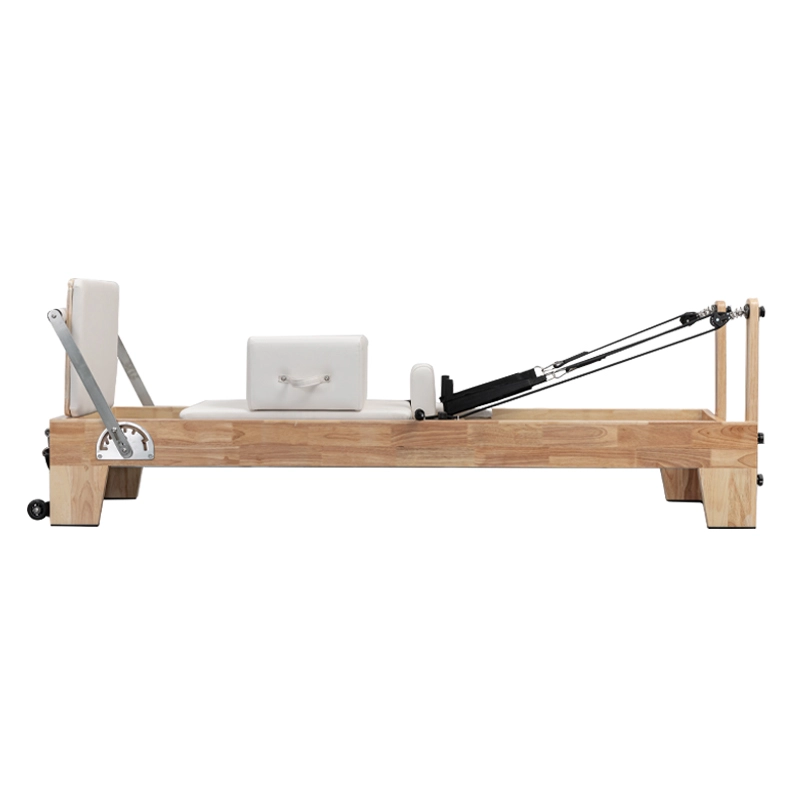
Reformatorių pilatesas is exceptionally beneficial for managing and rehabilitating a bulging disc, provided it is approached with caution, proper technique, and professional guidance. While the condition of a bulging disc can be debilitating and painful, the Reformer offers a unique environment where the spine is supported by the carriage and the load is managed by springs rather than gravity alone. This allows for the strengthening of the deep stabilizing muscles—specifically the transversus abdominis and multifidus—without placing undue compressive force on the compromised spinal discs. However, it is not a free-for-all; specific protocols must be followed to ensure safety, as improper form can exacerbate the injury. When executed correctly, Reformer Pilates acts as a powerful tool to decompress the spine, restore alignment, and build a “corset” of muscle that protects the back from future injury.
1. Why Is Reformer Pilates Considered the Gold Standard for Spinal Rehabilitation?
In recent years, Reformer Pilates has exploded in popularity, transitioning from a niche practice for dancers to a mainstream fitness phenomenon visible on every social media feed. While the aesthetic benefits of a toned physique are appealing, the medical community—including orthopedic surgeons and physical therapists—often champions the Reformer for a different reason: spinal health.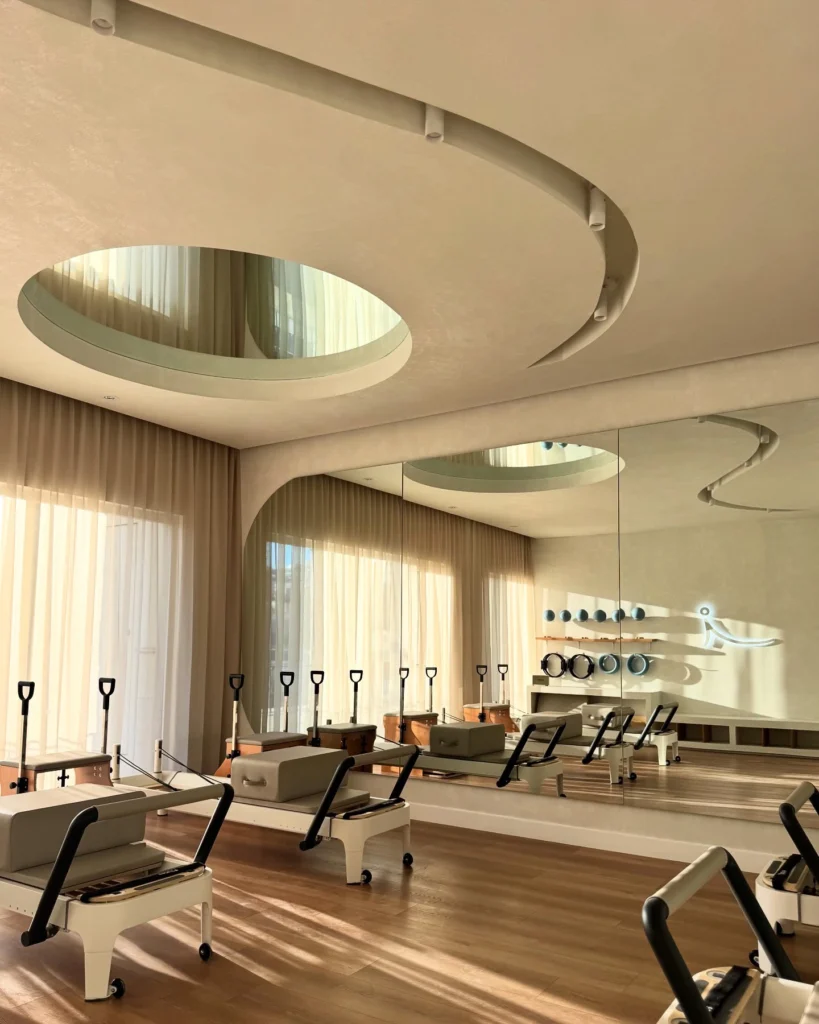
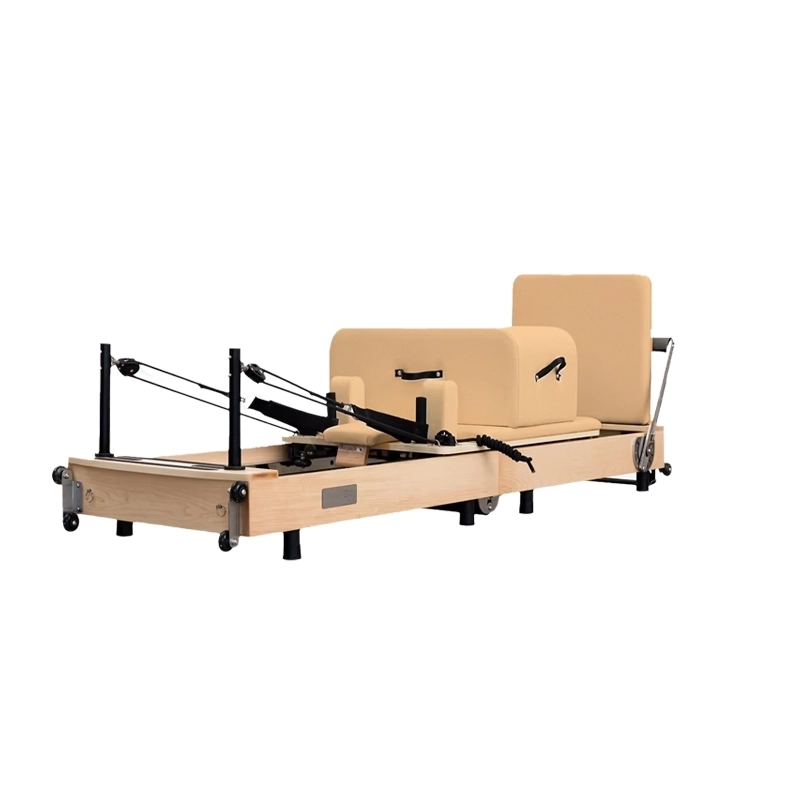
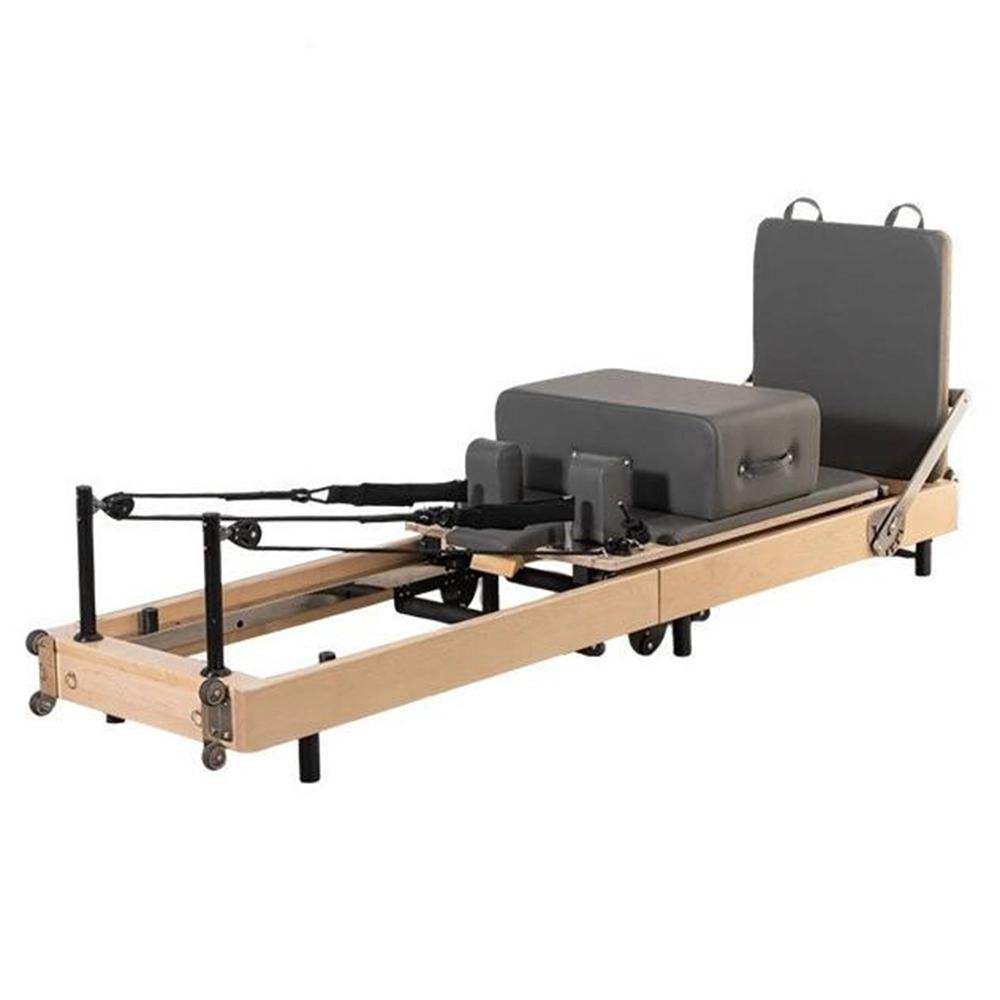
The Mechanics of Support vs. Gravity
To understand why the Reformer is superior to many other forms of exercise for a bulging disc, one must look at the physics of the machine. When suffering from a disc injury, gravity is often the enemy. Standing, walking, or even sitting compresses the spine, potentially squeezing the gelatinous center of the disc further out against the nerve root.
On the Reformer, much of the work is performed in a supine position (lying on the back). In this position, the spine is in a non-weight-bearing state. The carriage supports the torso, head, and pelvis. This allows the individual to engage the muscles of the arms, legs, and core without the vertical compression of gravity acting on the lumbar vertebrae. It creates a safe “closed chain” environment where the body can move and strengthen without the immediate threat of pain caused by vertical loading.
The Role of Spring Resistance
Unlike dumbbells or kettlebells, which rely on dead weight, the Reformer uses springs. Spring resistance is dynamic. It increases as the spring is stretched and creates a need for control as the spring retracts. This serves two vital purposes for a bulging disc:
- Eccentric Strengthening: The “return” phase of a movement (resisting the springs as they close) builds eccentric strength. This lengthens the muscles while strengthening them, preventing the compressive “shortening” that often plagues back pain sufferers.
- Stability Feedback: If a user has a muscular imbalance—for example, if the right side of the back is protecting the injury and the left side is weak—the springs will wobble or the carriage will rattle. This provides immediate biofeedback, forcing the user to correct their alignment and engage the deep stabilizers to create a smooth motion.
Decompression and Traction
One of the unique features of the Reformer is its ability to create traction. Exercises that involve pulling straps with the arms or pushing the carriage with the legs can actually create space between the vertebrae. For a bulging disc, which is essentially a compression injury, this gentle distraction (pulling apart) can offer immediate relief by reducing the pressure on the nerve root.
2. What Exactly Is a Bulging Disc and How Does Movement Affect It?
Before diving deeper into the exercises, it is crucial to understand the pathology being treated. The spine is made up of stacked vertebrae separated by shock-absorbing discs. These discs have a tough outer layer (annulus fibrosus) and a soft, jelly-like center (nucleus pulposus).
A “bulge” occurs when the tough outer layer weakens, allowing the inner jelly to push outward, distorting the shape of the disc. If it pushes far enough, it can press on the nerves exiting the spine, causing pain, numbness, or weakness in the legs (sciatica).
The “Motion is Lotion” Philosophy
Historically, doctors prescribed bed rest for back pain. We now know this is detrimental. Prolonged inactivity causes the stabilizing muscles to atrophy (waste away), leaving the spine even more vulnerable. The current medical consensus is that controlled movement is essential.
However, the tipas of movement matters immensely.
- Flexion (Rounding forward): For most posterior disc bulges (the most common type), bending forward squeezes the front of the vertebrae together, pushing the disc further backward into the nerve. This is often a trigger for pain.
- Extension (Arching back): For some, this brings relief, but for others with conditions like stenosis, it causes pain.
- Rotation (Twisting): Uncontrolled twisting, especially under load, creates a shearing force that can tear the disc further.
Reformer Pilates is effective because it teaches dissociation. It teaches you how to move your hip joints and shoulder joints without moving your spine. By keeping the spine in a “neutral” zone while mobilizing the limbs, you increase blood flow and strength without irritating the bulge.
3. How Do Specific Breathing Techniques Protect the Injured Spine?
When dealing with a herniated or bulging disc, breathing is not just about oxygen intake; it is a mechanical tool for spinal stabilization. The prompt highlights two critical techniques: the Abdominal Drawing-In Maneuver (ADIM) ir Valsalva Maneuver (or management of Intra-Abdominal Pressure). Mastering these is the prerequisite for any movement.
The Abdominal Drawing-In Maneuver (ADIM)
This technique targets the Transversus Abdominis (TVA). The TVA is the deepest layer of abdominal muscle, wrapping horizontally around the waist like a corset.
- The Problem: In many people with back pain, the TVA goes “offline.” It fails to fire before movement occurs.
- Pataisymas: The ADIM involves gently drawing the navel toward the spine without moving the pelvis or holding the breath.
- Visualization: Imagine trying to zip up a pair of tight jeans. You pull the lower belly in away from the zipper.
- Function: When the TVA contracts, it compresses the abdominal contents and tightens the fascia around the lower back, creating a rigid cylinder of support. This “internal splint” prevents the vertebrae from shifting during exercise.
Managing Intra-Abdominal Pressure (The “Valsalva” Context)
While the medical “Valsalva Maneuver” often implies holding the breath to the point of strain (which is generally avoided in fitness), in the context of lifting and heavy stabilization, it refers to creating Intra-Abdominal Pressure (IAP).
- The Mechanism: By inhaling deeply and depressing the diaphragm while contracting the pelvic floor and abs, you create a pressurized balloon inside your abdomen.
- Application: For a bulging disc patient, learning to regulate this pressure is key. You don’t want to hold your breath until you turn blue, but you do want to use the breath to brace the spine during the hardest part of an effort.
- Pilates Adaptation: In Reformer Pilates, we use a controlled exhalation. As you push the carriage (exertion), you exhale forcefully through pursed lips. This triggers an automatic contraction of the deep core, increasing IAP enough to protect the disc without spiking blood pressure.
These techniques must be practiced in isolation first—lying on the mat or reformer—before adding the load of springs. If you cannot breathe and brace while still, you cannot do it while moving.
4. Who Should You Trust to Guide Your Rehabilitation Journey?
The diagnosis of a bulging disc moves you from the category of “general fitness” to “clinical population.” This shift requires a change in who you trust with your body. Not all Pilates is created equal, and not all instructors are equipped to handle spinal pathologies.
The Danger of the “Fitness” Approach
In large group classes (often called “Megaformer” or “Power Pilates”), the focus is frequently on intensity, speed, and muscle burn. The goal is caloric expenditure. For a healthy body, this is fine. For a bulging disc, it is dangerous. These classes often utilize rapid transitions, heavy loads, and complex movements that require a healthy spine to execute safely.
The Clinical Pilates Distinction
You must seek out Clinical Pilates or instructors certified in rehabilitative protocols.
- Physiotherapists: Many physical therapy clinics have Reformers. This is the safest starting point. A physio understands the exact angle of your bulge and the contraindications.
- Certified Rehabilitation Specialists: Look for instructors with comprehensive certification (500+ hours) and specific continuing education in spinal pathologies.
The Role of the Physician
Before stepping into a studio, clearance from a spine specialist or orthopedic surgeon is non-negotiable. They can provide an MRI report indicating the direction of the bulge (e.g., L4-L5 posterior-lateral herniation). This detail is gold for your instructor. Knowing the direction of the bulge tells the instructor exactly which movements (like flexion or extension) to avoid.
5. Where Is the Safe Range of Motion for a Compromised Back?
One of the most critical concepts in rehabilitating a bulging disc is establishing a Safe Range of Motion (ROM). The philosophy of “no pain, no gain” must be completely abandoned. Instead, the focus shifts to “pain-free precision.”
Finding “Neutral Spine”
The “Neutral Spine” is the position where the spine is most resilient and the discs are under the least amount of asymmetric pressure.
- The Position: Lying on the Reformer, there should be a small, natural curve in the lower back—enough to slip a few fingers under, but not a whole hand. The tailbone should be heavy on the carriage.
- The Challenge: The goal of Reformer Pilates is to maintain this neutral shape while the legs and arms move. If you lower your legs and your back arches (pops off the carriage), you have lost neutral and compromised the disc. If you pull your knees in and your tailbone tucks under, you have flexed the spine and potentially aggravated the bulge.
The Concept of the “Functional Range”
Every individual will have a different functional range.
- Restricted Hip Flexion: A person with a bulging disc may only be able to lift their leg to 45 degrees before the pelvis starts to tuck (flex). Therefore, 45 degrees is their limit. Going to 90 degrees would cause injury.
- Restricted Rotation: While healthy spines love rotation, a bulging disc is vulnerable to shearing forces. Initial rehab may involve zero rotation (anti-rotation exercises), progressing to very small, controlled ranges only once stability is proven.
The Reformer is excellent for defining these ranges because the straps and footbar provide hard stops and tactile feedback. You learn exactly where your safe zone is, and you work strictly within it until your strength allows you to expand it.
6. When Is It Time to Modify or Change Your Routine?
A common pitfall in back pain recovery is either doing too much too soon, or getting stuck doing too little for too long. The prompt notes that practicing the same program for more than 1.5 to 2 months renders it obsolete.
The Principle of Adaptation
The human body is an adaptation machine. When you first learn a rehabilitation exercise—say, a simple pelvic tilt or a leg slide—your nervous system works hard to coordinate it. After a few weeks, the movement becomes efficient. The muscles no longer need to work as hard to perform the same task.
- Stagnation: If you continue doing the exact same routine for 3 months, you are no longer strengthening the back; you are merely maintaining a baseline. For a bulging disc to heal and for the spine to become robust, the tissues need Progressive Overload.
Progresyvus reformatoriaus perkrovimas
This does not necessarily mean adding heavier springs. In Pilates, progression can look like:
- Decreasing Base of Support: Moving from a wide stance to a narrow stance.
- Reducing Assistance: Using lighter springs on stability exercises makes the core work harder to control the wobble.
- Complexity: Adding arm movements to leg movements (coordination challenges).
- Endurance: Increasing the time under tension.
The Weekly vs. Monthly Check-in
- Acute Phase (Weeks 1-4): You should be consulting your instructor or physio weekly. Symptoms fluctuate rapidly, and the program needs micro-adjustments.
- Sub-Acute/Chronic Phase (Month 2+): A check-in every 3-4 weeks is vital to update the program. The instructor needs to see if your neutral spine is stronger, if your hamstring flexibility has improved, and if you are ready for the next level of challenge. Without this progression, recovery stalls.
The “Don’ts” – The Hidden Dangers of Stretching and Massage
Kai jaučiame skausmą, dažnai instinktyviai norime jį “patrinti” arba “ištempti”. Intuityviai jaučiame, kad įsitempusią nugarą reikia atpalaiduoti. Tačiau kalbant apie išsipūtusį diską, ši intuicija gali būti klaidinanti ir netgi žalinga.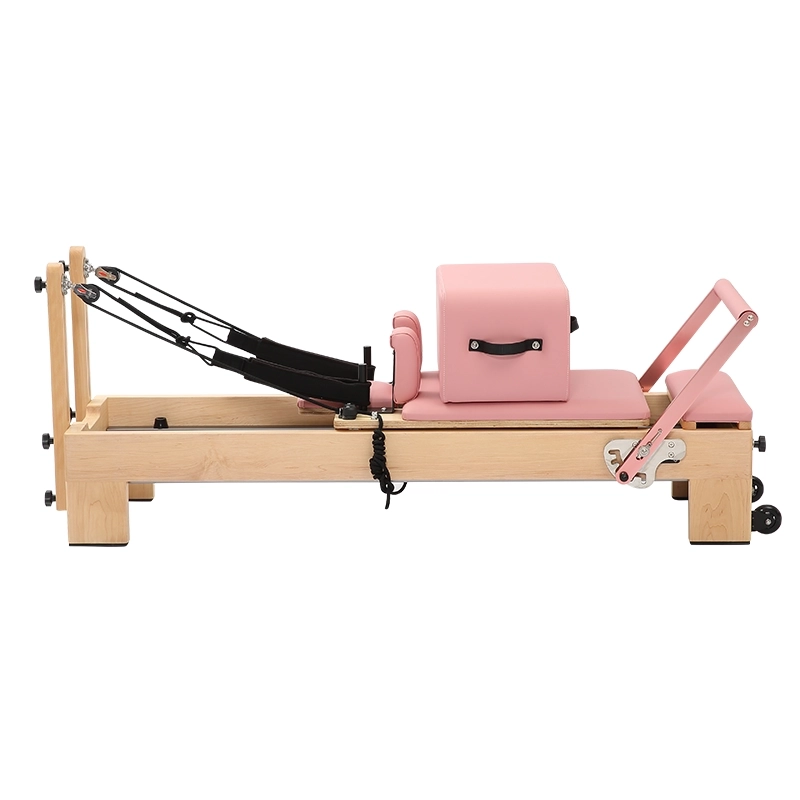
Mitas apie skausmo malšinimą
Kai diskas išsipučia, stuburą supantys raumenys dažnai patiria spazmą. Tai yra apsaugos mechanizmas. Smegenys pajunta stuburo nestabilumą ir nurodo raumenims susiveržti, kad susidarytų natūralus įtvaras, neleidžiantis judėti, kuris galėtų sukelti tolesnę žalą.
- Pavojus: Jei agresyviai tempiate šiuos raumenis (pavyzdžiui, priverčiate giliai sulenkti į priekį arba pasukti juos), faktiškai pažeidžiate vienintelę kūno gynybos liniją. Galite laikinai jaustis “atsipalaidavę”, bet praradote stabilumą, todėl pažeistas diskas gali pasislinkti. Dėl to dažnai atsiranda “atšokos efektas”, kai skausmas po kelių valandų vėl sugrįžta su didesniu intensyvumu.
Fascijos manipuliavimo rizika
Panašiai gilus audinių masažas arba agresyvus putų volelis tiesiai ant nestabilumo srities gali būti neproduktyvus ūminėse stadijose.
- Hipermobilumas: Kai kuriems žmonėms išsipūtę diskai atsiranda dėl per didelio raiščių laisvumo (hipermobilumo). Dėl to audiniai... daugiau lankstumas pasyviu tempimu ar atpalaidavimu tik padidina nestabilumą.
- Pilateso sprendimas: Vietoj pasyvus tempimo pratimai (ten, kur traukia gravitacija), „Reformer Pilates“ naudoja aktyvus mobilumas. Raumenį pailginate įjungdami priešingą raumenį (abipusis slopinimas). Pavyzdžiui, įjungdami sėdmenis, kad aktyviai atvertumėte klubų priekį. Taip sukuriamas ilgis neprarandant stabilumo.
Saugių ir rizikingų reformatoriaus pratimų vadovas
Norint suprasti “Reformer” repertuarą, reikia filtro: „Ar tai stabilizuoja, ar mažina?“. Štai kas paprastai veikia ir ko reikėtų vengti.
Saugūs / rekomenduojami pratimai (“Žalia šviesa”)
- Kojų darbas (neutralioje padėtyje): Gulėjimas ant nugaros, pėdos ant štangos. Tai stiprina kojas ir sėdmenis – variklius, kurie turėtų atlikti kėlimą kasdieniame gyvenime, – o stuburas išlieka paremtas ir statiškas.
- Gulint ant nugaros rankos diržuose: Gulėdami ant nugaros, traukdami virves žemyn iki klubų. Tai įtraukia plačiuosius pilvo raumenis ir nugaros vidurinę dalį, kurie padeda stabilizuoti apatinę nugaros dalį. Taip pat lavinama liemens raumenų įtampa nejudinant stuburo.
- Kelio tempimai (plokščia nugara): Klūpokite ant vežimėlio, rankos ant štangos, vežimėlio judinimas kojomis. Tai labai svarbus stabilizavimo pratimas, kuris moko korpusą laikyti stuburą tvirtą, o klubus lenkti ir tiesti.
- Šoninio gulėjimo kojų serija: Gulėdami ant šono (su tinkama galvos atrama), pritvirtinkite pėdą diržu. Tai veikia vidurinį sėdmens raumenį. Silpni sėdmens raumenys yra pagrindinė nugaros skausmo priežastis; jų stiprinimas stabilizuoja dubenį.
Rizikingi / kontraindikuotini pratimai (“raudona šviesa”)
- Trumpas langelis apvalus nugarėlėje: Tai reiškia sėdėjimą ant dėžės ir stuburo lenkimą į priekį ir atgal. Esant užpakalinio disko išsipūtimui, šis apkrautas lenkimas yra traumos mechanizmas ir jo reikėtų vengti.
- Pjūklas / kamščiatraukis: Tai apima gilų sukimąsi kartu su lenkimu. Šis sukimo judesys sukuria šlyties jėgas, kurios gali sutraiškyti diską.
- Rieda kaip kamuolys / Anonsas: Tai pažangūs hibridiniai kilimėlio / reformatoriaus pratimai, kurie daro didžiulį spaudimą juosmeninei stuburo daliai ir reikalauja gilaus lenkimo.
- Stiprus spaudimas virš galvos: Nors ne visada neįmanoma, stuburo apkrovimas vertikaliai (sėdint tiesiai ir stumiant sunkius diržus virš galvos) gali suspausti diskus.
Psichologinis aspektas – kineziofobijos įveikimas
Skausmas keičia smegenų veiklą. Po disko traumos dažnai išsivysto Kineziofobija, arba judėjimo baimė. Pacientai dažnai sustingsta ir tampa robotiški, bijodami, kad pasilenkę paimti pieštuką vėl “išpūs” jiems nugarą.
“Reformer Pilates” kaip „saugus konteineris“
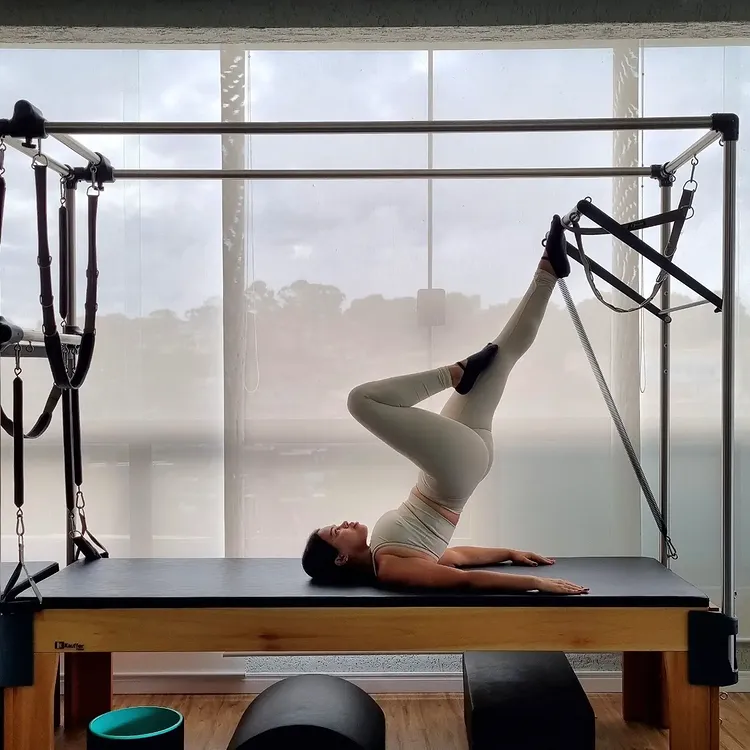
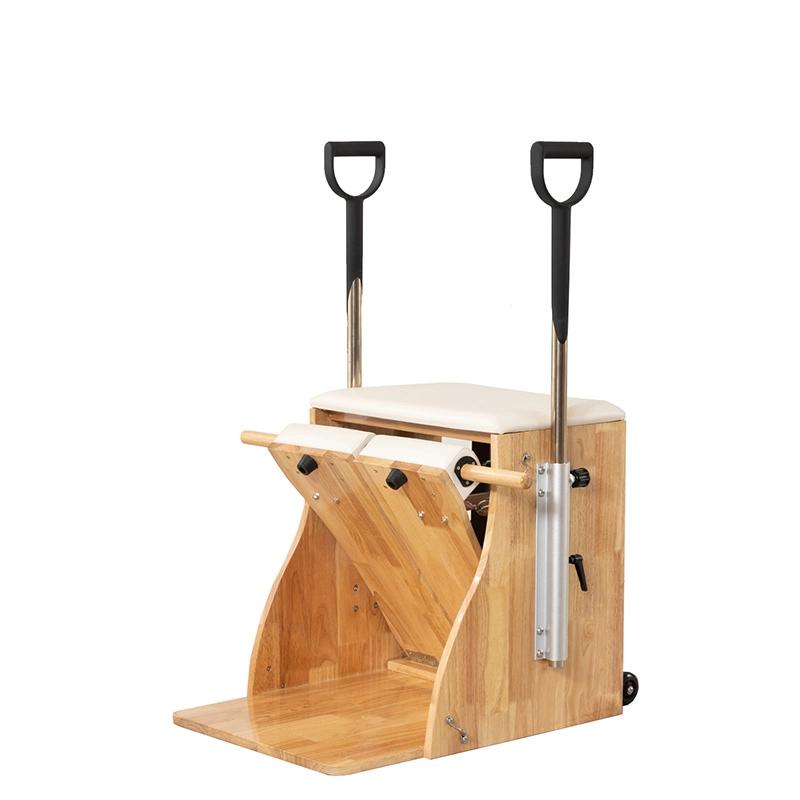
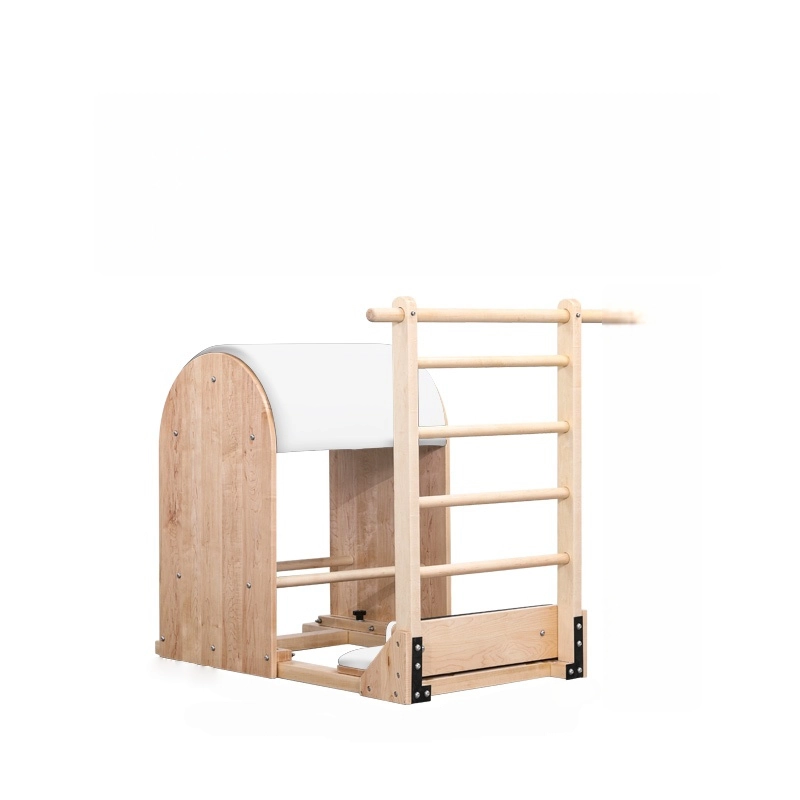
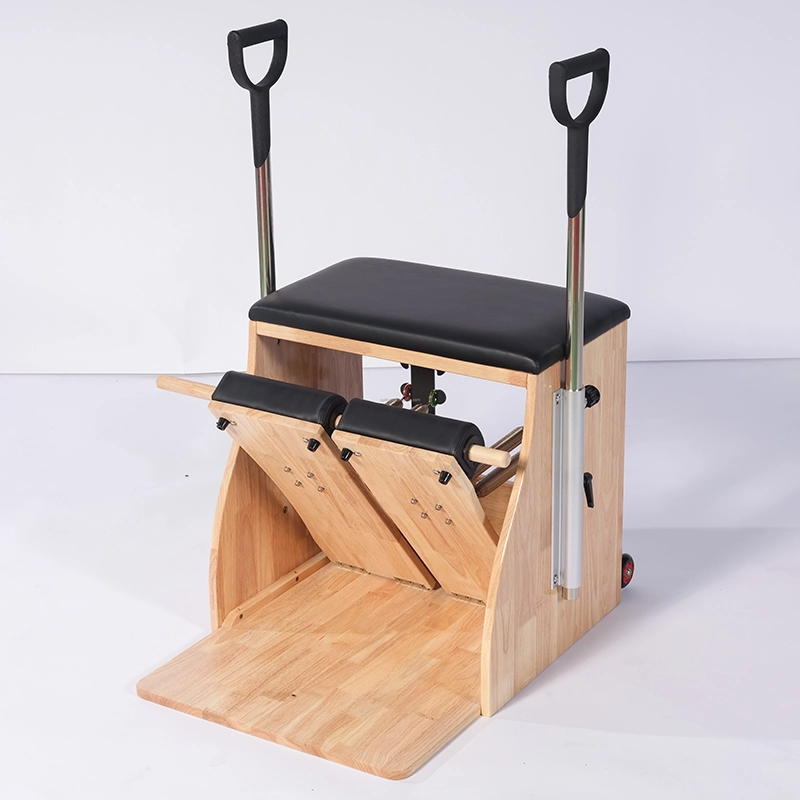
„Reformer“ suteikia psichologinį apsaugos tinklą. Jis dažnai naudojamas kartu su tokia įranga kaip Wunda kėdė, „Cadillac“ (trapecijos formos stalas), ir Kopėčių statinė teikti visapusišką reabilitaciją.
- Palaikymas: Žinojimas, kad aparatas jus laiko, leidžia nervų sistemai susilpninti savo veiklą. Jūs nekovojate su gravitacija vieni.
- Kontroliuojama aplinka: Kitaip nei sporto salėje su laisvaisiais svoriais, kurie gali būti supami arba krenta, „Reformer“ judėjimo trajektorija yra tiesinė ir valdoma. Šis nuspėjamumas padeda sumažinti smegenų reakciją į grėsmę.
- Sėkmės spiralės: Sėkmingai atliekant judesį ant „Reformer“ be skausmo, perjungiamos smegenys. Tai įrodo nervų sistemai, kad judėjimas yra saugus. Šis pasitikėjimas savimi atsispindi kasdieniame gyvenime, sumažinant apsaugą ir įtampą, kurie prisideda prie lėtinio skausmo.
Dažnai užduodami klausimai
1. Ar galiu praktikuoti „Reformer Pilates“, kai mano diskas šiuo metu yra išvaržos ir skausmingas?
Laikas yra viskas. Ūminėje fazėje (paprastai per pirmąsias 3–7 dienas po traumos), kai uždegimas yra didžiausias ir kiekvienas judesys sukelia spazmus, poilsis ir ramus pasivaikščiojimas paprastai yra pageidaujami. Reformer Pilates paprastai pristatomas poūmė fazė, kai pradiniai stiprūs raumenų spazmai atslūgsta ir skausmas tampa valdomas.
Per anksti pradėta mankšta gali padidinti uždegimą. Tačiau, kai jau galite patogiai atsigulti ir atsikelti, „Reformer Pilates“ puikiai tinka mobilizacijai. Šiame etape visada pradėkite nuo individualios treniruotės, niekada ne grupinės.
2. Ar išsipūtusiam diskui geriau taikyti „Mat Pilates“, ar „Reformer Pilates“?
Nors abu yra naudingi, Reformatorius paprastai yra pranašesnis ankstyvosioms išsipūtusio disko reabilitacijos stadijoms.
- Pilateso kilimėlis: Reikalaujama, kad savo kūno svorį laikytumėte prieš gravitaciją. Silpnam korpusui tai dažnai sukelia kompensaciją (klubų raumenys perima darbą, kaklo įtampa). Tokie pratimai kaip “Šimtas” ant kilimėlio gali per daug apkrauti pažeidžiamą nugarą.
- Reformatoriaus Pilatesas: Spyruokles galima naudoti pagalba. Jie gali padėti išlaikyti kojų svorį, sumažindami apkrovą nuo nugaros. Ant pakelto vežimėlio taip pat lengviau užlipti ir nulipti nei ant grindų. Atsiliepimai iš treniruoklio užtikrina, kad išliktumėte tiesioje padėtyje, o ant kilimėlio lengva “sukčiauti” to nesuvokiant.
3. Ar pratimai skaudės? “Gero” ir “blogo” skausmo supratimas.
Reabilitacija neturėtų būti nepakeliama. Yra skirtumas, kurį turite išmokti:
- Geras skausmas: Raumenų darbo, deginimo ar nuovargio pojūtis (pvz., dreba pilvo presas arba degina sėdmenis). Tai yra pageidautina.
- Blogas skausmas: Aštrus, duriantis, elektrinis arba deginantis skausmas. Tiksliau, skausmas, plintantis koja žemyn (radikulopatija) arba sukeliantis tirpimą / dilgčiojimą.
Jei bet kokio pratimo metu jaučiate “stiprų skausmą”, nedelsdami nutraukite pratimą. Tai reiškia, kad nervas yra spaudžiamas. Pratimą reikia modifikuoti arba nutraukti. Bukas skausmas ar sustingimas pradžioje dažnai yra normalu, tačiau aštrus nervo skausmas yra įspėjamasis ženklas.
Esmė
„Reformer Pilates“ siūlo kelią nuo skausmo iki sportinių rezultatų tiems, kurie kenčia nuo išsipūtusio disko. Suteikdamas palaikančią aplinką, kurioje pirmenybė teikiama stuburo neutralumui, giliam liemens įtempimui ir kontroliuojamam judrumui, jis sprendžia pagrindines nugaros nestabilumo priežastis. Jis peržengia pasenusius lovos režimo patarimus ir siūlo aktyvų stuburo sveikatos priežiūros sprendimą.
Tačiau treniruoklis yra toks pat geras, koks yra jo metodas. Sėkmė priklauso nuo tinkamos kvėpavimo mechanikos (ADIM ir IAP), griežto saugių judesių amplitudės laikymosi ir išminties vengti pratimų, kurie kenkia diskui. Tam reikia pakeisti mąstyseną nuo “treniruočių” prie “reabilitacijos”.”
Jei turite išsipūtusį diską, nebijokite judesio. Baimė nekontroliuojamas judėjimas. Pasinaudokite tikslumu Reformatorius, kreipkitės kvalifikuotos pagalbos ir pasitikėkite procesu. Nuosekliai ir atsargiai galite sukurti stuburą, kuris yra ne tik užgijęs, bet ir stipresnis bei atsparesnis nei buvo prieš traumą.
 English (United States)
  English (Canada)
  English (Australia)
  English (New Zealand)
  English (UK)
  Arabic
  Bulgarian
  Czech
Czech  Danish
  Greek
Greek  Spanish
  Ukrainian
  Turkish
  Thai
Thai  Swedish
  Serbian
  Slovenian
  Slovak
  Russian
  Romanian
  Portuguese (Portugal)
  Portuguese (Brazil)
  Dutch
Dutch  Estonian
  Finnish
  French
  Hindi
Hindi  Croatian
  Indonesian
  Icelandic
  Italian
  Japanese
  Georgian
  German
  Lithuanian
  Polish
  Korean
  Uzbek
Uzbek  Hungarian
  Malay
Malay