
When executed with precision, Reformer Pilates is one of the most effective modalities for resolving chronic neck pain because it rebuilds the structural foundation of the shoulder girdle and realigns the cervical spine. However, without proper form, the resistance of the springs can exacerbate existing issues. The Reformer is a tool that magnifies movement; if you move efficiently, it magnifies strength, but if you compensate with your neck muscles, it magnifies strain. Therefore, Pilates is the solution to neck pain only when the practitioner learns to stabilize the head through deep core activation rather than superficial neck tension.
1. Why Does Neck Tension Occur When the Core Should Be Working?
To understand why a discipline famous for healing back pain can sometimes cause a “pain in the neck,” we must analyze the body’s innate survival mechanisms. The relationship between your neck and your core is often described as a battle between tension and stability.
The Weight of the Issue
Anatomy dictates that the average human head weighs between 10 and 12 pounds. In daily life, your spine stacks this weight vertically against gravity. However, in many fundamental Reformer exercises—such as The Hundred or Coordination—you are lying on your back (supine) and asked to lift that 12-pound weight against gravity. This creates a long lever arm that requires immense muscular endurance to sustain.
The Compensation Reflex
The primary cause of neck pain in Pilates is the dominance of the “Mobilizers” over the “Stabilizers.”
- The Stabilizers (Deep Core): The Transversus Abdominis and deep neck flexors (Longus Colli) are meant to act as a corset, holding the head and trunk steady.
- The Mobilizers (Superficial Muscles): The Sternocleidomastoid (SCM) and Upper Trapezius are designed for big, gross movements, like turning your head to look at traffic.
When your deep core fatigues or fails to fire—a common occurrence for beginners or those with “sleepy glutes”—the brain panics. It immediately recruits the SCM and Upper Traps to hoist the head up. These muscles are not designed for endurance holding. Consequently, they become hypoxic (oxygen-starved), tight, and painful. The burning sensation you feel in your neck is essentially your body shouting that the “link” between your head and your powerhouse has been broken.
The Shoulder-Neck Connection
Furthermore, the neck acts as the roof to the house of the shoulders. If the foundation (the scapula) is unstable, the roof becomes shaky. On the Riformatore, if you allow the spring tension to pull your shoulders up toward your ears (elevation), you effectively shorten the neck muscles and compress the cervical vertebrae. This alignment error guarantees that the neck will bear the load that the latissimus dorsi and mid-back should be carrying.
2. What Specific Reformer Exercises Pose the Biggest Risk?
While the Pilates method is inherently rehabilitative, certain exercises on the Reformer are notorious for triggering neck pain if the practitioner lacks the necessary cervical endurance or scapular stability. Understanding the mechanics of these risks is the first step toward preventing them.
The Hundred: The Endurance Trap
This is the classic Pilates warmup, but it is also the most common culprit for neck strain. It requires the student to curl the head and shoulders off the carriage and sustain that position for a hundred pumps of the arms. If you have not mastered the “cervical nod” (a slight chin tuck that lengthens the back of the neck), you will likely hyperextend the neck. This places sheer force on the vertebrae and forces the anterior neck muscles to grip. The danger here is not the movement itself, but the duration; holding a poor position for ten seconds is manageable, but holding it for a hundred counts leads to strain.
Short Spine Massage: The Compression Risk
This popular spinal articulation exercise involves putting feet in straps and lifting the hips over the head. It is designed to massage the spine, but it poses a significant risk if the student rolls too far back. The weight of the body should rest across the ridge of the shoulder blades (the scapular shelf), never on the cervical spine itself. If a student lacks core control, they often roll onto the neck, crushing the delicate structures and discs under their own body weight, which can lead to immediate and acute pain.
Planks on the Moving Carriage
Planking on a moving carriage adds an element of instability that forces the core to work harder. However, when the core quakes and fails, the head is usually the first thing to drop. This “forward head posture” in a plank hangs the weight of the head off the neck ligaments and creates immense tension in the base of the skull (suboccipital muscles). The neck essentially becomes a hammock for the head, rather than a supported extension of the spine.
Rowing Series: The Whiplash Effect
When sitting on the box pulling ropes, the resistance can sometimes overpower the student’s back muscles. If the mid-back (rhomboids and mid-traps) isn’t strong enough to pull the straps, the user will instinctively jut their chin forward and use their neck muscles to help “yank” the cables. This creates a repetitive, micro-whiplash effect with every repetition, leading to soreness the next day.
3. How Can Proper Equipment Setup Prevent Injury?
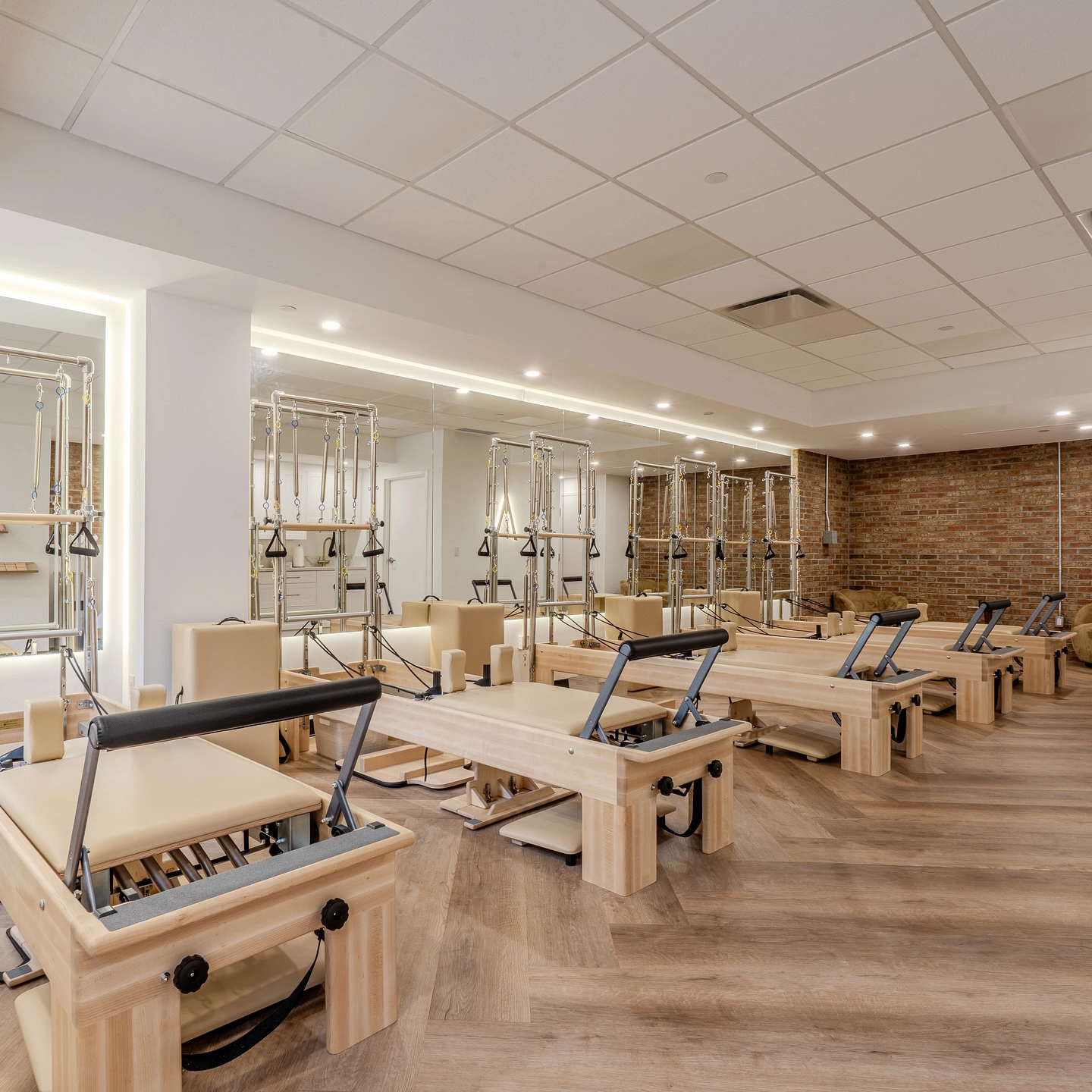
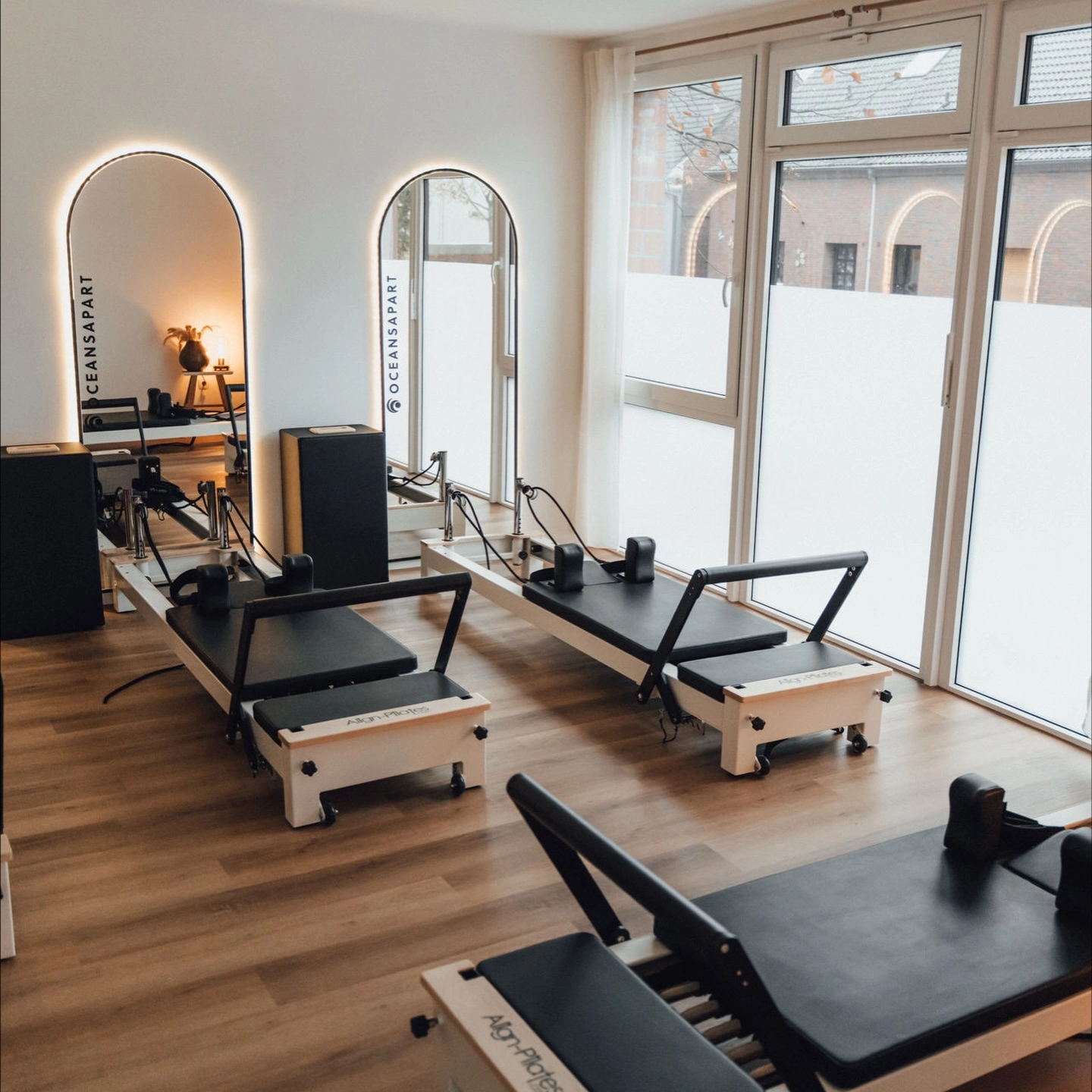
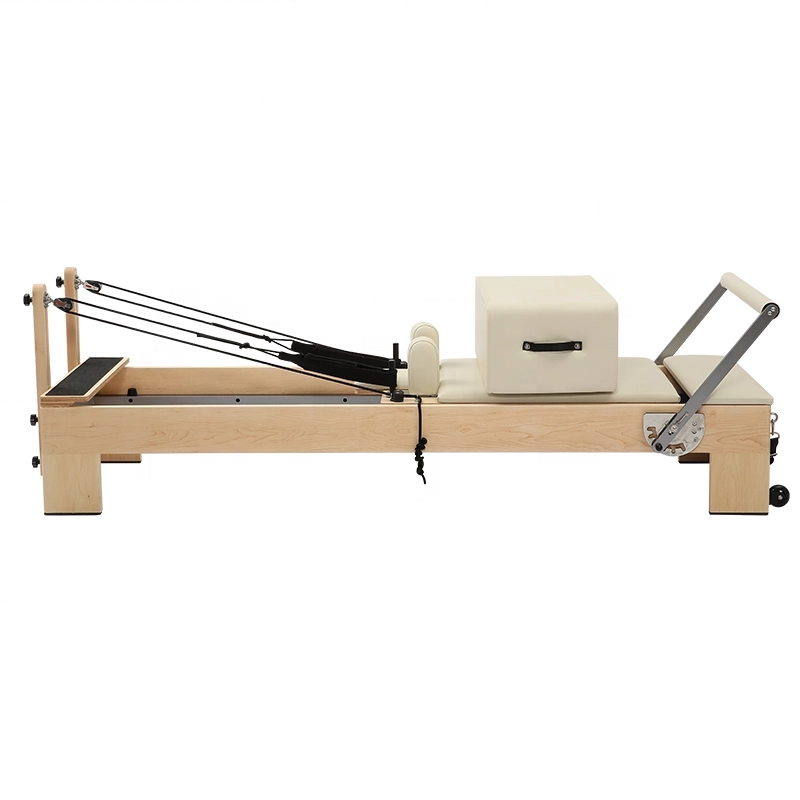
The beauty of the Universal Reformer is that it is infinitely adjustable. However, many students (and even some hurried instructors) fail to customize the machine for their specific anthropometry (body measurements). Using a machine set up for someone else is a recipe for neck disaster.
The Headrest: To Lift or Not to Lift?
The headrest on a Reformer usually has three positions: flat, halfway up, and all the way up. Understanding when to use which is vital.
- How to use it UP: If you have Kyphosis (a rounded upper back) or tight shoulders, lying flat might cause your head to tilt backward, leaving your chin higher than your forehead. This compresses the cervical spine. In this case, lifting the headrest creates a neutral spine.
- How to use it DOWN: You must lower the headrest anytime you lift your hips (bridges, short spine, overhead rollovers). Leaving the headrest up during these moves creates a severe angle in the neck (hyperflexion) that restricts airflow and can cause significant injury to the cervical discs.
Rope Length and Loop Tension
If the ropes are too short for your arm length, you will run out of range of motion too early. To complete the movement, you might unknowingly protract (round) your shoulders forward, which pulls on the neck muscles attached to the shoulder blade. Conversely, if the springs are too heavy for your current strength level, your Upper Trapezius will recruit to help move the load. It is always better to use a lighter spring and maintain a long, elegant neck than to fight a heavy spring with poor form.
The Box Placement
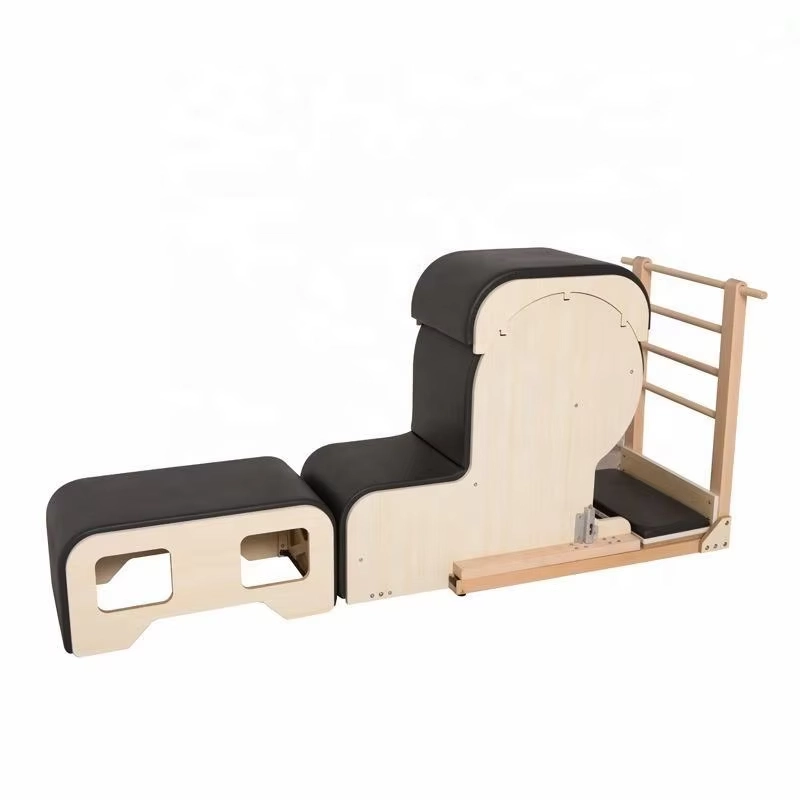
When sitting on the Long Box, your posture is paramount. If your hamstrings are tight, sitting with legs straight might force your pelvis to tuck and your spine to slump (the “C-curve” slump). This slump forces the head to jut forward to compensate for the center of gravity. Sitting on a chaotic, unstable base guarantees neck tension. Modifying by crossing legs or sitting on a foam pad can align the pelvis, allowing the neck to stack effortlessly over the spine.
4. Who Should Be Most Cautious When Starting Reformer Pilates?
While Pilates is for everyone, certain body types and lifestyles are pre-disposed to neck pain on the Reformer and require extra vigilance.
The “Tech Neck” Sufferer
If you spend eight hours a day hunched over a laptop or looking down at a smartphone, you likely have “Anterior Head Carriage.” Your neck muscles are already chronically overstretched in the back and tight in the front. Asking these exhausted muscles to hold your head up in an abdominal curl immediately triggers pain. These individuals need to build endurance slowly, perhaps keeping the head down on the headrest for the first few weeks of training.
Hyper-Mobile Individuals
People who are “double-jointed” or hyper-mobile often rely on their ligaments for stability rather than their muscles. On the Reformer, they might “hang” into their neck joints rather than using muscular tension to support the head. These students need tactile cueing to learn how not to over-extend their range of motion and how to engage the deep cervical stabilizers.
Those with High Stress Levels
We carry stress in our shoulders. It is a biological protective reflex (the startle response) to shrug shoulders up to protect the neck. If you enter a Pilates class highly stressed, your “resting” position might already involve active Upper Trapezius engagement. You must consciously focus on “melting” the shoulders down before even touching the carriage.
5. When Is It Time to Modify or Stop an Exercise?
A “burn” in the muscles is generally good; sharp pain or tension in the joints is not. Learning to decipher the signals your body sends is the key to longevity in Pilates.
The Tremor of Truth vs. The Strain of Pain
If your abdominals are shaking, that is the “tremor of truth”—neuromuscular adaptation is happening. Keep going. However, if you feel heat building at the base of your skull, or a tightening band around your forehead, stop immediately. These are signs that the SCM and suboccipitals have taken over.
Modifications are Not Failures
There is a misconception that modifying an exercise makes it “easier.” In reality, modifying makes the exercise effective.
- When to Support the Head: Place a small ball, a yoga block, or a folded towel behind the head during abdominal work to provide tactile feedback and support.
- When to use Hands: In the “Hundred,” put one hand behind your head to support the weight. Switch hands at the count of 50.
- When to Adjust Legs: In many exercises, the lower the legs go, the harder the abs work. If the abs fail, the back arches and the neck grips. Raise the legs to the ceiling (90 degrees) to imprint the spine and relax the neck.
When to Seek Professional Help
If neck pain persists more than 24 hours after class, or if you experience radiating pain (tingling down the arm), dizziness, or headaches, it is time to step away from the Riformatore and into a clinic. This indicates that the issue has moved from simple muscular fatigue to potential nerve impingement or joint dysfunction.
6. Where Can Physical Therapy Intervene to Fix the Root Cause?
This is where the intersection of Pilates and rehabilitation becomes vital. Physical therapists (PTs) who understand Pilates mechanics can diagnose why you are hurting and provide manual interventions to fix it. As mentioned in the introduction, simply pushing through the pain is not the answer.
Soft Tissue Release and Trigger Points
Physical therapists use manual therapy to release the “knots” in the Upper Trapezius and Levator Scapulae. By physically manipulating the fascia and muscle belly, they can restore blood flow and elasticity, allowing the muscle to relax so the proper muscles can fire.
Joint Mobilization
Sometimes the issue isn’t the muscle; it’s the joint. If your thoracic spine (mid-back) is stiff, your cervical spine (neck) has to be hyper-mobile to compensate. PTs perform joint mobilizations to unlock the stiff thoracic vertebrae. When your mid-back moves correctly, your neck no longer has to do double duty.
Dry Needling
Dry needling is a highly effective technique used by experts for deep muscle tension. A thin monofilament needle is inserted directly into a myofascial trigger point. This causes a “twitch response,” which essentially hits the reset button on the muscle, forcing it to relax chemically and electrically. For deep, unreachable neck muscles, this can be a game-changer.
Deep Neck Flexor Training
PTs will often prescribe exercises specifically for the Longus Colli E Longus Capitis—the deep neck flexors. These are essentially the “core muscles of the neck.” Strengthening these specifically (often using blood pressure cuffs for feedback) ensures that when you lift your head in Pilates, the deep stabilizers are doing the work, not the superficial strainers.
Feature 1: The “Neck-Safe” Reformer Checklist
Before your next class, run through this mental checklist to ensure your setup is conducive to a pain-free session.
| Componente | Check | Action |
|---|---|---|
| Headrest | Check your posture | Up if you have a rounded back; Down if you are doing bridges/inversions. |
| Shoulder Rests | Check distance | There should be a small space (fingertip width) between your shoulders and the blocks; don’t jam yourself against them. |
| Ponytail | Check placement | A high ponytail or claw clip can force your head forward. Take hair down or tie it low at the nape of the neck. |
| Rib Cage | Check alignment | Are your bottom ribs popping up? Knit them down to connect to the core, which supports the neck. |
| Eye Gaze | Check focus | Look at your knees during ab curls. Looking at the ceiling strains the throat. |
Feature 2: Core vs. Neck Dominance Comparison
How do you know if you are doing it right? Use this table to identify the feeling of proper engagement.
| Core Dominant (Correct) | Neck Dominant (Incorrect) |
|---|---|
| Abs shake or burn deeply. | Jaw clenches or teeth grind. |
| Neck feels long and spacious. | Chin juts forward toward the ceiling. |
| Shoulders are wide and down. | Shoulders creep up toward ears. |
| You can breathe laterally into ribs. | Breathing is shallow or held. |
| Movement feels supported from the center. | Movement feels heavy and dragging. |
Frequently Asked Questions (FAQs)
1. Is it safe to do Reformer Pilates if I have a diagnosed cervical herniated disc?
Generally, yes, but with strict modifications. Pilates is excellent for stabilization, which protects discs. However, you should avoid all exercises that involve flexion (lifting the head up) or extreme rotation until the acute phase passes. You should likely keep your head on the headrest for the majority of the class and focus on neutral spine stability. Always inform your instructor and consult your Physical Therapist before starting.
2. Why does my neck hurt only during “The Hundred”?
This is the most common complaint. It usually stems from weak deep neck flexors or weak upper abdominals. The “Hundred” is an endurance exercise. If your muscles only have 10 seconds of endurance, the remaining 50 seconds will hang on your ligaments. Try keeping your head down for the first 50 counts, or rest the head every time you feel the neck muscles grip. You are not failing; you are building appropriately.
3. Will my neck pain eventually go away as I get stronger?
If the pain is due to muscular weakness, yes—it will disappear as your core and deep neck flexors gain stamina. However, if the pain is due to poor mechanics (like jamming your chin into your chest), getting stronger won’t help because you are strengthening a dysfunction. You must correct the form first. If you fix the form and build the strength, the neck pain should vanish, leaving you with the improved posture Pilates is famous for.
Thoughts
Neck pain on the Reformer is common, but it is not normal. It is a vital signal from your body indicating that the load has shifted from your powerful core to your delicate cervical spine. You do not have to “push through” this discomfort to see results. By adjusting your equipment to fit your unique anatomy, respecting your current range of motion, and engaging in targeted awareness to release tight structures, you can transform your Pilates practice from a source of strain into a source of relief.
Ultimately, the goal of Pilates is to build a body that is both uniformly developed and resilient. You should leave a Reformer class feeling taller, lighter, and more open—never stiff or reaching for pain relief. By prioritizing precision over intensity and mechanics over muscle, you ensure that your practice remains a sustainable source of strength and healing for years to come.
Would you like me to create a specific 10-minute “Pre-Pilates” neck warmup routine to help activate the deep neck flexors before your next class?
 English (United States)
  English (Canada)
  English (Australia)
  English (New Zealand)
  English (UK)
  Arabic
  Bulgarian
  Czech
Czech  Danish
  Greek
Greek  Spanish
  Ukrainian
  Turkish
  Thai
Thai  Swedish
  Serbian
  Slovenian
  Slovak
  Russian
  Romanian
  Portuguese (Portugal)
  Portuguese (Brazil)
  Norwegian
  Dutch
Dutch  Estonian
  Finnish
  French
  Hindi
Hindi  Croatian
  Indonesian
  Icelandic
  Italian
  Japanese
  Georgian
  German
  Lithuanian
  Polish
  Korean
  Uzbek
Uzbek  Hungarian
  Malay
Malay