
Choosing the right Pilates Reformer requires a holistic evaluation of your specific fitness objectives, the spatial constraints of your environment, your budgetary parameters, and the biomechanical needs of your body; ultimately, the “right” machine is one that offers a seamless blend of smooth carriage flow, adjustable spring resistance, and structural integrity that aligns with whether you are training casually at home or equipping a high-volume professional facility. It is a decision that balances immediate functionality with long-term durability, ensuring that the equipment serves as a reliable partner in your journey toward improved strength, flexibility, and alignment.

1. Why is the Pilates Reformer Considered the Ultimate Investment for Your Physical Health?
Investing in a Pilates Reformer is not merely purchasing a piece of exercise equipment; it is an investment in a comprehensive health management system. The Reformer is revered in the fitness community because it transcends the limitations of standard gym equipment. While treadmills focus on cardio and dumbbells focus on isolated strength, the Reformer integrates the entire body into a cohesive unit of movement. It is a sophisticated apparatus that teaches the body to work smarter, not just harder.
The Versatility Factor
One of the primary reasons the Reformer stands out is its unparalleled versatility. A single machine can facilitate hundreds of distinct exercises. Whether you are a nonagenarian looking to maintain mobility or an elite athlete seeking to improve power transfer and agility, the Reformer adapts to you. The system of ropes, pulleys, and springs allows for exercises to be performed in a multitude of positions—lying down (supine), sitting, kneeling, standing, and even perched on all fours. This variety ensures that the body never plateaus, as the muscles are constantly challenged from different angles and with varying leverage points.
Low-Impact, High-Yield Conditioning
In a world where high-intensity interval training (HIIT) often leads to burnout and joint degradation, the Reformer offers a sanctuary of low-impact conditioning. The gliding carriage removes the harsh impact of gravity and ground reaction forces that are common in running or jumping. By supporting the body’s weight, the Reformer allows users to strengthen muscles around vulnerable joints—such as the knees, hips, and shoulders—without the risk of compression or impact injury. This makes it the equipment of choice for rehabilitation, allowing for safe movement even during recovery from injury.
Postural Correction and Structural Integrity
Modern lifestyles, characterized by prolonged sitting and screen time, wreak havoc on human posture. The Reformer acts as a corrective tool. The resistance provided by the springs requires the user to engage the deep stabilizing muscles of the core—specifically the transverse abdominis and the pelvic floor—to control the movement of the carriage. Over time, this conditions the body to hold itself in better alignment. Users often report feeling taller and more “open” after sessions, as the exercises encourage spinal elongation and shoulder depression, counteracting the “slump” of daily life.
The Mind-Body Connection
Beyond the physical, the Reformer demands mental presence. You cannot mindlessly pedal a Reformer like you might a stationary bike. The coordination required to manage the ropes, stabilize the carriage, and breathe rhythmically forces a state of mindfulness. This concentration creates a meditative effect, reducing cortisol levels and alleviating stress. The investment in a Reformer is, therefore, an investment in mental clarity as much as physical strength.
2. What Are the Critical Differences Between Home and Commercial Reformers?
Understanding the distinction between a machine designed for personal use and one engineered for commercial rigor is the first step in narrowing down your selection. While they share the same fundamental DNA, their construction, features, and price points diverge significantly based on their intended application.
The Home Reformer: Accessibility and Convenience
Home Reformers are designed with the constraints of a residential environment in mind. The primary drivers for these machines are footprint, weight, and aesthetics.
- Portability and Storage: Many home models are engineered to be lightweight. Some feature foldable frames or telescoping designs that allow them to be slid under a bed or tucked into a closet. Others are designed to stand upright on their end, occupying a minimal vertical footprint when not in use.
- Cost-Efficiency: Generally, home Reformers are more affordable. They may use lighter materials, such as high-grade plastics or thinner gauge metals, which are perfectly adequate for a single user or a couple working out a few times a week.
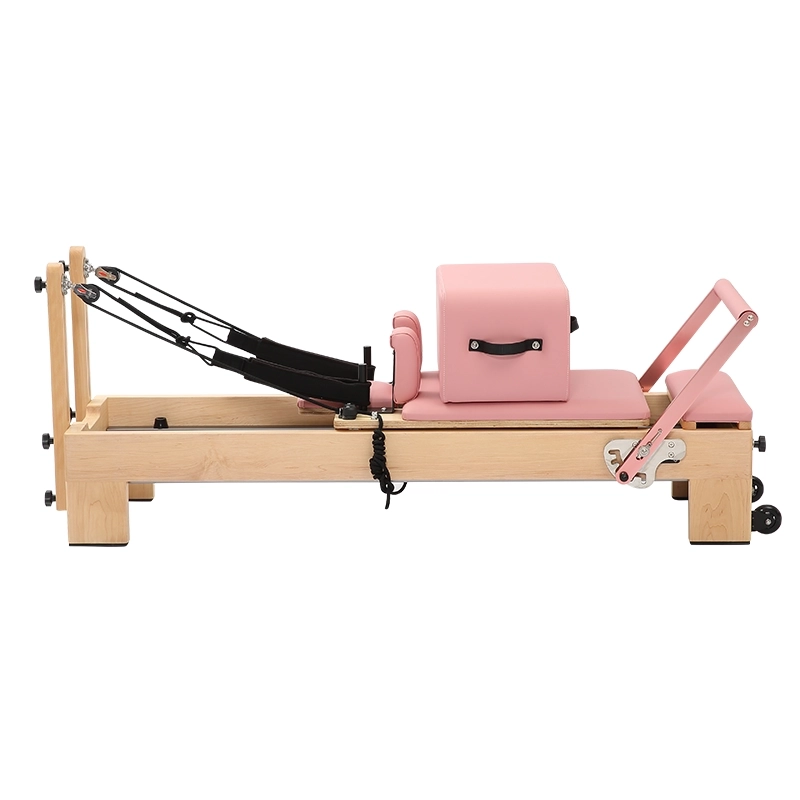
- Aesthetic Integration: Home equipment often features sleeker, softer designs intended to blend with living room or bedroom furniture, moving away from the purely industrial look of gym equipment.
The Studio Reformer: Durability and Performance
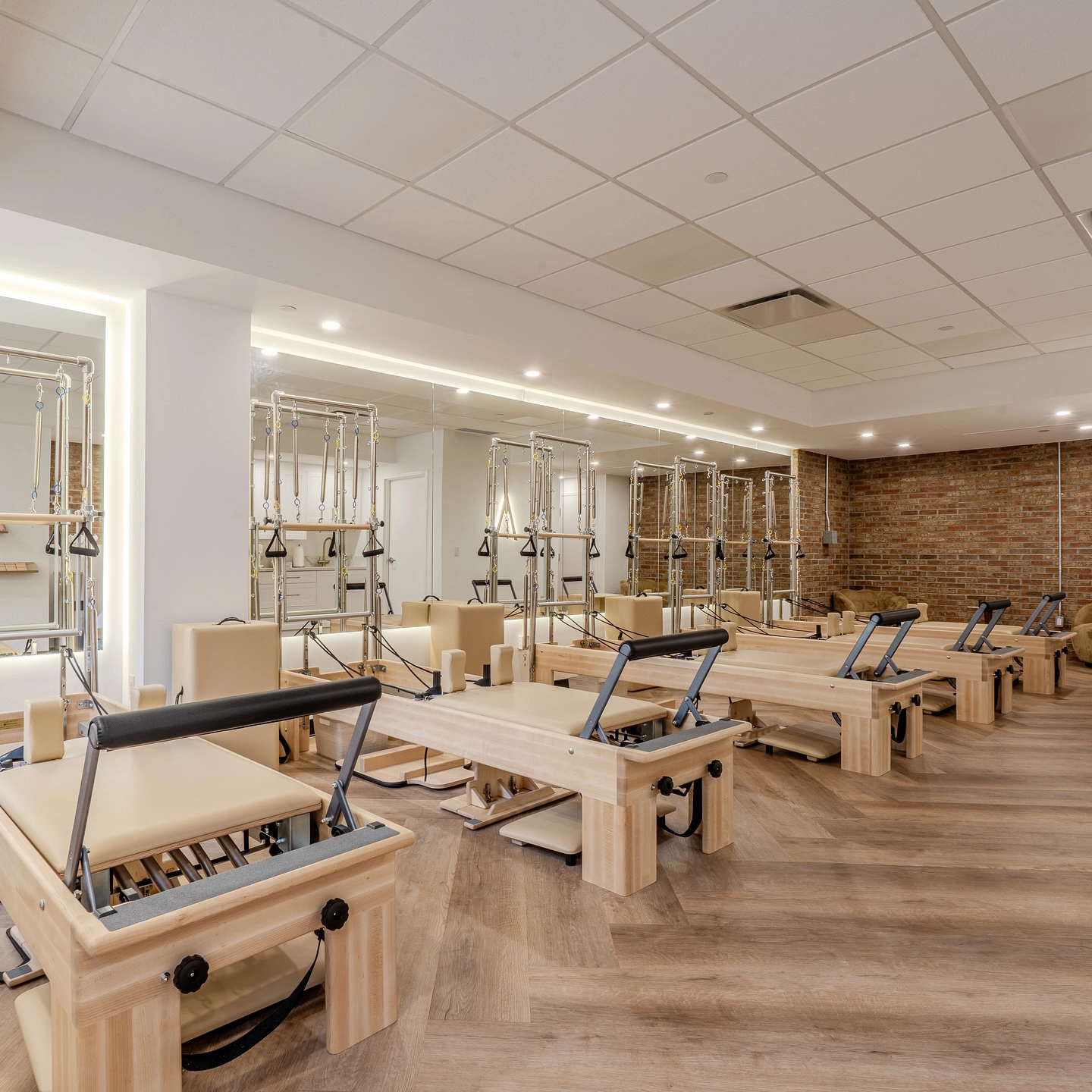
A commercial studio Reformer is a workhorse. It is built to withstand the abuse of 10 to 12 hours of continuous use per day, accommodating clients of all shapes, sizes, and skill levels.
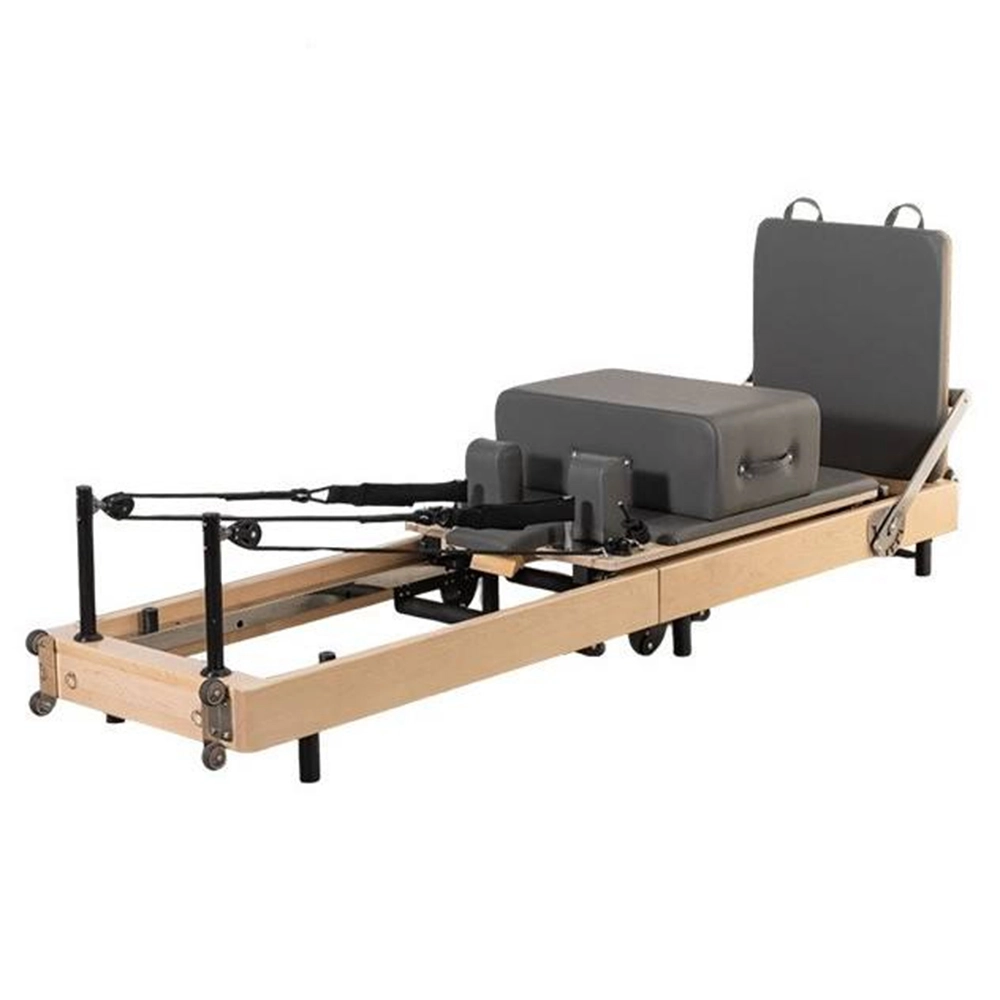
- Structural Rigidity: These machines are usually constructed from heavy-duty maple wood, aluminum, or steel. They are heavy and stable, ensuring zero wobble or shifting during vigorous jumping or heavy resistance work.
- Universal Fit: Studio machines are generally longer and wider to accommodate the tallest and broadest clients. They feature highly adjustable components—gear bars, footbars, and rope lengths—that can be changed in seconds to keep class flow moving.
- Longevity: As noted by industry experts, a high-quality commercial Reformer can last over 20 years with proper maintenance. The components are often replaceable, meaning you can swap out wheels or springs without discarding the whole machine.
3. How Do You Assess Quality and Durability in Manufacturing?
When you are ready to purchase, you must look past the shiny finish and inspect the engineering. “Quality” in a Reformer is defined by the smoothness of the ride, the integrity of the resistance, and the safety of the locking mechanisms.
The Carriage Ride
The sensation of the carriage moving along the rails is the defining characteristic of a Reformer. It should be silent and frictionless.
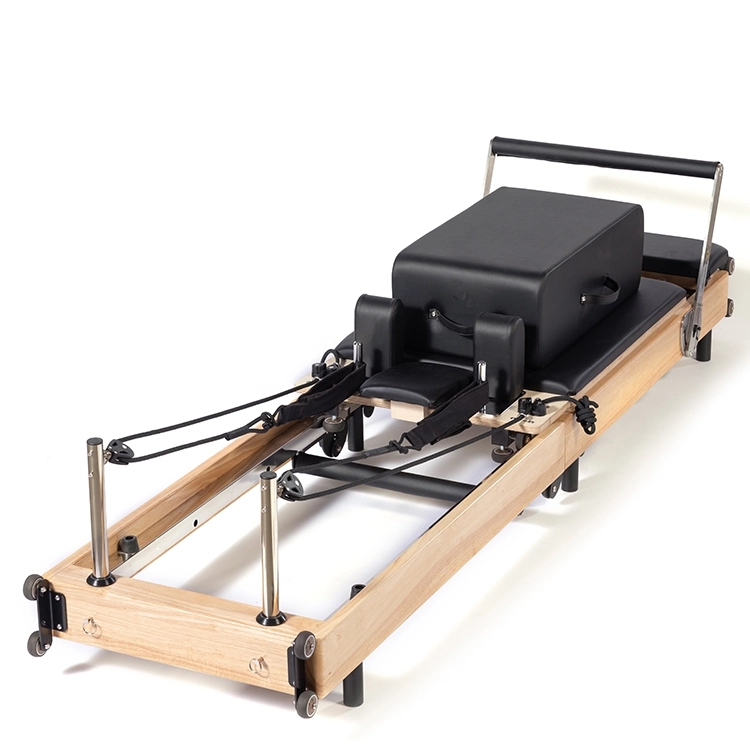
What to look for: High-end Reformers use a multi-wheel system (often 8 wheels) with precision bearings. Four wheels support the weight vertically, while side wheels prevent the carriage from rattling horizontally. If the carriage bumps, drags, or makes a grinding noise, the quality is compromised, and the “flow” of your workout will be ruined.
Spring Integrity
The springs are the heart of the machine. They provide the resistance that mimics muscular contraction.
What to look for: Look for nickel-plated carbon steel springs. These resist oxidation and maintain their tension curve over time. Cheap springs can snap or lose their recoil, becoming “dead” spots in the movement. Furthermore, the attachment points should be secure. A standard Reformer setup usually includes five springs of varying tensions (e.g., 3 heavy, 1 medium, 1 light), allowing for granular control over resistance.
The Footbar Mechanism
You will push against the footbar with significant force. If it collapses or shifts, it can result in serious injury.
What to look for: Test the locking mechanism. It should click securely into place. Durability also means comfort; the padding on the footbar should be dense and covered in non-slip, sweat-resistant vinyl. A footbar that is easily adjustable with one hand is a hallmark of superior engineering, especially for fast-paced workouts.
Upholstery and Frame
The contact points—the carriage pad and headrest—must be comfortable yet firm.
What to look for: Marine-grade vinyl is the industry standard because it resists cracking, peeling, and bacterial growth. The foam underneath should be high-density EVA foam that provides feedback to the spine; if the foam is too soft, you lose the proprioceptive connection to the mat.
4. Where Should You Place Your Reformer: Space and Storage Solutions?
One of the most practical hurdles in buying a Reformer is the physical footprint. These are large machines, typically measuring seven to eight feet in length. The “Where” determines the type of machine you can buy.
The Dedicated Home Gym
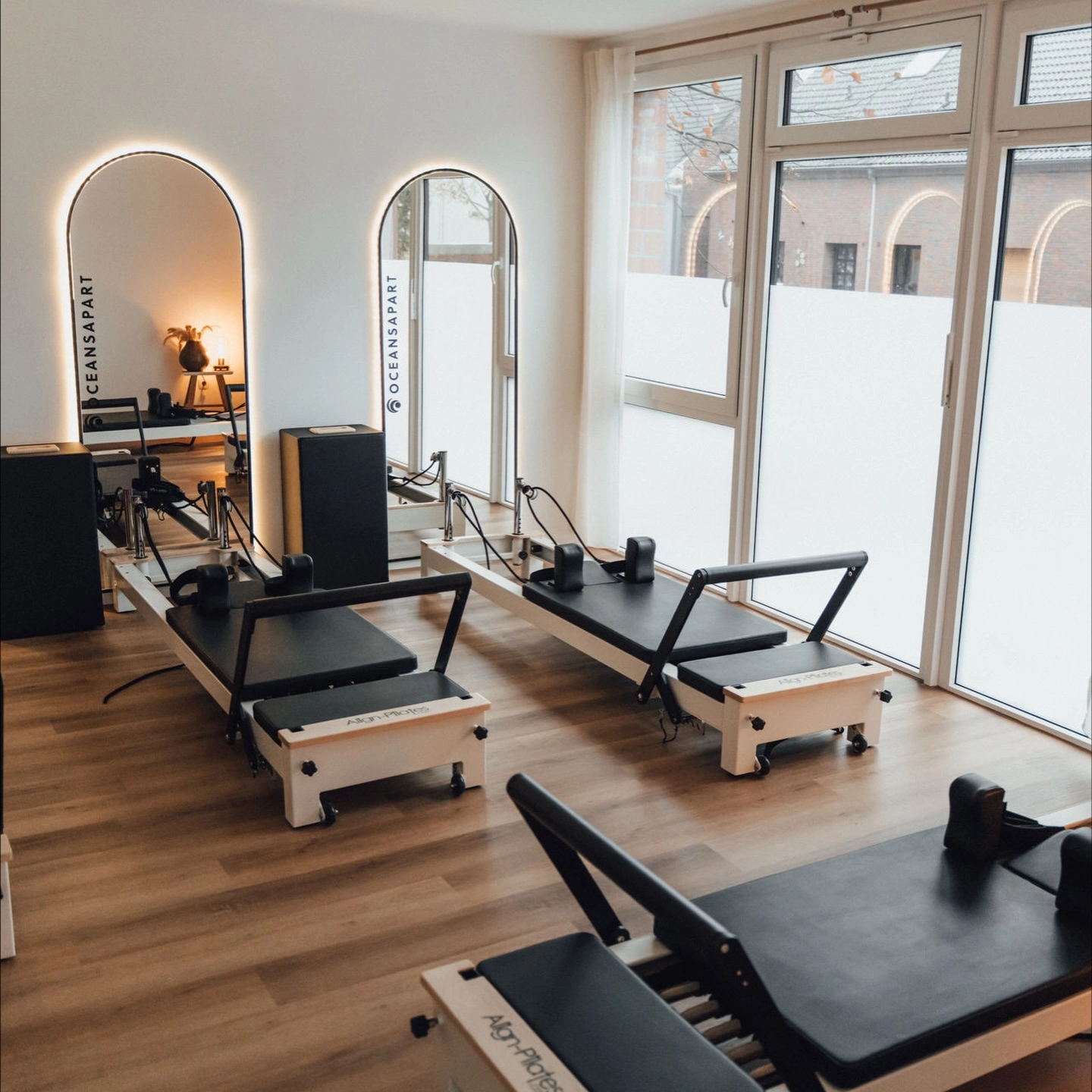
If you have a dedicated room, a standard studio-height Reformer is ideal. These sit about 14 to 16 inches off the ground. The advantage of a dedicated space is that the machine is always ready. Psychological barriers to exercise are removed when you don’t have to “set up” the equipment. You should measure a clearance of at least two feet around the entire perimeter of the machine to allow for exercises where legs or arms extend beyond the frame.
Multi-Use Living Spaces
For those in apartments or shared living areas, floor space is a luxury. Here, low-profile Reformers that sit on the floor are common options. However, the game-changer is the vertical storage capability.
Check ceiling height: If you plan to stand the Reformer on its end, ensure your ceilings are high enough to clear the footbar and risers. Also, check the weight—if a machine weighs 150 lbs, standing it up might be a safety hazard for a petite user.
Studio Layout Planning
For professional studios, space maximization equals revenue. However, overcrowding ruins the client experience.
The Layout Strategy: You need to account for the “wing span” of clients. When arms are open wide in a “T” position, clients should not be hitting their neighbors. Staggering machines or placing them at diagonals can sometimes yield more capacity than parallel rows. Additionally, studios must consider storage for accessories like boxes, poles, and jumpboards. Wall-mounted storage systems are essential to keep the floor clear.
5. Who Will Be Using the Machine: Adjustability and Inclusivity?
The “Who” factor is often overlooked. A Reformer is not a one-size-fits-all garment; it is a suit that must be tailored. The machine must be adaptable to the anthropometrics (body measurements) of the user.
Height and Limb Length
If the user is over 6 feet tall, a standard carriage might feel cramped, preventing full extension of the legs. Conversely, a petite user (under 5 feet) might struggle to reach the footbar while lying down.
The Solution: Look for machines with an adjustable “gear bar.” This is the mechanism that moves the spring anchor points further away or closer to the carriage. By moving the gear bar, you effectively change the starting distance of the carriage, accommodating different leg lengths. Adjustable rope risers are also critical; raising the pulleys allows for a greater range of motion for broad-shouldered individuals.
Physical Limitations and Injuries
For users with limited mobility—perhaps older adults or those recovering from hip surgery—a Reformer that sits on the floor is impractical. Getting down to and up from the floor can be difficult or painful.
The Solution: A “Studio Height” or “Rehab Height” Reformer (14 to 24 inches high) is easier to mount and dismount, similar to sitting on a chair. This accessibility is crucial for adherence to a rehabilitation program.
Multiple Users
If a husband (6’2″, tight hamstrings) and a wife (5’2″, hypermobile) share the machine, the ease of adjustment becomes the number one priority. If changing the settings takes 5 minutes and requires tools, the machine will likely go unused by one party. Look for “quick-lock” and “easy-slide” mechanisms that allow for transitions in seconds.
6. When Should You Prioritize Accessories and Bundles?
When purchasing a Reformer, you are often presented with a “base model” versus a “bundle.” Knowing when to upgrade is a matter of understanding your workout progression.
The Essential Accessories
At a minimum, every Reformer user will eventually need a **Sitting Box**. This box allows for prone (lying on stomach) exercises, seated abdominal work, and side stretching. It effectively doubles the repertoire of exercises available. If a bundle includes a box and a foot strap, it is almost always worth the extra cost immediately.
Cardio Integration
If your goal is weight loss or cardiovascular health, the **Jumpboard** is non-negotiable. This is a padded plate that replaces the footbar. It allows you to “jump” horizontally while lying on your back. It provides a high-intensity cardio workout with zero impact on the joints. If you enjoy plyometrics but have bad knees, you should prioritize a package that includes this.
Advanced Progression
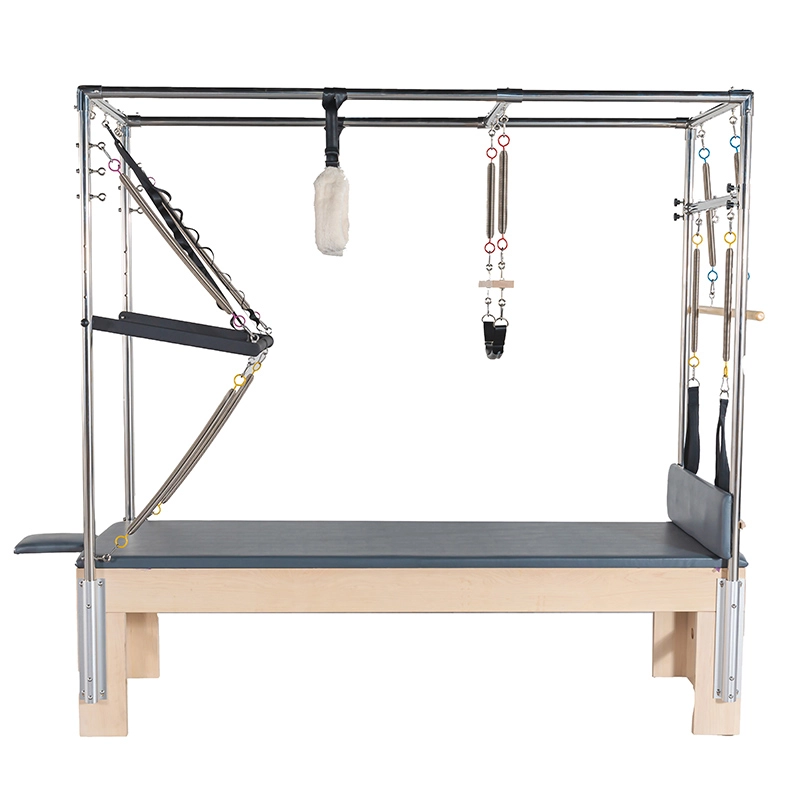
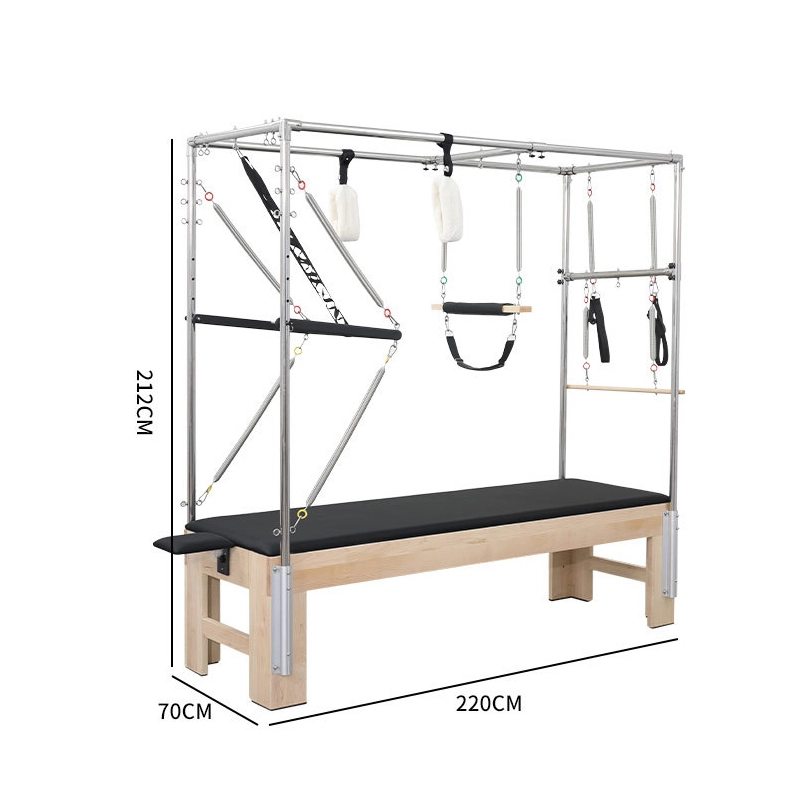
For the advanced practitioner or the studio owner, the **Tower** or **Vertical Frame** is the next step. This attachment adds a vertical structure to one end of the Reformer, essentially combining it with elements of the Cadillac (another Pilates apparatus). It introduces springs from above and a push-through bar, opening up a three-dimensional plane of movement. While expensive, buying a Reformer that is “Tower Ready” (pre-drilled ports) is a smart future-proofing strategy.
Feature 1: A Deep Dive into Frame Materials – Wood vs. Metal
The debate between wood and metal frames is one of the most common dilemmas for buyers. While functionally they perform the same task, their characteristics differ in ways that impact the ownership experience.
Wood (Maple, Oak, Walnut)
Wood is the traditional choice, honoring the original designs of Joseph Pilates.
Pros:
Aesthetics: Wood frames are furniture-grade pieces. They bring warmth and elegance to a studio or home, feeling less “clinical” than metal.
Absorption: Wood naturally absorbs some sound and vibration, leading to a quieter, “thuddier” feel during usage.
Stability: Solid wood is heavy, providing an incredibly stable base.
Cons:
Maintenance: Wood is susceptible to humidity and temperature changes. It can expand or contract, potentially loosening bolts over time. It scratches more easily than metal.
Weight: They are difficult to move.
Metal (Aluminum, Steel)
Metal represents the contemporary evolution of the method.
Pros:
Durability: Aluminum is resistant to rust, scratching, and humidity. It is virtually indestructible in a commercial setting.
Weight: Aluminum is lighter than wood, making these frames easier to move or stack.
Modern Look: They offer a clean, sleek, industrial aesthetic that fits well in modern gyms or minimalist homes.
Cons:
Coldness: They can feel cold to the touch and look more sterile.
Resonance: Metal can sometimes amplify the sound of the springs or carriage wheels, creating a slightly noisier experience if not engineered perfectly.
Feature 2: Tips for New Pilates Studios – The Business of Equipment
For entrepreneurs launching a new studio, the equipment choice is a cornerstone of the business model. Here is a strategic breakdown for the aspiring studio owner.
Uniformity is Key
Do not mix and match brands. Instructors need to cue classes efficiently. If one machine has a red spring as “heavy” and another has a green spring as “heavy,” the class flow will disintegrate. Buying a fleet of identical machines ensures that every client has a consistent experience and follows cues instantly.
The Maintenance Schedule
A studio Reformer sees more wear in a month than a home Reformer sees in a decade. You must establish a protocol:
Daily: Wipe down upholstery with non-abrasive, studio-approved cleaner (tea tree oil solutions are popular). Wipe rails to remove hair and dust which ruins wheels.
Weekly: Check all ropes for fraying. Inspect spring clips for deformation.
Quarterly: Tighten all bolts. Rotate springs (move the ones used most often to the outside positions) to ensure even wear.
Warranty as Insurance
Never buy studio equipment without a commercial warranty. Home warranties are voided the moment a machine is used in a business. Look for brands that offer at least 5 to 10 years on the frame and 2 years on moving parts. This protects your capital investment.
Pertanyaan yang Sering Diajukan
1. Can I lose weight using only a Pilates Reformer?
While the Reformer is not primarily a cardio tool (unless using a Jumpboard), it is highly effective for body recomposition. It builds lean muscle mass, which raises your resting metabolic rate (BMR), causing you to burn more calories at rest. It also shapes and tones the body, leading to a “smaller” appearance through improved posture and tighter core musculature. However, for significant weight loss, it is best paired with a caloric deficit and some form of aerobic activity.
2. Is it safe to use a Reformer during pregnancy?
Yes, the Reformer is one of the best tools for prenatal fitness, but modifications are essential. The machine supports the weight of the growing belly and helps maintain pelvic stability. However, after the first trimester, supine (lying flat on the back) exercises should be limited to prevent compression of the vena cava. A Reformer with an adjustable wedge or utilizing the Sitting Box can keep the expectant mother at an incline, ensuring safety. Always consult a doctor and a certified prenatal Pilates instructor.
3. How often do I need to replace the springs?
For a home Reformer used 2-3 times a week, springs should generally be replaced every two years. For a professional studio, springs should be replaced every 12 to 24 months depending on volume. Signs that springs need immediate replacement include: gaps in the coils when the spring is at rest, a “wavy” appearance to the coil, or audible creaking/groaning during extension. Never wait for a spring to snap; preventative maintenance is key to safety.
Conclusion
So, how does one choose the right Pilates Reformer? The answer lies in the intersection of your reality and your aspirations. It is about measuring your living room to the inch, being honest about your budget, and understanding that quality engineering pays dividends in the form of safety and enjoyment.
For the home user, the right Reformer is the one that fits your life—one that is inviting enough to use daily yet unobtrusive enough to live with. For the studio owner, the right Reformer is a silent partner in your business—durable, reliable, and capable of accommodating every client who walks through your door. Whether you choose a sleek aluminum model with a vertical stand or a classic maple frame with leather straps, the goal remains the same: to provide a platform for movement that heals, strengthens, and invigorates. Take your time, test different models, and invest in a machine that will support your wellness journey for decades to come.
 English (United States)
  English (Canada)
  English (Australia)
  English (New Zealand)
  English (UK)
  Arabic
  Bulgarian
  Czech
Czech  Danish
  Greek
Greek  Spanish
  Ukrainian
  Turkish
  Thai
Thai  Swedish
  Serbian
  Slovenian
  Slovak
  Russian
  Romanian
  Portuguese (Portugal)
  Portuguese (Brazil)
  Norwegian
  Dutch
Dutch  Estonian
  Finnish
  French
  Hindi
Hindi  Croatian
  Indonesian
  Icelandic
  Italian
  Japanese
  Georgian
  German
  Lithuanian
  Polish
  Korean
  Uzbek
Uzbek  Hungarian
  Malay
Malay