
Your studio needs to invest in high-quality Pilates reformers because the equipment is the literal foundation of your client’s somatic experience, directly dictating the safety of their movement, the efficacy of their neuromuscular re-education, and the perceived value of your brand; ultimately, premium machinery is the only variable that simultaneously lowers long-term operational costs while justifying premium pricing tiers.
In the wellness industry, the reformer is not merely a tool—it is the partner in the practice. When a client lies down on a carriage, they are entrusting their physical safety and their journey toward alignment to that machine. If the glide is uneven, the springs inconsistent, or the footbar unstable, the trust is broken before the first plié is even performed. High-quality reformers provide the requisite tactile feedback and mechanical precision that allows the nervous system to down-regulate and the muscles to fire correctly. For the studio owner, the answer is found in the “Total Cost of Ownership” (TCO). A cheap machine costs you twice: once when you buy it, and daily in lost retention, maintenance downtime, and liability risks. Investing in excellence is not a luxury; it is the baseline for a sustainable, high-performance Pilates business.
1. Why are premium Pilates reformers a better investment than budget options?
The economic argument for high-quality reformers goes far beyond the initial price tag. To understand the “deep mind” perspective of this investment, we must look at the concept of Total Cost of Ownership (TCO) and the hidden economics of depreciation.
When you purchase a budget reformer, you are often buying a liability disguised as an asset. The initial savings are quickly eroded by what engineers call “mean time between failures” (MTBF). Budget machines often utilize lower-grade aluminum or steel alloys, plastic pulleys rather than marine-grade hardware, and springs that suffer from “hysteresis”—a phenomenon where the spring loses its ability to return to its original length and tension over time.
The Hidden Cost of Downtime
Consider the mathematics of a single out-of-order reformer. If your studio charges $35 per class and that machine runs 4 classes a day, a single down machine costs you $140 in daily revenue. If a budget reformer requires a week of downtime waiting for a replacement part (which is often shipped from overseas with poor supply chain reliability), you have lost nearly $1,000 in revenue—roughly 20-30% of the cost of a brand-new, high-quality machine.
Premium manufacturers mitigate this through:
- Standardization: Parts are universal and easily replaceable.
- Durability: High-end reformers are rated for commercial use, often tested for millions of cycles.
- Resale Value: This is the most overlooked asset. A Balanced Body, Gratz, or Merrithew reformer holds its value remarkably well. Five years down the line, a premium reformer can often be sold for 50-70% of their original purchase price. A generic, budget knock-off usually depreciates to near zero because the secondary market knows it has no lifespan left.

Liability and Risk Management
From a legal standpoint, equipment failure is a primary source of negligence lawsuits in fitness studios. If a footbar collapses under load because a locking mechanism on a cheap machine failed, the resulting injury is catastrophic not just for the client, but for the studio’s existence. High-quality reformers come with rigorous safety certifications (such as CE markings or medical device classifications in some regions) that act as a shield for your business liability. Your insurance premiums may even reflect the quality of equipment you house.
2. What features should you look for in a professional Pilates reformer?
To distinguish between “good” and “exceptional,” one must look at the biomechanics of the machine. The reformer is a closed-chain kinetic environment. The feedback loop between the human and the machine must be seamless.
The Science of the Springs
The soul of the reformer is the spring. In high-quality units, springs are engineered for “linear elasticity.” This means the resistance increases predictably as the spring stretches.
- Deep Dive: In cheaper models, springs often have an inconsistent “tension curve.” As the client extends, the resistance might spike suddenly or lag. This forces the client to use momentum rather than muscle control to overcome the sticking point, defeating the purpose of Pilates (contrology).
- The Nickel-Plating Difference: Premium springs are often nickel-plated or made of high-carbon steel to resist corrosion and silence the “twang” noise that distracts from the zen environment of a studio.
The Gliding Mechanism (Friction Coefficients)
The carriage ride should feel like floating on ice. This is achieved through precision bearings and rails.
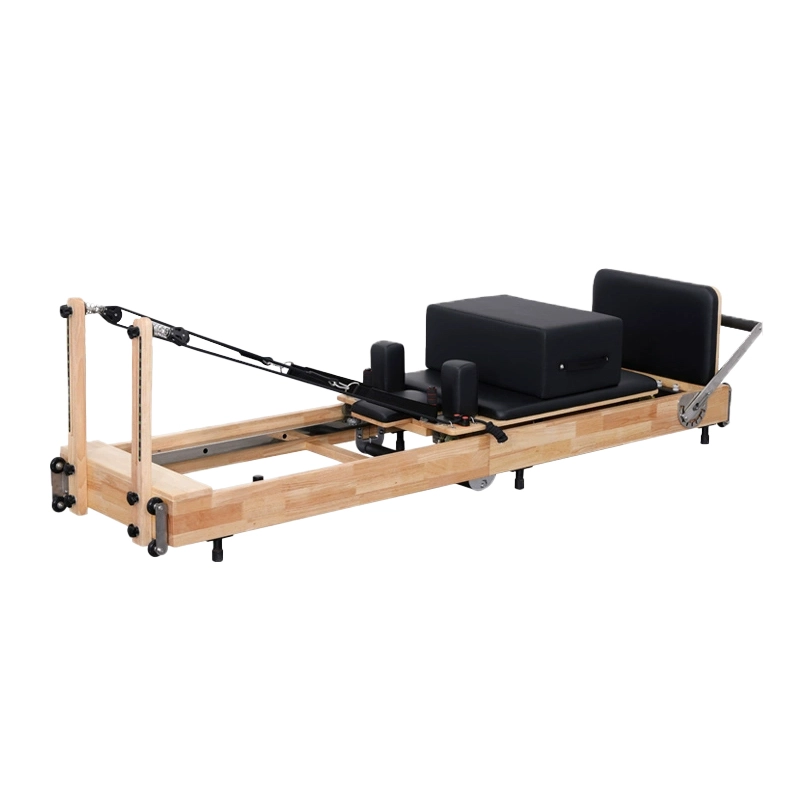
- Vertical vs. Horizontal Wheels: Top-tier reformers utilize a multi-wheel suspension system (often 4 vertical wheels for support and 4 side wheels for stability). This ensures that even if a client loads the carriage unevenly (e.g., leaning heavily to the left during a side-lying leg series), the carriage does not grind against the rail.
- Silence as a Feature: The sound of a workout should be the breath, not the friction of plastic on metal. High-quality reformers use custom durometer wheels that absorb sound and vibration, allowing the client to focus purely on proprioception.
Adjustability and Anthropometry
Human bodies vary wildly. A 5’0″ client and a 6’6″ athlete cannot effectively use the same settings.
- The Gear Bar: Premium reformers offer a gear bar that adjusts the distance of the footbar from the carriage without changing the spring tension. This is critical for knee safety. If a machine lacks micro-adjustability, you are forcing the client’s skeleton to adapt to the machine, rather than the machine adapting to the skeleton. This is the antithesis of Pilates.
3. How does equipment quality affect client retention and studio pricing?
There is a psychological phenomenon known as the “Halo Effect.” When a client walks into a studio and sees robust, gleaming, well-engineered equipment, they subconsciously attribute that same level of quality to your instructors, your programming, and your brand management.
The Somatic Experience of Value
Clients may not be engineers, but they are somatic feelers. They know what “cheap” feels like.
- Stability = Safety: When a client stands on a reformer to perform a lunge or a split, the machine must feel like an extension of the floor—immovable and solid. If the frame flexes or the footbar wiggles even a millimeter, the client’s sympathetic nervous system (fight or flight) activates. Instead of engaging their deep core and stabilizers, they brace their global muscles (quads, traps) out of fear.
- The Result: They leave the class feeling tense rather than lengthened. They may not articulate why they didn’t enjoy the class, but they will eventually stop coming. Conversely, on a solid machine, they feel safe enough to surrender into the movement, achieving the “Pilates high” that drives retention.
Justifying Premium Pricing
You cannot charge $40+ per class if your equipment looks like it was bought on a budget clearance rack.
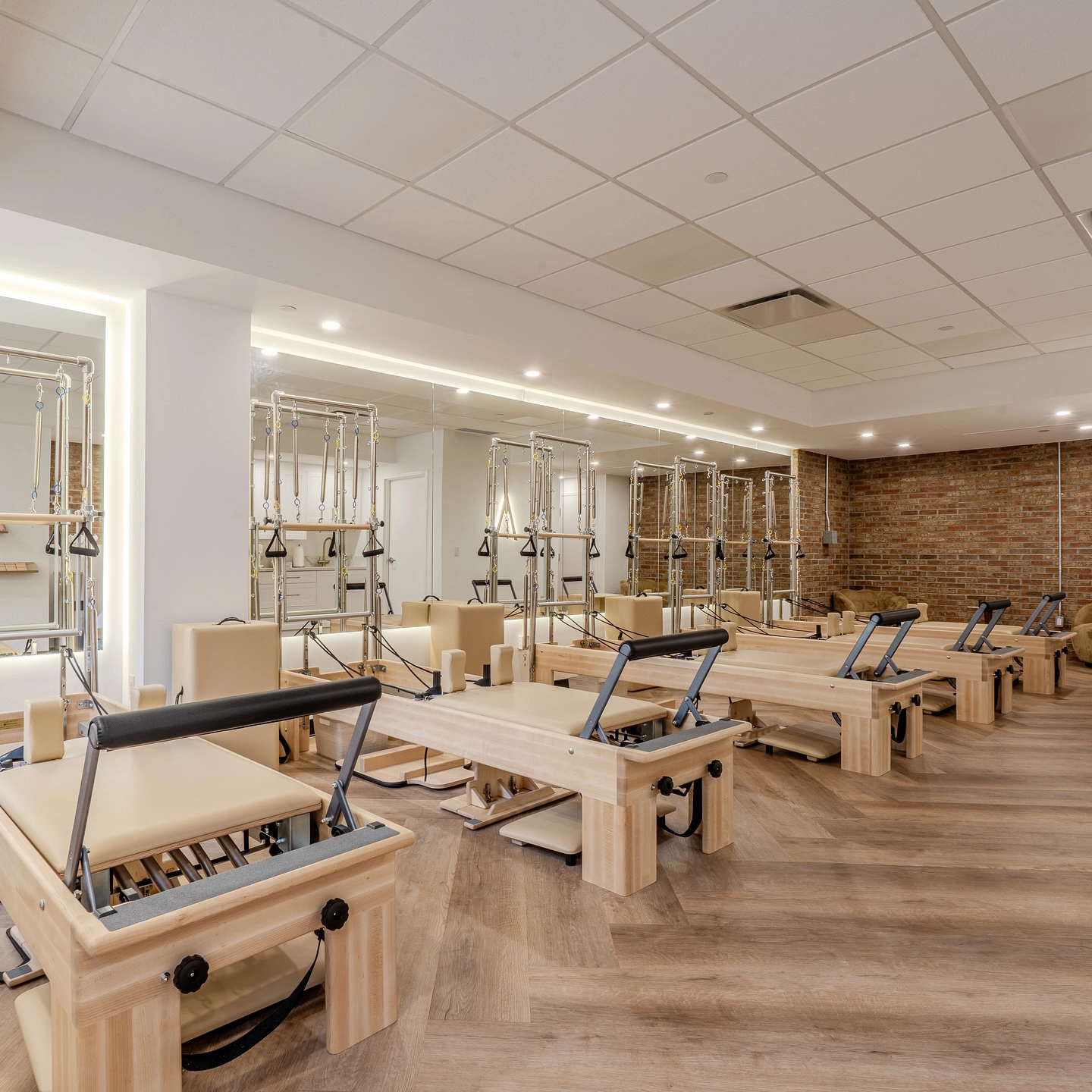
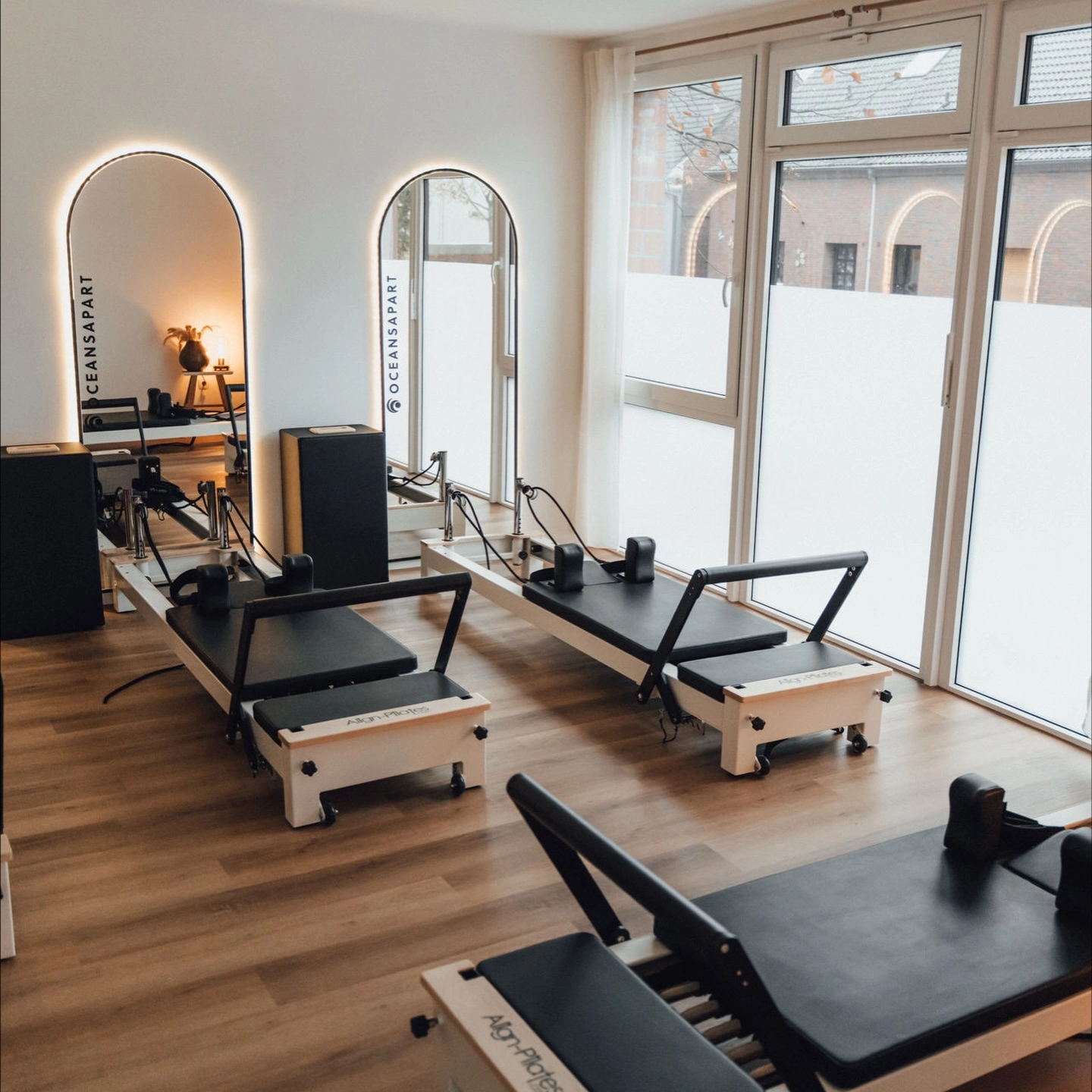
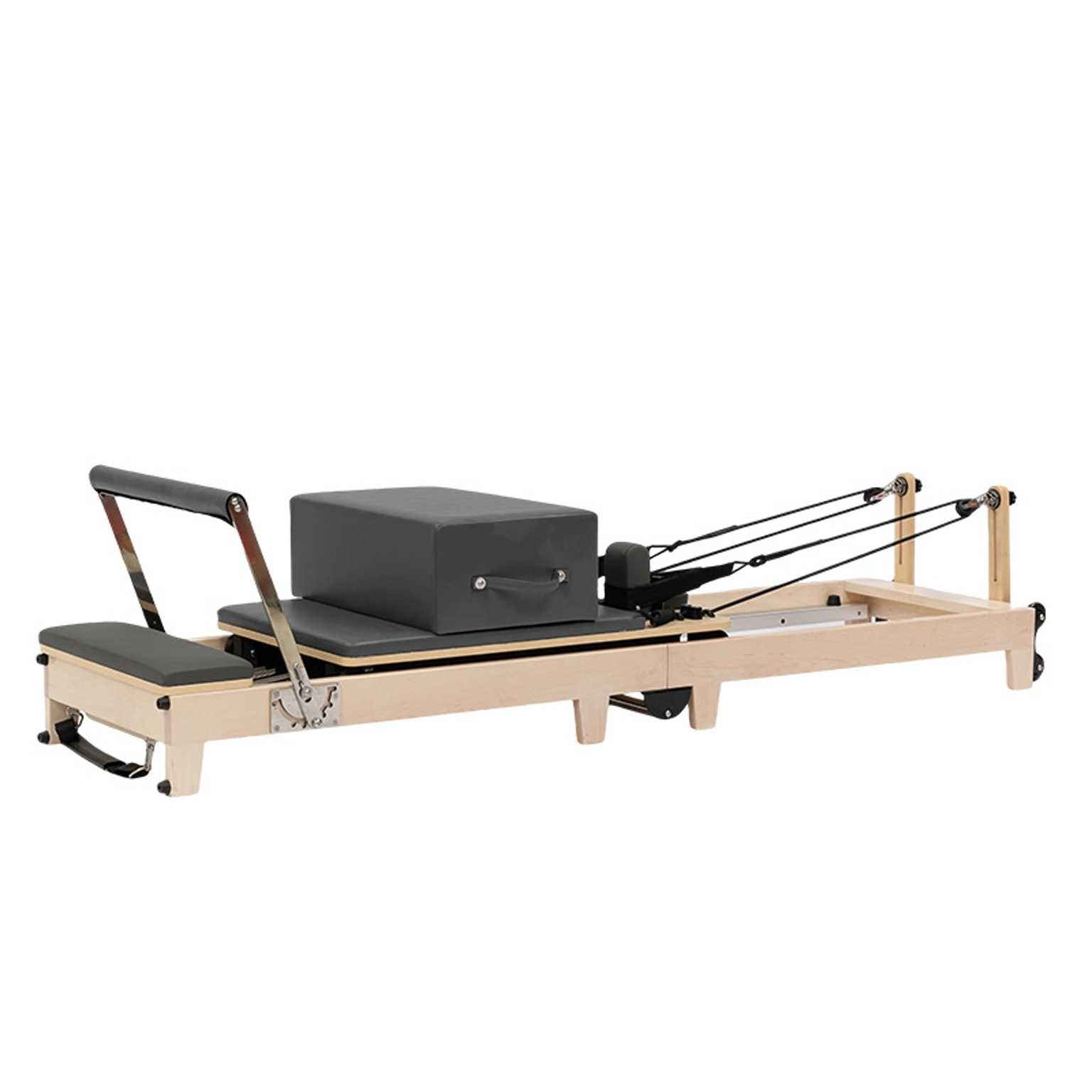
- Aesthetic Equity: High-quality reformers are beautiful. They often feature hand-finished wood (maple, oak) or sleek, powder-coated aluminum. They contribute to the interior design of the space.
- Differentiation: In a saturated market, listing your equipment brand can be a flex. “We train exclusively on [Brand X] Reformers” signals to experienced Pilates practitioners that you take the method seriously. It moves your studio from a commodity (just another gym) to a boutique specialist.
Note: Clients who pay premium rates are detail-oriented. They will notice a torn upholstery seam or a sticky pulley. High-quality vinyls are resistant to oils, sweat, and bacteria, maintaining that “new studio” look for years.
4. Who is responsible for reformer maintenance and how does quality reduce that burden?
The “Who” in this scenario is usually the studio owner or the lead instructor, and their time is the most expensive resource in the business. Every hour spent troubleshooting a squeaky rail or tightening a loose bolt is an hour not spent on marketing, staff training, or teaching.
The Instructor’s Perspective
Your instructors are your front line. If they are constantly fighting the equipment to make adjustments, their teaching suffers.
- Flow interruption: A sticky locking pin on a footbar can ruin the flow of a class. If an instructor has to stop the rhythm to kick a machine into place, the energy of the room drops.
- Instructor Retention: Just as clients prefer nice equipment, top-tier talent prefers to teach in studios where the equipment works. It reduces their physical fatigue (less bending and forcing levers) and allows them to teach sophisticated choreography that requires trustworthy gear.
The “Self-Healing” Design of Premium Gear
High-end manufacturers design their equipment for serviceability.
- Accessible Maintenance: On a high-quality reformer, changing a spring or a wheel is usually a 5-minute job with a standard wrench. On cheap imports, these components are often riveted shut or buried inside welded frames, making repair impossible and replacement the only option.
- Customer Support Ecosystem: When you buy from a reputable high-end brand, you are buying into a support ecosystem. You get access to exploded diagrams, part numbers, and technical support teams. With budget brands, you are often left with a “contact us” form that goes to a dead inbox.

5. When is the right time to upgrade or invest in your fleet?
Strategic timing of capital expenditure is crucial for cash flow, but waiting too long can be fatal to a studio’s reputation.
The Lifecycle Analysis
A high-quality reformer has a lifecycle of 10-15+ years if maintained. However, the technology of Pilates evolves.
- The 7-Year Itch: Generally, after 7 years of heavy commercial use, even the best reformers need a major overhaul (new upholstery, new springs, new wheels).
- The Upgrade Signal: You should invest in new, high-quality reformers when you notice that maintenance costs (parts + labor) exceed 20% of the asset’s value per year, or when client feedback regarding comfort begins to trend negatively.
New Studio Launches
If you are launching a new studio, the “When” is Day One.
- The Anchoring Effect: Your launch sets the anchor price and quality expectation for your entire business lifespan. It is incredibly difficult to raise prices later if you started with cheap equipment. Starting with the best allows you to anchor your pricing high.
- Financing Options: Most premium manufacturers offer leasing or financing. It is better to pay a monthly lease on $50,000 worth of amazing equipment than to pay cash for $20,000 of garbage that will need replacing in two years. The lease is an operating expense; the cheap equipment is a capital loss waiting to happen.
6. Where can high-end reformers position your brand in the competitive wellness market?
We are currently in the era of “Wellness 3.0,” where consumers are highly educated about biomechanics and recovery. The “Where” is about market positioning—where do you sit on the spectrum of fitness offerings?
The Clinical Bridge
High-quality reformers allow you to bridge the gap between Fitness és Rehabilitation.
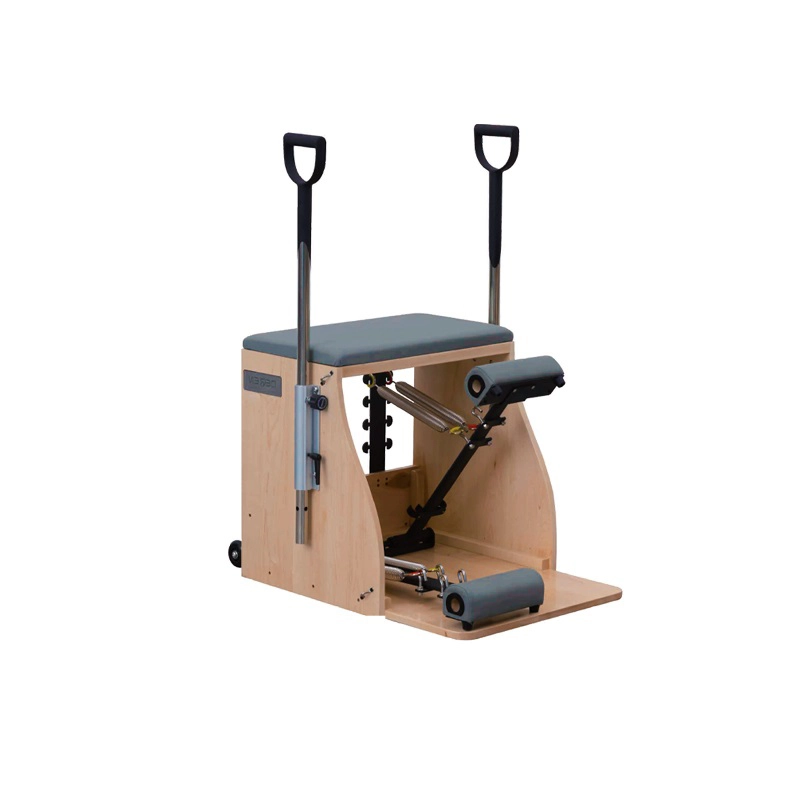
- Many premium reformers can be fitted with towers, jumpboards, and clinical accessories. This versatility allows your studio to host physical therapy sessions, pre-natal workshops, and athletic conditioning camps.
- Budget reformers rarely have the structural integrity to handle the dynamic loads of athletic jumping or the precise, low-load requirements of rehab patients. By investing in quality, you expand your Total Addressable Market (TAM) to include injured populations and elite athletes, not just general fitness enthusiasts.
The Visual Ecosystem (Instagram & Marketing)
We cannot ignore the visual economy.
- Where does your studio live digitally? On Instagram and TikTok. A sleek, high-end reformer with polished metal and pristine upholstery photographs beautifully. It creates “user-generated content” (UGC) appeal. Clients love to take selfies on beautiful machines.
- Cheap machines look cluttered and industrial in a bad way. Investing in design-forward equipment essentially turns every client into a marketing photographer for your studio.
Conclusion: The ROI of Excellence
To conclude, the decision to invest in high-quality Pilates reformers is not merely a purchase; it is a strategic maneuver that stabilizes your business foundation.
We have explored the Why (TCO and ROI), the What (biomechanical precision), the How (client psychology and retention), the Who (staff satisfaction), the When (strategic lifecycles), and the Where (market positioning).
In the deep mind analysis of business, we realize that “expensive” is a relative term. A machine that lasts 15 years, retains 60% of its value, keeps clients safe, and justifies a $40 class fee is infinitely cheaper than a budget machine that breaks in 2 years, injures a client, and caps your pricing power at $20.
Your studio is a sanctuary for movement. The equipment is the altar at which your clients practice. Respect the practice, respect your business, and respect your future self by investing in the best. Excellence is the only currency that never depreciates.
Gyakran ismételt kérdések
1. How long do high-quality Pilates reformers actually last compared to budget models?
Answer: A high-quality commercial reformer from a reputable brand (like Balanced Body, Merrithew, or Gratz) typically lasts between 10 to 20 years with regular maintenance. The frames are often guaranteed for life. In contrast, budget or “home-use” reformers placed in a commercial setting often suffer critical mechanical failures within 2 to 3 years, requiring complete replacement. When you amortize the cost over the lifespan, the premium machine costs significantly less per year.
2. Can I mix and match different brands of reformers in my studio?
Answer: While physically possible, it is strongly discouraged. From a “deep mind” instructional perspective, consistency is key. Different brands use different spring tensions (e.g., a “Red” spring on one brand may be 100% tension, while on another it is 75%). This confuses clients and frustrates instructors who have to constantly translate cues (e.g., “One red spring here, but two blue springs there”). For a cohesive class flow and brand aesthetic, stick to a single, high-quality manufacturer for your fleet.
3. Is it worth buying “refurbished” high-end reformers instead of brand new ones?
Answer: Yes, this can be an excellent strategy, provided the refurbishment is done by a certified professional. Because high-end reformers have such durable frames (the “bones” of the machine), replacing the soft goods (springs, wheels, ropes, and vinyl) can restore a 10-year-old machine to “like-new” performance. This allows you to acquire top-tier biomechanics at a 30-40% discount. However, ensure the rails are not pitted and the frame is not warped, as these cannot be fixed.
 English (United States)
  English (Canada)
  English (Australia)
  English (New Zealand)
  English (UK)
  Arabic
  Bulgarian
  Czech
Czech  Danish
  Greek
Greek  Spanish
  Ukrainian
  Turkish
  Thai
Thai  Swedish
  Serbian
  Slovenian
  Slovak
  Russian
  Romanian
  Portuguese (Portugal)
  Portuguese (Brazil)
  Norwegian
  Dutch
Dutch  Estonian
  Finnish
  French
  Hindi
Hindi  Croatian
  Indonesian
  Icelandic
  Italian
  Japanese
  Georgian
  German
  Lithuanian
  Polish
  Korean
  Uzbek
Uzbek  Hungarian
  Malay
Malay